What if a stranger could walk through your hotel room door simply because they had a spare key card? That scenario plays out more often than most people realize — and it's exactly why how portable door locks work is worth understanding. These compact devices slip into your bag, require zero installation, and add a real physical barrier to almost any inward-swinging door. If you're looking to shop around, our portable door locks category is a solid starting point.
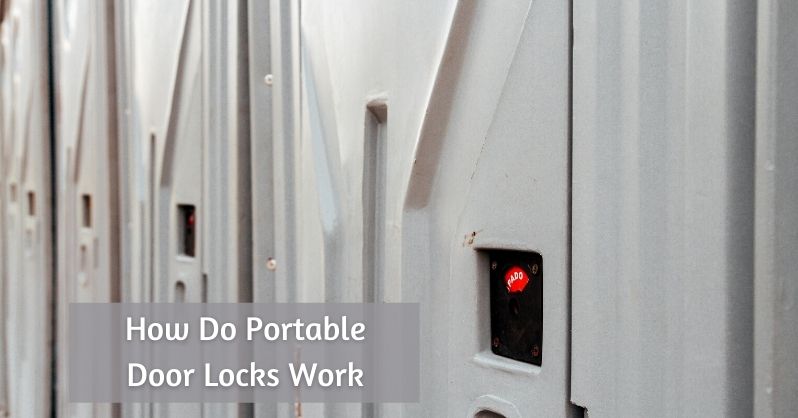
Portable door locks don't replace your existing deadbolt — they reinforce it. Most designs engage with the door's existing strike plate or brace against the floor, creating a secondary barrier that holds even if the primary lock is bypassed. According to Wikipedia's overview of door security, even basic physical reinforcements significantly reduce forced-entry risk. They're popular with travelers, college students, and renters who can't modify their doors.
This guide breaks down the mechanics, walks through how to use them step by step, and clears up some stubborn myths. Whether you're buying your first one or want to use the device you already own more effectively, you'll leave with a clearer picture of what these locks can — and can't — do.
Contents
- How Portable Door Locks Actually Work: A Step-by-Step Breakdown
- Entry-Level vs. Heavy-Duty Portable Locks
- Quick Security Wins You Can Apply Right Now
- Best Practices for Getting the Most Out of Your Portable Lock
- Common Myths About Portable Door Locks — Debunked
- Frequently Asked Questions
- Key Takeaways
How Portable Door Locks Actually Work: A Step-by-Step Breakdown
The core idea behind how portable door locks work is deceptively simple: they use the door's own hardware as an anchor point. Rather than adding a new locking cylinder, they brace against what's already there — typically the strike plate, the door's latch recess, or the gap between the door and the floor. Most models are built from hardened steel or heavy-duty zinc alloy, keeping them both lightweight and resilient.
The Core Mechanism
There are three main mechanism types you'll encounter:
- Strike plate locks (addalock style) — A metal tab inserts into the strike plate cavity in the door frame. A rigid bar or arm then blocks the door from swinging open, even if the latch is retracted.
- Floor brace locks — A bar extends from the door handle down to the floor at an angle. The floor absorbs the force, so the harder someone pushes, the more resistance the brace generates.
- Door frame clamps — These clamp onto the door edge itself, near the top or middle, preventing lateral movement. Common for sliding doors or outward-facing scenarios.
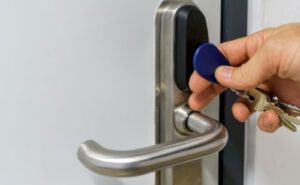
Each design exploits a different physical principle — leverage, friction, or direct obstruction. Knowing which type you have matters because each one has specific installation requirements and compatibility limitations.
Using One for the First Time
Using a strike-plate style lock like the Addalock takes under 30 seconds once you've practiced it a couple of times. Here's the basic process:
- Close the door fully from the inside.
- Locate the strike plate recess — the rectangular slot in the door frame where the latch seats.
- Insert the flat end of the portable lock into that slot.
- Rotate or slide the locking arm into the engaged position.
- Test by gently pushing on the door — it should hold firm without shifting.
Pro tip: Always test the lock with light pressure before relying on it overnight. A misaligned insertion won't hold under real force.

Entry-Level vs. Heavy-Duty Portable Locks
Not all portable locks are built for the same situation. Knowing the difference between a basic travel model and a reinforced security device helps you choose the right tool for the job. It also helps to understand the different types of door locks so you know where portable devices fit into the broader security picture.
Basic Models
Entry-level portable locks prioritize convenience. They're lightweight, affordable, and easy to slip into a carry-on. The trade-off is that they typically offer moderate resistance — enough to stop someone using a spare key or card shim, but not enough to stop a sustained, forceful breach.
- Weight: under 2 oz
- Material: zinc alloy or lightweight steel
- Best for: hotel rooms, Airbnb stays, dorm rooms
- Limitations: won't fit shallow or non-standard strike plates; not rated for high-force entry

Advanced and Multi-Feature Options
Heavier-duty models include reinforced steel floor braces, dual-point locking arms, and built-in alarm triggers that sound a loud alert if the door is pushed while engaged. These offer considerably more resistance but are bulkier to carry.
| Feature | Basic Model | Heavy-Duty Model |
|---|---|---|
| Weight | Under 2 oz | 4–12 oz |
| Material | Zinc alloy | Hardened steel |
| Forced Entry Resistance | Moderate | High |
| Alarm Feature | Rarely included | Often included |
| Ease of Use | Very easy | Moderate |
| Best Use Case | Travel, hotels, dorms | Home reinforcement, high-risk areas |
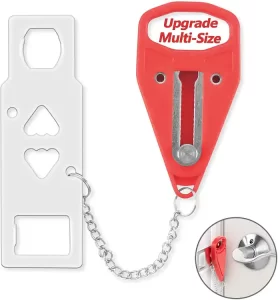
Warning: A lock rated for "travel use" is not a substitute for a permanent deadbolt — it's a supplement, not a standalone solution.
Quick Security Wins You Can Apply Right Now
You don't need a complicated setup to meaningfully improve your door security. A few well-placed decisions close most common vulnerabilities fast, whether you're staying somewhere temporarily or simply reinforcing your home.
Travel and Hotel Scenarios
Hotels are the most common use case, and for good reason. A standard hotel key card lock can be bypassed with a bump key, a shimmed card, or even a compromised staff key. A portable lock eliminates that vulnerability entirely because it blocks the door mechanically from the inside — no external key override is possible once it's engaged.
- Pack a strike-plate style lock in your carry-on for any trip.
- Make engagement a nightly habit — installation takes under a minute.
- For Airbnb stays where the strike plate may be non-standard, bring a floor-brace model as a backup.
- Consider one with an alarm trigger for additional deterrence in unfamiliar environments.
Home and Rental Use
If you rent your home or apartment, you may not be permitted to install or change locks. A portable lock solves that cleanly — no modifications, no permanent marks, and it travels with you when you move. Pairing it with a good primary lock gives you two independent barriers. You can also browse the best portable door locks to find options matched to specific door types and security levels.
Best Practices for Getting the Most Out of Your Portable Lock
Understanding the mechanism is only half the equation. Using your portable lock correctly — and layering it with other measures — is what actually keeps you safer.
Using It Correctly
Several common mistakes reduce effectiveness more than most people realize:
- Skipping a compatibility check — Strike plate depths vary. Test your lock at home on your own door before you travel.
- Engaging it before the door is fully closed — always latch first, then lock.
- Using a worn or bent device — inspect for damage before each use. Metal fatigue happens.
- Forgetting removal in an emergency — practice disengaging it quickly. In a fire, a few extra seconds matter.
Tip: Run through the engagement and removal sequence a few times in daylight at home so you can do it confidently in an unfamiliar room at night.
Pairing with Other Security Measures
A portable lock works best as one layer in a broader approach. On its own it covers the door-entry vector well; it doesn't cover windows, noise events, or external visibility. Consider pairing it with:
- A door or window alarm for audio alerting
- A video doorbell or peephole camera to screen visitors before opening
- A door wedge as a floor-level secondary brace on carpeted surfaces
For permanent home installations, understanding the different types of deadbolts will help you choose a primary lock that complements your portable option without redundancy.
Common Myths About Portable Door Locks — Debunked
There's a lot of misinformation floating around about what these devices can and can't do. Here are the claims worth examining.
Myth 1: "They work on any door."
Not quite. Most strike-plate locks require a standard-depth recess in the frame. Shallow plates, European-style frames, outward-swinging doors, and hollow-core frames may not be compatible. Always verify your door type before buying.
Myth 2: "They're strong enough to stop any forced entry."
Portable locks add meaningful resistance, but no portable device can indefinitely withstand a sustained, high-force breach. They're designed to deter opportunistic intrusion and buy time — not to act as a vault door. Think of them as a strong deterrent, not an absolute barrier.
Myth 3: "Hotel staff can never get in once you engage one."
That's largely the point — but it's also the trade-off. Emergency responders can't enter quickly from the outside either. Some hotels prohibit them in guest agreements. It's worth being aware of that balance before you rely on one in a shared accommodation setting.
Myth 4: "You don't need a real lock if you have a portable one."
Portable locks only function from the inside. The moment you step out of the room, you're back to relying entirely on the primary lock. They're a sleeping and privacy solution — not a 24/7 standalone security system.
Frequently Asked Questions
Can portable door locks be used on all types of doors?
Most portable door locks are designed for standard inward-swinging doors with a conventional strike plate recess. They generally won't work on outward-swinging doors, sliding doors, or doors with non-standard frames. Before purchasing, check your door's swing direction and existing hardware to confirm the lock will seat properly.
Are portable door locks legal to use in hotels?
In most places, using a portable lock inside a hotel room you're occupying is legal — you're securing yourself from the inside of a space you've rented. However, some hotels include clauses in their guest policies that discourage or prohibit them. It's worth reviewing those terms, and keeping in mind that emergency responders may have limited access while the lock is engaged.
How strong are portable door locks against forced entry?
Strength varies significantly by model. Basic travel-style locks offer moderate resistance — enough to stop someone with a spare key or card shim. Heavy-duty floor-brace models offer considerably more resistance. No portable lock is engineered to stop a sustained, high-force breach, but all add meaningful delay and deterrence compared to a standard latch alone.
Key Takeaways
- Portable door locks work by anchoring against existing door hardware — the strike plate, floor, or door frame — to physically block the door from opening, even if the primary lock is bypassed.
- Three main mechanism types exist: strike plate locks, floor braces, and door frame clamps, each suited to different door configurations and threat levels.
- They function exclusively from the inside and work best as a secondary security layer, not as a standalone replacement for a permanent deadbolt.
- Compatibility checking and regular testing are essential — an ill-fitting or worn device provides little real protection when you need it most.


About Vincent Foster
Greetings, This is Tom Vincent. I’m a home Security Expert and Web developer. I am a fan of technology, home security, entrepreneurship, and DIY. I’m also interested in web development and gardening. I always try to share my experience with my reader. Stay Connected and Keep Reading My Blog. Follow Me: Facebook, Twitter, Pinterest
Now you can get FREE Gifts. Or latest Free Security Cameras here.
Disable Ad block to reveal all the gifts. Once done, hit a button below