A friend of mine came home to a ransacked living room last spring — the back sliding door had been pried open in under two minutes. After speaking with a detective, he realized almost every entry point in his house was practically an open invitation. If you want to know how to burglar proof your home without spending a fortune, you're already thinking about it the right way. This isn't about paranoia — it's about closing the gaps that make your home the path of least resistance. Start by reviewing the full range of strategies in the home security guides, where you'll find layered approaches for every budget and skill level.
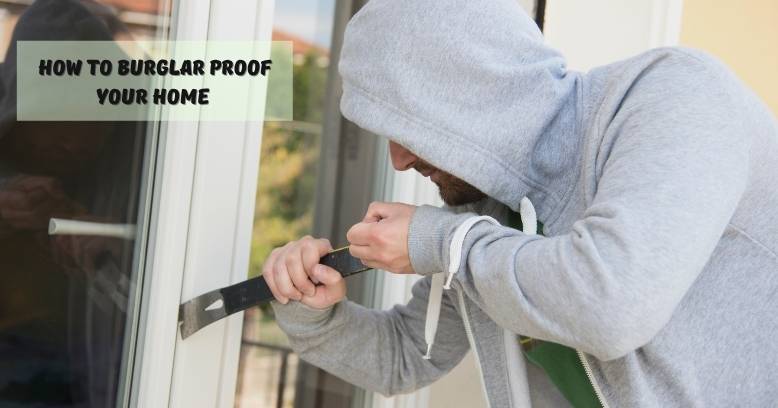
Burglars are opportunists, not professionals. They're not planning heists — they're scanning neighborhoods for the easiest door on the block. Even modest improvements dramatically cut your risk, because a burglar who sees reinforced doors, visible cameras, and bright exterior lights will almost always move on. You don't need to transform your home into a vault — you need to be a harder target than your neighbors. That shift in mindset makes every tip in this guide immediately actionable.
According to the FBI's Uniform Crime Reports, the vast majority of residential burglaries involve forced entry through doors and first-floor windows — in that order. That tells you exactly where to focus first. The sections below are organized by vulnerability, difficulty, and budget so you can build your defense layer by layer, starting this weekend if you want.
Contents
- Where Burglars Actually Target First
- Simple Fixes vs. Full Security Upgrades
- Essential Tools and Hardware You'll Need
- Security Solutions Compared at a Glance
- How to Burglar Proof Your Home With Daily Habits
- When Your Home Security Isn't Working
- DIY or Call a Pro — Knowing the Difference
- Security Mistakes That Invite Break-Ins
- Frequently Asked Questions
Where Burglars Actually Target First
The Most Vulnerable Entry Points
Before you spend a single dollar on security hardware, you need to understand where the real risks are. Most homeowners assume the front door is the primary target — it's on the list — but burglars are more strategic than that. They favor entries with low visibility, weak hardware, and fast access.
- Back door — Less visible from the street, often weaker frames, frequently left unlocked
- First-floor windows — Especially those hidden by shrubs, fences, or low-hanging tree branches
- Attached garage — Often connected directly to the home interior, with the interior door routinely left unlocked
- Sliding glass doors — Vulnerable to being lifted off worn tracks or forced with minimal tools
- Front door — High visibility keeps this lower on the list during daylight, but it's a primary nighttime target
Walk your property like a burglar would. Stand at the street and ask yourself: which door is least visible? Which window is hidden by landscaping? Which side of the house gets no foot traffic? Those are your highest-priority problem areas — address them first.
How Burglars Choose a Target
Research consistently shows that burglars look for easy access and low detection risk. They make fast decisions based on a handful of visible signals.
The signals that attract attention:
- No visible cameras or alarm system signage
- Overgrown landscaping that provides cover near entry points
- Accumulated mail, packages, or newspapers signaling an empty home
- Weak door frames or single-cylinder deadbolts — easy to kick in
- No exterior lighting along paths, entries, or the driveway
- Doors or windows left open or unlocked
Eliminating as many of these signals as possible is the foundation of how to burglar proof home security. You don't need to eliminate every single risk — you need to look like too much trouble compared to the next house.
Simple Fixes vs. Full Security Upgrades
Quick Wins for Any Homeowner
You don't need a monitoring contract or a full smart home hub to meaningfully improve your security. Some of the most effective measures cost under $30 and take under an hour to install.
- Upgrade your strike plate — Replace standard 3/4" screws with 3" screws in your door's strike plate. This single change makes kick-in attacks dramatically harder and costs almost nothing.
- Add a deadbolt — If your exterior doors only have a knob lock, that's a serious gap. Learn about the different types of deadbolts to choose the right security grade for each door.
- Pin your windows — Drill through the inner sash into the outer frame and drop in a steel pin. $5 per window, prevents both sliding and lifting.
- Security bar for sliding doors — A cut piece of closet dowel rod in the track costs nearly nothing and stops the door from sliding even if the lock is defeated.
- Motion-activated lights — Install them at every entry point. Basic models run $20–$40 each and are genuinely among the most effective deterrents available.
These fixes address the most common attack methods without any contractor help or significant investment. Do them first, before anything else.
Stepping Up to a Full Security System
Once the basics are locked in, layer in more sophisticated protection. These upgrades require more time or money but close vulnerabilities that basic hardware can't fully address.
- Smart locks — Keyless entry, remote access, tamper alerts, and activity logs. If you're weighing models, the August Smart Lock Pro vs Yale Assure comparison breaks down two of the most popular options side by side.
- Video doorbell — Lets you see, record, and speak to anyone at your front entry remotely. If you're starting from scratch, how to install a Ring Doorbell without an existing doorbell is a clear DIY walkthrough.
- Outdoor security cameras — Cover all entry points with wide-angle cameras that record on motion trigger. Position them at 7–9 feet high, angled 15–30 degrees downward for usable face and license plate footage.
- Monitored alarm system — Professional monitoring contacts emergency services automatically, even when you're unavailable or asleep.
- Smart garage controller — Lets you check and close your garage door remotely; an accidentally open garage is one of the most common and preventable vulnerabilities.
Pro insight: Visible deterrents — camera housings, alarm signage, motion lights — stop most break-in attempts before they start. You don't need everything to be working; you need everything to look like it's working.
Essential Tools and Hardware You'll Need
Door and Lock Hardware
Doors and their frames are the first investment priority. Here's the hardware that makes the biggest difference:
- ANSI Grade 1 deadbolt — The highest residential security rating. Choose double-cylinder if your door has glass panels near the lock.
- Heavy-duty strike plate — The standard factory strike plate is the weakest point on most door frames. Upgrade to a four-screw model with 3-inch screws that reach the door's structural framing.
- Door reinforcement kit — Steel channel that wraps around the door jamb and prevents frame splitting during kick-in attempts. A 30-minute installation.
- Door security bar — Braces from the floor to the door handle, preventing the door from opening inward even if the lock is bypassed.
- Window security film — Applied to the glass interior surface, it holds shards together on impact, dramatically slowing glass-break entry.
If your front door is hollow-core or has large decorative glass panels running top to bottom, those are structural problems that no lock can fully compensate for. The best front doors for security guide explains which materials and construction specs to prioritize when it's time to upgrade the door itself.
Camera and Doorbell Equipment
Cameras are among the strongest deterrents available. When you're selecting equipment, focus on these specs:
- Resolution — 1080p minimum; 2K or 4K if you need license plate or facial recognition capability
- Field of view — 130°+ for broad coverage; fisheye lenses for tight corners
- Night vision — Color night vision is significantly more useful than standard infrared black-and-white
- Storage — Cloud storage requires a subscription; local NVR or SD card storage does not. If cost is a concern, learn how to save Ring Doorbell video without a subscription as a starting point.
- Power source — Wired cameras are more reliable long-term; battery-powered are easier to install but require routine maintenance
Not sure whether a video doorbell or a dedicated outdoor security camera serves your front entry better? The video doorbell vs security camera breakdown gives a direct comparison of both options across key factors including coverage, cost, and installation complexity.
Security Solutions Compared at a Glance
Different methods protect against different attack vectors. Use this table to match your biggest vulnerability to the right solution, and to build an effective combination without overspending.
| Security Measure | Protects Against | Avg. Cost | DIY Friendly | Deterrence Level |
|---|---|---|---|---|
| Grade 1 Deadbolt | Lock picking, bump attacks, key duplication | $30–$80 | Yes | High |
| Reinforced Strike Plate | Kick-in forced entry | $10–$25 | Yes | High |
| Smart Lock | Unauthorized key copies, forgotten locks, access control | $120–$300 | Yes | High |
| Video Doorbell | Package theft, front-door surveillance, visitor logging | $100–$250 | Yes | Medium–High |
| Outdoor Security Camera | Perimeter monitoring, recording evidence, deterrence | $50–$200 each | Yes | High |
| Motion-Activated Lighting | Concealment during approach, dark perimeter | $20–$60 each | Yes | Medium–High |
| Window Security Film | Glass break entry | $30–$80 per window | Yes | Medium |
| Sliding Door Security Bar | Sliding door forced entry, track lifting | $5–$30 | Yes | Medium |
| Monitored Alarm System | Intrusion, fire, carbon monoxide, panic response | $20–$60/mo | Partial | Very High |
The most cost-effective starter combination for most homeowners: Grade 1 deadbolt + reinforced strike plate + outdoor camera + motion lighting. For under $200, you've addressed the four biggest attack vectors. Build from there once those are in place.
How to Burglar Proof Your Home With Daily Habits
Daily Security Routines That Matter
Hardware is only as effective as the habits that support it. A Grade 1 deadbolt means nothing if you're leaving it unlocked every morning. Build these into your standard routine — they cost nothing and compound over time.
- Lock every exterior door — including the interior garage door — every single time you leave, even for five minutes
- Set window pins every night before bed, especially on ground-floor rooms
- Verify your garage door is closed via your smart controller before leaving or sleeping
- Collect mail and packages daily — or use a locking mailbox to prevent package theft from the curb while you're away
- Never announce vacations, extended trips, or an empty house on social media
- Set smart plugs or timers on interior lights to simulate occupancy when traveling
- Rotate your alarm PIN and smart lock codes periodically, especially after sharing them with contractors or houseguests
Lighting and Visibility
Darkness is a burglar's best ally. Eliminating shadows and blind spots around your home is one of the cheapest and most effective deterrents you can implement. A well-lit property signals that someone is home, that cameras will capture clear footage, and that there's nowhere to linger unnoticed.
- Install motion-activated floodlights at every entry point — front, back, and both sides of the house
- Light the path from your driveway to your front door continuously after dusk
- Trim shrubs and hedges that obstruct sightlines to windows or doors from the street
- Use landscape lighting along fences and side pathways to eliminate dark approach corridors
- Position a bright security light near your garage that activates automatically after dark
- Consider solar-powered stake lights along your driveway perimeter — low cost, zero wiring
For detached structures, outbuildings, or rental properties where you need portable or standalone lighting solutions, understanding how to choose a torch light for security purposes helps you pick the right brightness and beam pattern for the coverage area.
When Your Home Security Isn't Working
Diagnosing Weak Points
You've installed the hardware, positioned the cameras, and upgraded the deadbolts — but something still feels like a gap. Here's how to audit your setup methodically rather than guessing.
- Walk the perimeter at night — Look for dark spots your lighting doesn't reach. Pay attention to the sides of the house and the area behind any fencing.
- Review camera recordings after a windy day — Motion-triggered footage will reveal exactly what angle each camera captures and where the blind spots are
- Test your deadbolts by leaning into the door — If the door flexes significantly, the frame is weak even if the lock is a Grade 1
- Test every window latch manually — Latches corrode and loosen over time; many no longer engage properly. Any that wiggle or don't catch firmly need replacement.
- Test the sliding door lift — Grip the door and lift upward while pushing outward. If it moves more than a quarter inch, the track rollers are worn and the door can be popped out of the frame
Fixing the Gaps
Once you've identified the problem areas, the fixes are almost always straightforward:
- Camera blind spots — Reposition the camera or add a second unit; wide-angle lens attachments can also extend an existing camera's field of view without a new installation
- Weak door frame — Install a door frame reinforcement kit; it's a 30-minute project with a drill and screwdriver. The process is similar in scope to other door hardware projects like installing a door closer.
- Failed window latches — Replace with keyed window locks; they run $10–$20 per window and are genuinely more secure than standard sash latches anyway
- Worn sliding door track — Replace the track rollers and add a secondary pin lock drilled through both panels at the top and bottom
- Dark perimeter zones — Reposition motion sensor heads or add a second fixture; most sensors have an adjustable detection arc and range
DIY or Call a Pro — Knowing the Difference
What You Can Handle Yourself
The great news is that the vast majority of meaningful home security improvements are genuine weekend DIY projects. You don't need professional installation for:
- Replacing or upgrading deadbolts and knob locks
- Upgrading strike plates with long screws
- Installing window pins, sash locks, or security film
- Mounting wireless or battery-powered outdoor cameras
- Setting up a video doorbell — even without existing doorbell wiring
- Installing motion-activated lights on standard outdoor junction boxes
- Adding a door reinforcement bar or sliding door security rod
If you want to handle your smart lock installation without a contractor, how to install a smart lock covers the full process — from removing the old hardware to pairing the new lock with your smartphone app. Most installs take 20–30 minutes with basic tools.
When Professional Installation Makes Sense
Some situations genuinely warrant a licensed installer or electrician. Bring in a pro when:
- You're installing hardwired cameras that require running low-voltage cable through walls or attic spaces
- You need a full alarm panel with professional central station monitoring and sensor integration across multiple zones
- Your door frames are damaged, warped, or structurally compromised and need carpentry repair before new hardware will seat correctly
- You're integrating your security system into a full smart home automation platform that requires professional commissioning
- You're replacing an exterior door entirely — improper installation leaves gaps and alignment issues that undermine any lock you put on it
The practical rule: if the project involves cutting into walls, running new electrical circuits, or structural changes to the home, get a licensed professional. Everything else is within reach for a confident DIYer with basic tools and an afternoon to spare.
Security Mistakes That Invite Break-Ins
Knowing how to burglar proof your home only protects you if you avoid the habits and oversights that undermine even solid hardware. These are the most common missteps — and the easiest to fix.
- Relying on a knob lock alone — A knob lock is a convenience mechanism, not a security device. It takes seconds to bypass. A deadbolt is non-negotiable on every exterior door.
- Hiding a spare key outside — Under the mat, in a fake rock, above the door frame — burglars know all of these. Use a proper key lockbox with a strong combination, or give a spare to a trusted neighbor instead.
- Pointing cameras too high — A camera mounted above 10 feet captures rooftops and sky, not faces or license plates. Mount at 7–9 feet, angled 15–30 degrees downward.
- Leaving the garage interior door unlocked — The door between your garage and your home is often hollow-core and unlocked. Treat it exactly like your front door: solid core, deadbolt, always locked.
- Letting landscaping overgrow entry areas — Tall hedges and dense shrubs provide cover for a burglar, not privacy for you. Keep plantings trimmed below windowsill height along all entry areas and pathways.
- Announcing travel on social media — Even "private" posts reach a wider audience than most people realize. Post trip photos after you're home, not while you're away.
- Ignoring second-floor windows — Porch roofs, large trees, ladders, and adjacent structures give access to upper floors. Pin those windows the same way you do ground-floor entries.
- Never rotating your access codes — Alarm PINs and smart lock codes that never change become institutional knowledge after enough time. Know how to change the code on an electronic door lock so you can rotate it quickly whenever someone who previously had access leaves the picture.
- Not testing your setup regularly — Motion lights with dead bulbs, cameras with full storage cards, and alarms with low batteries provide zero protection. Check every component monthly.
Frequently Asked Questions
What is the cheapest way to burglar proof your home?
The highest-impact, lowest-cost combination is a Grade 1 deadbolt, a reinforced strike plate with 3-inch screws, and one or two motion-activated lights at key entry points. Together these cost under $150 and directly address the most common forced-entry methods. Add window pins for another $20–$30 and you've secured your main vulnerabilities with no professional help required.
Do security cameras actually deter burglars?
Yes — law enforcement surveys and criminology research consistently confirm that visible cameras cause most opportunistic burglars to move on to a different target. Camera placement matters: mount at 7–9 feet with a downward angle, ensure adequate lighting for nighttime recording, and make sure cameras are clearly visible from the approach. A camera that can't be seen from the street provides evidence but not deterrence.
Is a smart lock safer than a traditional deadbolt?
A quality smart lock is at minimum as secure as a traditional deadbolt — and often more so, because it eliminates key duplication risks, provides activity logs, and lets you remotely verify the door is locked. The physical bolt grade matters most: look for ANSI Grade 1 regardless of whether the lock is smart or traditional. The most common vulnerability with smart locks is weak PINs, so never use a birthday, anniversary, or sequential number as your code.
How do I secure a sliding glass door against break-ins?
Use three layers simultaneously: a cut-to-length security bar or wooden dowel in the track prevents sliding; a pin lock drilled through both panels prevents the door from being lifted off the track; and a sliding door alarm alerts you immediately if the door moves. Apply security film to the glass surface to slow glass-break entry. If your track rollers are worn, replace them first — a door that doesn't fit snugly in its frame can be popped out even with a pin lock in place.
Should I use a professionally monitored alarm or self-monitor?
Both options work well — the choice depends on your lifestyle and budget. Professional monitoring contacts emergency services automatically even when you're unreachable, which is especially valuable if you travel frequently, work long hours, or have family members at home who may not respond well in an emergency. Self-monitoring via smartphone alerts works reliably if you're consistently reachable and want to avoid monthly fees. Many modern systems support both modes simultaneously, which gives you the flexibility to switch based on your schedule.
The most dangerous security plan is the one you keep meaning to start — pick one improvement today and the rest becomes much easier to build on.


About Vincent Foster
Greetings, This is Tom Vincent. I’m a home Security Expert and Web developer. I am a fan of technology, home security, entrepreneurship, and DIY. I’m also interested in web development and gardening. I always try to share my experience with my reader. Stay Connected and Keep Reading My Blog. Follow Me: Facebook, Twitter, Pinterest
Now you can get FREE Gifts. Or latest Free Security Cameras here.
Disable Ad block to reveal all the gifts. Once done, hit a button below