According to the FBI's Uniform Crime Reporting data, a burglary occurs in the United States roughly every 26 seconds — and yet millions of homeowners are still paying $10 to $30 a month just to access footage from their own cameras. In 2026, that model is obsolete. The best outdoor home security cameras without subscription give you 4K resolution, AI-powered detection, local or onboard storage, and full remote access without a single recurring charge. You buy the camera once and own your security outright.
The market has matured significantly. Whether you want a solar-powered unit that never needs charging, a plug-in wide-angle powerhouse, or a professional-grade PoE dome that handles vandalism and extreme weather, there is a subscription-free option built for your situation. You don't have to sacrifice features to escape the monthly fee trap. This guide covers seven of the strongest performers available right now, with a full breakdown of what each one does best and where it falls short. Before you buy, also check out our broader camera reviews section for deep dives across every category.
Choosing the wrong camera is an expensive mistake. Some models store footage locally on a microSD card with no cloud option. Others connect to an NVR or NAS for professional-grade archiving. A few rely entirely on onboard storage. Understanding the difference before you buy saves you from a frustrating return. Read on — the right camera for your home is in this list.
Contents
Standout Models in 2026
- #PreviewProductRating
- Bestseller No. 1
 Rating:

- Bestseller No. 2
 Rating:
 - Bestseller No. 3
 Rating:
 - Bestseller No. 4
 Rating:
 - Bestseller No. 5
 Rating:
 - Bestseller No. 6
 Rating:
 - Bestseller No. 7
 Rating:

Full Product Breakdowns
1. REOLINK Duo 2 WiFi — Best Wide-Angle Coverage
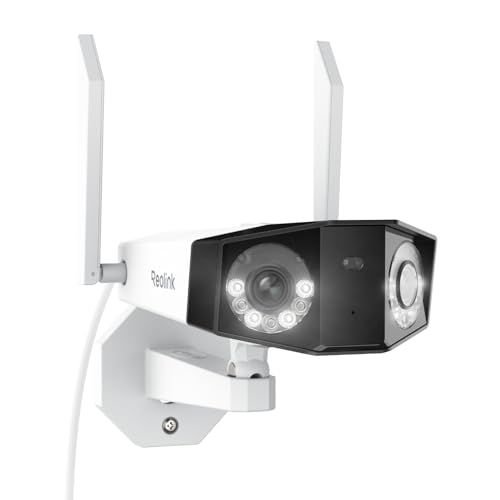
The REOLINK Duo 2 WiFi solves a problem that single-lens cameras never could: dead zones at the edges of your field of view. By fusing images from two lenses into one seamless 180° panoramic frame, this camera delivers 4K Ultra HD coverage that effectively replaces two separate units. You get one power cable, one app connection, and one mounting point — but the visibility of a two-camera setup. For driveways, wide backyards, or garage entrances where a standard 110° camera leaves gaps, this is the camera that fills them.
Night vision performance is a genuine standout. The integrated spotlights push out 100 feet of full-color illumination, meaning you see faces and license plates in color rather than grainy black-and-white infrared. You can dim or disable the spotlights manually if you prefer a more discreet setup, and the camera will still produce usable night footage using ambient light processing. The AI detection engine uses shape analysis to distinguish humans, vehicles, and animals, which dramatically reduces nuisance alerts from passing headlights or blowing foliage. Setup runs on both 2.4GHz and 5GHz WiFi bands, giving you flexibility depending on your router configuration and mounting distance. Storage is handled locally via microSD card — no subscription, no cloud required.
Build quality is solid for outdoor use, with an IP66-rated housing that handles rain, dust, and temperature swings without issue. The DC 12V/2A plug-in power requirement means you need an outlet nearby, which limits placement compared to battery or solar models. But if you have power access, you get continuous recording without any of the battery-life anxiety that plagues wireless alternatives.
Pros:
- 180° panoramic 4K view eliminates dead zones without a second camera
- Full-color 100ft night vision with adjustable spotlight brightness
- Accurate AI detection for humans, vehicles, and animals
- Dual-band 2.4/5GHz WiFi support for flexible placement
- Zero subscription required — local microSD storage
Cons:
- Requires a power outlet — not suitable for truly wireless installs
- Larger footprint than standard single-lens cameras

2. WYZE Cam v4 — Best Budget Pick
The WYZE Cam v4 proves that you don't need to spend a lot to get genuinely capable outdoor security in 2026. At its price point, nothing else comes close to its combination of 2.5K QHD resolution, IP65 weather resistance, and color night vision. The image quality jump from the v3 to v4 is noticeable — finer detail on faces, sharper license plate reads, and better low-light color reproduction. This is an indoor/outdoor camera built to handle real weather conditions while keeping your total cost as close to zero as possible on an ongoing basis.
For outdoor installation, you'll need the Wyze Outdoor Adapter (sold separately), which is an important detail to factor into your budget. The IP65 rating means it handles rain and humidity confidently, though it isn't submersion-proof. Color night vision performance is among the best at this price tier, pulling out useful color information in conditions that push cheaper cameras into pure infrared mode. Motion detection is AI-assisted and integrates with the Wyze app for push notifications. Local storage works via microSD card, and Wyze does offer optional cloud tiers — but you never need to pay for them to get full functionality from the camera.
If you're outfitting a rental property, a garage, or a secondary entrance where you want solid coverage without heavy investment, the v4 delivers. It's not the right call for your primary front entrance if you need 4K detail or wide-angle coverage, but for the price, it outperforms cameras that cost three times as much from brands that force you into cloud subscriptions.
Pros:
- Excellent 2.5K resolution for the price — noticeably sharper than 1080p
- IP65 weather resistance handles all standard outdoor conditions
- Vivid color night vision without requiring premium modes
- No mandatory subscription — full functionality out of the box
Cons:
- Outdoor Adapter required for exterior use (sold separately)
- 2.5K falls short of 4K if you need to zoom in on distant detail
3. eufy Security SoloCam S340 — Best Solar-Powered
If you want a camera that installs once and never demands your attention again, the eufy SoloCam S340 is the answer. The removable solar panel keeps it charged year-round under normal sun conditions, which means no battery swaps, no power cables, and no service interruptions. 360° Pan & Tilt surveillance via the dual-camera system eliminates blind spots entirely — the pan motor covers horizontal rotation while the fixed secondary lens picks up wide-angle context, giving you full yard coverage from a single mount point. The 3K resolution with 8× zoom lets you lock in on a specific area without losing detail.
eufy's local storage approach is a key advantage. The SoloCam S340 stores footage onboard — no monthly fee, no cloud required. If you want extended local storage and smart home integration, it's also compatible with the HomeBase S380 hub. The 2.4GHz WiFi connection is straightforward to set up through the eufy Security app. Pan and tilt controls give you the ability to sweep your entire property from your phone, which effectively turns this single camera into a coverage solution that would otherwise require three or four static units.
The solar-powered design does have one limitation: heavily shaded installation locations may not generate enough charge to sustain continuous operation, especially in winter months at northern latitudes. But for standard suburban homes with reasonable sun exposure, the SoloCam S340 runs indefinitely without any intervention. If you're looking at solar PTZ options, also compare the units in our top outdoor PTZ security cameras guide to see how the S340 stacks up against dedicated PTZ alternatives.
Pros:
- Solar-powered — truly install-and-forget with no recurring maintenance
- 360° Pan & Tilt eliminates every blind spot from a single mount
- 3K resolution with 8× zoom for detailed close-up identification
- No monthly fee — onboard local storage included
- HomeBase S380 compatible for expanded local storage
Cons:
- Solar charging performance drops in shaded or low-sunlight locations
- 2.4GHz only — no 5GHz band support
4. Blink Outdoor 4 — Best Long Battery Life
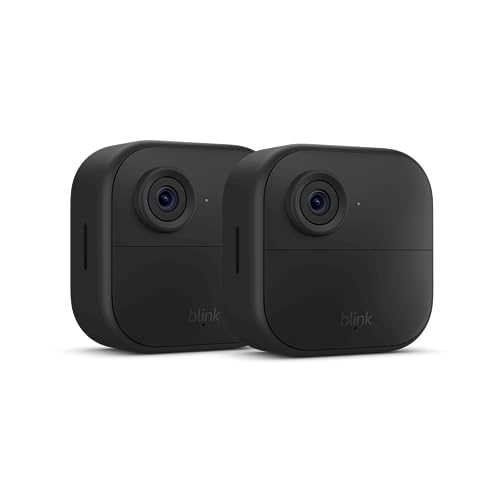
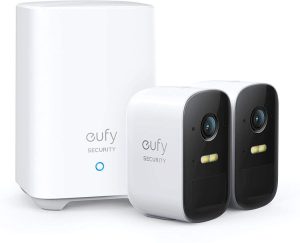
The Blink Outdoor 4 is the camera you choose when wire-free installation and hands-off operation are the top priorities. Two years of battery life from standard AA lithium batteries is a genuine differentiator — most competing wireless cameras demand a recharge or battery swap every three to six months. You mount it, configure it in the Blink app, and walk away for two years. This is the fourth-generation iteration of one of Amazon's most popular security cameras, and the refinements show in the app responsiveness and motion detection reliability.
Video quality tops out at 1080p HD with infrared night vision, and live view is available directly from your smartphone at any time. The two-way audio lets you communicate through the camera — useful for monitoring a front door or package delivery zone. Motion detection zones are configurable, and you can set activity zones to focus on specific areas while ignoring others like public sidewalks or tree branches at the frame edge. Storage works through the Blink Subscription Plan or locally via the Blink Sync Module 2 with a USB drive — the sync module is often bundled in multi-camera packs.
The trade-off here is resolution. At 1080p, you're working with less detail than the 4K and 2.5K cameras in this list. For identifying faces at a distance or reading license plates, that gap matters. But for monitoring entry points, back porches, or side yards where motion detection triggers are more important than forensic detail, the Blink Outdoor 4 delivers consistent, reliable performance with minimal maintenance overhead. If you're concerned about the vulnerability side of wireless cameras, our article on whether home security systems can be hacked covers what you need to know.
Pros:
- Two-year battery life — the longest of any camera in this roundup
- Completely wire-free installation in minutes
- Live view, two-way audio, and motion alerts via the Blink app
- Configurable motion zones to reduce false alerts
Cons:
- 1080p resolution — less detail than 4K and 2.5K competitors
- Local storage requires Sync Module 2 with USB drive (often sold separately)
- Infrared night vision only — no color night mode
5. eufy Security eufyCam S3 Pro 4-Cam Kit — Best Multi-Camera System
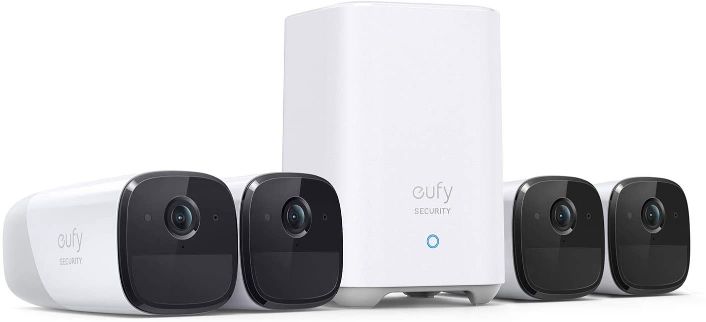
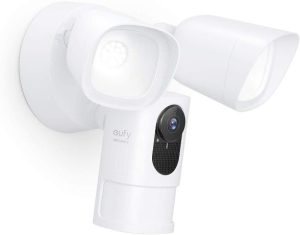
The eufyCam S3 Pro 4-Cam Kit is the most complete subscription-free outdoor security solution in this entire roundup. You get four cameras, solar power on each unit via the SolarPlus 2.0 system, 4K resolution, face recognition, and local storage expandable up to 16TB — all without a single monthly fee. The face recognition capability is a premium feature that most subscription cameras lock behind paid tiers. Here it comes standard, and it works well enough to distinguish between regular household members and strangers approaching your property. Radar + PIR dual motion detection reduces false alerts by 99% according to eufy's testing, and real-world experience backs that up — you get alerts that mean something, not a flood of notifications triggered by passing cars or tree movement.
MaxColor Vision technology handles low-light performance without requiring a spotlight to fire first. The 4K sensor captures day-like image clarity in ultra-low light conditions, giving you useful color footage at night that holds detail. The SolarPlus 2.0 system offers two configurations: a built-in panel for streamlined efficiency or an external add-on panel for higher energy coverage in locations with partial shade. The kit includes two backup solar panels as well, covering power edge cases that a single-panel setup might miss.
If you're protecting a larger property — a house with multiple entry points, a detached garage, a backyard with limited sightlines — this kit gives you professional-grade coverage at a one-time cost. The local storage capacity is genuinely impressive; up to 16TB means months of continuous footage without overwriting. This is the camera system that replaces what a monitored professional setup would cost you on a subscription basis, and it does it without any ongoing fees.
Pros:
- 4K resolution with MaxColor Vision for day-like night footage
- Face recognition included — no subscription required
- Solar-powered with SolarPlus 2.0 and dual backup panel option
- Local storage expandable up to 16TB — months of footage
- Dual radar + PIR detection eliminates 99% of false alerts
Cons:
- Higher upfront cost — but no recurring fees offset this over time
- Solar performance varies by installation angle and sun exposure
6. Amcrest UltraHD 4K PoE Dome Camera — Best Wired PoE Camera
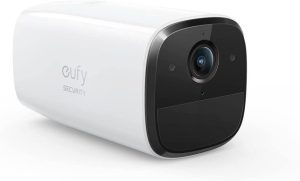
The Amcrest IP8M-2493EW-AI-V3 is the camera for installations where you want professional-grade reliability and you're not afraid to run cable. Power over Ethernet eliminates the need for a separate power outlet at the camera — a single Cat5e or Cat6 cable handles both data and power, keeping the installation clean and permanent. The Sony IMX274 Starvis image sensor combined with the Ambarella S3LM chipset produces 4K (8MP, 3840×2160) footage with exceptional low-light sensitivity. At night, 98 feet of IR night vision delivers usable surveillance footage in complete darkness, with detail quality that outperforms most consumer-grade cameras at similar ranges.
The IK10 Vandal Resistant Dome housing is a meaningful security feature in itself. IK10 is the highest impact protection rating available — the dome resists impacts that would crack or destroy standard plastic housings. Combined with IP67 weatherproofing, this camera is built to handle both the weather and direct tampering attempts. The 112° wide-angle lens covers significant area without distortion, and the dual H.265/H.264 compression support keeps storage requirements manageable across both modern and legacy NVR systems.
Footage can be recorded to a microSD card, an Amcrest NVR, Synology or QNAP NAS, FTP, or Amcrest Cloud — giving you complete flexibility in how you manage your archive. The Amcrest View app handles remote access and motion alerts. If you're building or expanding a wired NVR system and need a camera that delivers professional durability without professional pricing, the Amcrest 4K PoE dome is the strongest option at its price point. Note that a PoE injector or PoE switch is required — not included.
Pros:
- True 4K 8MP resolution with Sony Starvis low-light sensor
- IK10 vandal resistance — the highest impact protection rating available
- IP67 weatherproofing for all-condition outdoor deployment
- Flexible storage: microSD, NVR, NAS, FTP, or cloud
- PoE installation — single cable for power and data
Cons:
- Requires PoE switch or injector (sold separately)
- Cable runs required — not suitable for wireless installs
7. ANNKE C800 4K PoE Security Camera — Best Value PoE Camera
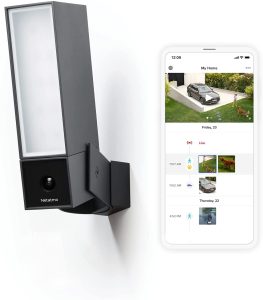
The ANNKE C800 brings 4K PoE performance to the most accessible price point in the wired camera segment. If you're expanding an existing ANNKE NVR system or building a new wired setup on a budget, this is your camera. The AI detection engine accurately identifies humans and vehicles while filtering out environmental triggers — blowing trees, falling leaves, passing rain — which reduces false alerts by up to 99% according to ANNKE's data. Push notifications deliver snapshots only when a human or vehicle is actually detected, meaning your alert stream stays useful rather than becoming background noise you start ignoring.
Image quality is 4K UHD with 120dB true WDR (Wide Dynamic Range), 3D DNR noise reduction, and BLC/HLC for handling scenes with both very bright and very dark areas simultaneously. EXIR 2.0 night vision with smart IR reaches 100 feet, adjusting IR intensity automatically to avoid overexposure when subjects move close to the camera. H.265+ compression reduces storage requirements by up to 75% compared to H.264, which makes a meaningful difference when you're running multiple cameras on a single NVR. The IP67 weatherproof housing handles rain, dust, and temperature extremes without issue.
Remote access runs through the free ANNKE software and smartphone app, with no recurring subscription charges. MicroSD recording supports cards up to 512GB for standalone operation without an NVR. The audio recording capability adds a useful layer — you capture conversations as well as video at monitored entry points. For users who want 4K PoE performance without the premium price of established brands, the ANNKE C800 delivers the core features that matter most. If you're curious about placement strategies to maximize camera effectiveness, check out our guide on how to hide a security camera in plain sight for positioning ideas that work across all camera types.
Pros:
- 4K UHD with 120dB WDR and EXIR 2.0 night vision to 100ft
- AI human/vehicle detection reduces false alerts by 99%
- H.265+ compression cuts storage usage by up to 75%
- MicroSD support up to 512GB for standalone operation
- Built-in audio recording — captures both video and sound
Cons:
- PoE switch or injector required — not included
- Best used within an ANNKE ecosystem for full feature integration
How to Pick the Best Outdoor Home Security Camera Without Subscription
Power Source: Wired, Battery, or Solar?
Your installation location determines which power option works. Plug-in wired cameras (REOLINK Duo 2, WYZE Cam v4) deliver continuous recording without any energy management concerns — the best choice when you have outlet access near the mounting point. PoE cameras (Amcrest, ANNKE) run a single network cable from a PoE switch to the camera location, which is cleaner than running two separate cables and works well for permanent installations on soffits and eaves. Battery cameras (Blink Outdoor 4) offer true wire-free installation at any location, but require periodic battery replacement or recharge. Solar cameras (eufy SoloCam S340, eufyCam S3 Pro) are the best long-term solution for locations with adequate sun exposure — install once, and the sun handles the rest. If your mounting location is heavily shaded, solar charging may not sustain continuous operation during winter months.
Resolution and Night Vision
In 2026, 1080p is the minimum you should accept for a primary security camera. It captures enough detail for general motion detection, but falls short when you need to identify faces or read license plates at moderate distances. 2.5K and 4K cameras provide the pixel density required for forensic-quality identification. At night, color night vision is a meaningful upgrade over standard infrared — color footage is dramatically easier to parse and act on than grayscale infrared images. Cameras like the REOLINK Duo 2 and WYZE Cam v4 deliver color night vision without requiring a premium tier. For PoE cameras, EXIR 2.0 technology (ANNKE C800) adjusts IR intensity dynamically to prevent overexposure, producing cleaner nighttime images at close range.
Local Storage vs. Cloud Storage
Every camera in this guide stores footage locally without a mandatory subscription. The specifics vary: some use microSD cards (WYZE Cam v4, Blink Outdoor 4 with Sync Module, ANNKE C800 up to 512GB), others use onboard storage (eufy SoloCam S340), and PoE cameras support NVR, NAS, and FTP in addition to microSD. Local storage gives you complete ownership of your footage — it's not accessible to third parties, it doesn't disappear if a cloud service changes its pricing, and it doesn't depend on your internet connection for playback. If you want optional cloud backup in addition to local storage, several cameras here offer it as an add-on without requiring it for core functionality.
AI Detection and False Alert Management
Motion detection without AI filtering produces an unusable number of alerts on most properties. Wind-blown trees, passing cars on public streets, and shifting shadows all trigger basic PIR sensors. AI-powered cameras — like the REOLINK Duo 2 (human/vehicle/animal), eufy eufyCam S3 Pro (radar + PIR dual detection), and ANNKE C800 (human/vehicle AI) — filter these triggers before the alert fires. The result is a notification stream where every alert represents something that actually warrants your attention. The eufy S3 Pro's dual-sensor approach (radar identifies movement direction and speed, PIR confirms human heat signature) is the most accurate implementation in this roundup, with a 99% false alert reduction rate backed by real-world testing.
Common Questions

Do subscription-free cameras record continuously or only when motion is detected?
It depends on the camera type and storage setup. Wired and PoE cameras connected to an NVR (like the Amcrest or ANNKE) support 24/7 continuous recording as long as there is sufficient storage capacity. Battery and solar cameras typically use motion-triggered recording to conserve battery life. Some plug-in cameras (like WYZE Cam v4) support continuous recording to a microSD card when plugged in and configured appropriately. Check the specific camera's settings before assuming one mode or the other.
How much local storage do I need for outdoor security footage?
For a single camera recording continuously at 4K, plan for roughly 50–100GB per day depending on compression settings. H.265+ cameras like the ANNKE C800 cut this significantly — often by 50–75% compared to H.264. A 512GB microSD card gives you approximately one week of continuous 4K footage with H.265+ compression. For multi-camera systems, an NVR with 2–8TB is a practical starting point. The eufy eufyCam S3 Pro supports up to 16TB locally, which covers months of footage from all four cameras.
Can I use these cameras without internet?
Local recording works without internet on all cameras in this guide — footage saves to the microSD card, NVR, or onboard storage regardless of internet connectivity. Remote access (viewing footage on your phone from outside your home network) requires an active internet connection. AI cloud processing features also require internet. If your primary concern is local recording during an outage, all seven cameras here continue to capture and store footage locally even when your internet goes down.
What is the difference between IP65, IP66, and IP67 weatherproofing?
The IP (Ingress Protection) rating system describes resistance to dust and water. The second digit is the water resistance level: IP65 handles water jets from any direction (adequate for rain and splashing), IP66 handles powerful water jets and heavy rain, and IP67 handles temporary immersion in water up to one meter for 30 minutes. For standard outdoor mounting under an overhang or on an exterior wall, IP65 is sufficient. For installations exposed to driving rain or direct downpours with no overhead protection, IP66 or IP67 is the safer choice. The Amcrest 4K PoE dome is rated IP67, while the WYZE Cam v4 carries IP65.
Is PoE better than WiFi for outdoor security cameras?
PoE (Power over Ethernet) delivers more consistent performance than WiFi for outdoor cameras. A physical Ethernet cable isn't subject to wireless interference, signal degradation through walls and building materials, or network congestion from competing devices. PoE cameras also eliminate battery management entirely. The trade-off is installation complexity — you need to run a cable from a PoE switch to each camera location. For permanent installations where you have access to run cable, PoE is the more reliable long-term choice. WiFi cameras are better suited to locations where cable routing is impractical or where you need flexibility to relocate the camera.
Are outdoor security cameras without subscriptions as good as monitored systems?
For video quality, AI detection accuracy, and local storage depth, the best subscription-free cameras in 2026 match or exceed what most monitored systems offered five years ago. The one thing a subscription-free camera cannot replicate is professional monitoring — a human (or automated service) watching your footage around the clock and dispatching emergency services if needed. If your goal is evidence capture, deterrence, and personal alerts, subscription-free cameras are fully capable. If you want guaranteed emergency dispatch when you're unavailable, a professionally monitored system adds that layer. Many homeowners combine both: subscription-free cameras for coverage, and a basic monitored alarm for emergency response. Also worth reading for context: our guide on how to burglar-proof your home covers the full picture of layered residential security.
Buy on Walmart
- REOLINK 4K WiFi Security Camera with 180° Ultra-Wide Angle, — Walmart Link
- WYZE Cam v4 (Latest Model), 2.5K AI Security Camera, Indoor/ — Walmart Link
- eufy Security SoloCam S340, Solar Security Cameras Wireless — Walmart Link
- Blink Outdoor 4 – Wireless smart security camera, two-year b — Walmart Link
- eufy Security eufyCam S3 Pro 4-Cam Kit, Solar Camera Outdoor — Walmart Link
- Amcrest UltraHD 4K (8MP) Outdoor Security PoE IP Camera, 384 — Walmart Link
- ANNKE C800 4K PoE Security Camera with AI Human/Vehicle Dete — Walmart Link
Buy on eBay
- REOLINK 4K WiFi Security Camera with 180° Ultra-Wide Angle, — eBay Link
- WYZE Cam v4 (Latest Model), 2.5K AI Security Camera, Indoor/ — eBay Link
- eufy Security SoloCam S340, Solar Security Cameras Wireless — eBay Link
- Blink Outdoor 4 – Wireless smart security camera, two-year b — eBay Link
- eufy Security eufyCam S3 Pro 4-Cam Kit, Solar Camera Outdoor — eBay Link
- Amcrest UltraHD 4K (8MP) Outdoor Security PoE IP Camera, 384 — eBay Link
- ANNKE C800 4K PoE Security Camera with AI Human/Vehicle Dete — eBay Link
Next Steps
- Identify your power situation first — walk the mounting locations you have in mind and confirm whether you have outlet access, the ability to run Ethernet cable, or need to rely on battery or solar power. This single decision narrows the field immediately.
- Check current prices on Amazon for the cameras that match your power and resolution requirements — prices shift frequently, and the spread between models changes the value calculation on any given day.
- Verify your WiFi signal strength at the mounting location before buying a wireless camera — use your phone to check signal at the exact spot where the camera would sit. A weak signal at the mount point means poor performance or frequent disconnects regardless of camera quality.
- Read the full specifications for your storage method — confirm microSD card class requirements, NVR compatibility, and whether the camera supports H.265+ compression if storage efficiency matters to your setup.
- Browse the full camera review library at our camera reviews section if none of the seven cameras here is an exact fit — there are dozens of additional options reviewed by category, use case, and price range.


About Vincent Foster
Greetings, This is Tom Vincent. I’m a home Security Expert and Web developer. I am a fan of technology, home security, entrepreneurship, and DIY. I’m also interested in web development and gardening. I always try to share my experience with my reader. Stay Connected and Keep Reading My Blog. Follow Me: Facebook, Twitter, Pinterest
Now you can get FREE Gifts. Or latest Free Security Cameras here.
Disable Ad block to reveal all the gifts. Once done, hit a button below