Have you ever turned a door knob and wondered what's actually happening inside? Understanding how door knobs work turns out to be more relevant to home security than most people realize — and the answer involves a surprisingly clever mechanical sequence. Whether you're upgrading hardware, troubleshooting a stiff latch, or just curious, this guide breaks it all down. For a full overview of hardware options, start with the door hardware category.
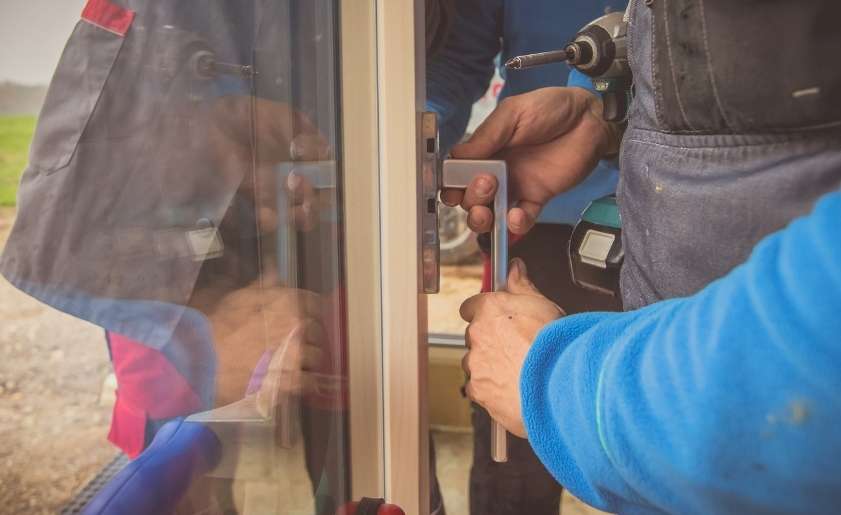
At its core, a door knob converts rotational motion into lateral motion. When you grip and turn the knob, that twist travels through a spindle to a latch mechanism, which retracts a spring-loaded bolt from the strike plate in the door frame. Release the knob and a spring pushes the bolt back out. That's the entire sequence — elegant, minimal, and almost unchanged for well over a century.
What does change between models is how much security sits on top of that basic motion. A passage knob has almost nothing extra. A keyed entry knob adds a pin tumbler cylinder. A smart lock replaces the cylinder with electronics. Once you understand the baseline mechanism, every variation makes immediate sense.
Contents
Simple vs. Complex: A Guide to Door Knob Types
Not every door knob is built for the same job. Before you can really understand how door knobs work across different applications, you need to know what separates one type from another. The differences go beyond looks — each type has a distinct internal configuration that determines what it can and can't do.
Passage Knobs
Passage knobs are the simplest type available. They turn freely from both sides and have no locking function at all. The internals are minimal: two knobs connected by a spindle, a basic latch unit, and a spring to return the latch after retraction. You'll find these on hallway doors, closets, and utility spaces where there's no need for privacy. If you want to understand the raw mechanics of how door knobs work with nothing else in the way, a passage knob is the clearest example.
Privacy Knobs
Privacy knobs add one layer of function — a push-button or thumb-turn on the interior side that locks the knob against rotation from outside. They're designed for bathrooms and bedrooms. The exterior always includes an emergency release, usually a small pinhole that accepts a narrow rod or coin to disengage the lock from outside. This makes them easy to open in an emergency, which also means they offer essentially no real security against deliberate entry.
Keyed Entry Knobs
Keyed entry knobs are the standard choice for exterior doors. The exterior knob houses a pin tumbler cylinder. Insert the correct key, and the cylinder rotates a cam that retracts the latch. Without the key, the cylinder won't rotate. These knobs are what most people picture when they think of a door lock — but they're best used alongside a deadbolt rather than as a standalone security measure.
Dummy Knobs
Dummy knobs don't turn at all. They're fixed permanently to the door surface and serve as a grip handle only — no spindle, no latch mechanism. You'll see them on the inactive panel of French doors or on decorative cabinet doors. There's nothing inside to understand mechanically, but knowing they exist saves you the confusion of trying to figure out why a knob won't turn.
| Type | Locks from Outside? | Locks from Inside? | Key Required? | Best Use |
|---|---|---|---|---|
| Passage | No | No | No | Hallways, closets |
| Privacy | No (emergency only) | Yes | No | Bathrooms, bedrooms |
| Keyed Entry | Yes | Yes (thumb-turn) | Yes (exterior) | Exterior doors |
| Dummy | No | No | No | French doors, decorative |
How Door Knobs Work in Different Settings
The same mechanical principle plays out differently depending on where the knob is installed. Context shapes how much the mechanism is relied on and what it's expected to resist.
Residential Use
In a home, door knobs handle an enormous range of tasks — from interior passage doors that see minimal stress to exterior entry points that need to resist weather, forced entry attempts, and daily wear. The spring latch is the workhorse of residential installations. Its angled face slides against the strike plate as the door swings closed, compresses briefly, then snaps back into the hole once it clears the plate. This automatic engagement is why residential doors latch without any deliberate turning motion.
For exterior doors, the knob latch works alongside a deadbolt to create a layered entry system. The knob holds the door in the frame under normal conditions. The deadbolt resists kick-in and forced-entry attempts. Neither works as well without the other.
Security tip: A keyed entry knob is not a substitute for a deadbolt — it's a complement to one. Always install both on any exterior door.
Commercial and Office Use
Commercial spaces frequently replace knobs with lever handles due to ADA accessibility requirements — turning a round knob requires a gripping and twisting motion that levers don't. However, older commercial buildings still use knob mechanisms, and the internal components are functionally identical to residential versions. The key differences are build quality and cycle rating. Commercial-grade hardware is tested to 250,000 or more operational cycles compared to roughly 50,000 for residential-grade products. The mechanism works the same way; it's just built to survive a much harder life.
Tools and Parts Inside a Door Knob Mechanism
If you've ever pulled a door knob apart — or watched someone do it — the interior looks deceptively simple. A handful of components, precisely coordinated. Here's what each one does and why it matters.
The Latch Assembly
The latch unit is the heart of how door knobs work. It mounts into the edge of the door and contains the bolt that extends into the strike plate. Two main variants exist:
- Spring latch: The standard beveled tongue found in most residential knobs. It retracts when the knob is turned or when the angled face presses against the strike plate during closing. A spring pushes it back out when released.
- Deadlatch: Adds a secondary plunger (called a deadlocking plunger) positioned just beside the main bolt. When the door closes fully, this plunger is depressed by the strike plate, which mechanically locks the main bolt against retraction by a credit card, thin shim, or similar tool.
The deadlatch plunger is a critical security feature that many people overlook entirely. If your exterior door's latch doesn't have one, or if the strike plate isn't aligned to depress it properly, the latch can potentially be shimmed open without any key or picking tool.
The Spindle and Rose Plate
The spindle is the connecting rod that runs through the door between the two knobs. It's typically square or round in cross-section. When you rotate the knob, the spindle transmits that rotation to the cam inside the latch housing, which pushes a follower that retracts the bolt.
The rose plate is the circular backplate that sits flush against the door face behind each knob. On inexpensive knobs, the rose plate is a thin stamped disc. On quality hardware, it's a solid casting that adds structural rigidity to the whole assembly. It also conceals the mounting screws, which is why you often need to remove the rose plate to access them during installation or removal.
Pro insight: When a door knob feels wobbly, the rose plate mounting screws are usually the first place to check — seasonal wood movement loosens them over time.
The Lock Cylinder
In keyed entry knobs, the lock cylinder is housed inside the exterior knob body. It operates on the pin tumbler principle — a series of spring-loaded pin stacks, each made of a key pin and a driver pin. Without a key, the driver pins cross the shear line and block the cylinder from rotating. Insert the correct key, and each pin stack is lifted to exactly the right height, aligning all the cuts at the shear line simultaneously. At that moment, the inner cylinder is free to rotate, turning the cam, which retracts the latch.
For a deeper technical breakdown of pin tumbler mechanics, the Wikipedia article on pin tumbler locks covers the engineering in detail.
Installation and Maintenance Mistakes to Avoid
A quality door knob can still fail you if it's installed carelessly or neglected once it's in place. These are the errors that show up most often — and most of them are easy to avoid once you know to look for them.
Improper Backset Measurement
The backset is the distance from the edge of the door to the center of the bore hole. Residential doors typically use either a 2-3/8 inch or a 2-3/4 inch backset. Getting this wrong during purchase means the latch won't align with the strike plate — resulting in either a door that won't catch properly or binding pressure that accelerates wear on the mechanism. Always measure before buying a replacement knob. If you're doing a full installation from scratch, a detailed walkthrough of this process is covered in the guide on how to install a door handle set.
Other installation errors to watch for:
- Not checking door alignment before installation — a warped or misaligned door will create latch binding even with perfect hardware
- Over-tightening the mounting screws, which strips the threads and eventually causes the knob to wobble
- Installing the latch with the bevel facing the wrong direction — it should always face the direction the door closes toward
Skipping Lubrication
Door knob internals are metal moving against metal. Friction degrades springs and wears contact surfaces over time. A properly lubricated mechanism feels smooth and consistent; a dry one starts to feel stiff, sticky, or sluggish — and eventually the spring latch begins to lag.
Use a dry lubricant: graphite powder or a PTFE-based spray work well. Avoid WD-40 for this job. It's a solvent and water displacer, not a long-term lubricant. It can actually attract dust and gum up fine tolerances inside the latch housing over repeated applications.
Common maintenance mistakes at a glance:
- Using WD-40 as a permanent lubricant
- Ignoring a stiff latch — usually the first sign of spring fatigue
- Not re-tightening mounting screws annually after seasonal wood movement
- Forcing a stuck knob rather than diagnosing the cause
If your knob has already started feeling loose or the latch doesn't retract cleanly, the guide on how to fix a door knob yourself covers the most common failure points and how to address them before replacing the whole unit.
Clearing Up Misconceptions About Door Knobs
A few widely repeated ideas about door knobs turn out to be either overstated or simply wrong. It's worth separating fact from assumption, especially if you're making security decisions based on what you've heard.
Are Door Knobs Really a Security Risk?
You've probably heard that door knobs are inherently insecure. There's partial truth there, but the framing is usually misleading. The knob mechanism itself rarely fails first. What fails is the door frame and strike plate. A standard strike plate held in place by short 3/4-inch screws into the door casing — not the stud — can be kicked in with a single moderate impact. Replace that plate with a reinforced strike plate using 3-inch screws driven into the stud, and the frame becomes far more resistant than the knob will ever be the weak point.
That said, keyed entry knobs alone are not sufficient for exterior entry doors. They provide latch-based holding force. A deadbolt provides bolt-based resistance to kick-in and forced entry. These are complementary layers — not interchangeable alternatives.
Do Expensive Knobs Last Longer?
Price correlates with durability, but not in the way most people assume. The gap between a $15 builder-grade knob and an $80 solid-brass unit isn't just about finish — it's material thickness, spring quality, and cycle testing. Inexpensive knobs use thin stamped metal internals and lightweight springs that fatigue quickly under regular use.
However, a high price tag doesn't always mean better security. Many premium decorative knobs prioritize visual finish over mechanism quality. The more reliable benchmark is the ANSI/BHMA grade rating:
- Grade 1: Heavy-duty commercial, highest cycle and force ratings
- Grade 2: Light commercial / heavy residential — a solid choice for exterior doors
- Grade 3: Standard residential — acceptable for interior use, minimal for exterior
Other myths worth dismissing quickly:
- "All door knobs are equally secure" — False. Deadlatch presence, ANSI grade, and cylinder quality all differ significantly.
- "Any door knob can be picked open easily" — Overstated. Basic knobs have vulnerabilities, but security pins and anti-pick cylinders raise the bar considerably.
- "Lubricating too often damages the mechanism" — False. Regular dry lubrication extends service life.
- "Dummy knobs are defective" — They're intentionally non-functional. That's by design.
Frequently Asked Questions
How do door knobs work at a basic level?
When you turn a door knob, the rotation transfers through a spindle to a cam inside the latch housing. The cam pushes a follower that pulls the spring latch back into the door edge. Once the latch clears the strike plate, the door opens. Release the knob and a return spring pushes the latch back out into the extended position.
What is the difference between a spring latch and a deadlatch?
A spring latch uses a beveled tongue that retracts automatically on contact with the strike plate when a door closes. A deadlatch adds a secondary plunger next to the main bolt that, when fully depressed by the strike plate, prevents the latch from being retracted by shimming or credit card attacks. Deadlatches are an important security feature on exterior doors.
Can I replace a door knob without professional help?
Yes, in most cases. Standard residential door knobs use a straightforward two-piece assembly held by two mounting screws. The main variables are measuring the correct backset (2-3/8 inch or 2-3/4 inch) and matching the bore hole diameter (typically 2-1/8 inch). With basic tools and careful measurement, most homeowners can complete a replacement in under 30 minutes.
What ANSI grade should I look for in a door knob?
For exterior doors, look for ANSI/BHMA Grade 1 or Grade 2. Grade 1 is heavy-duty commercial, tested to the highest force and cycle standards. Grade 2 is appropriate for residential exterior use. Grade 3 is fine for interior passage doors but is not recommended for exterior applications where security matters.
Why does my door knob feel stiff or sticky?
Stiffness usually comes from one of three causes: dry internals that need lubrication, a worn or fatigued return spring inside the latch assembly, or door alignment issues causing the latch to bind against the strike plate. Start with lubrication using graphite powder or a PTFE spray. If that doesn't resolve it, check the door alignment before assuming the knob needs replacement.
How long should a door knob last?
A Grade 3 residential knob is typically rated for around 50,000 cycles, while Grade 1 commercial hardware reaches 250,000 or more. In practical terms, a quality exterior knob used daily should last 10 to 20 years with basic maintenance. Cheap builder-grade knobs on high-traffic doors may show wear within 3 to 5 years.
The most important thing a door knob teaches you is that security isn't in any single component — it's in understanding how every part works together and making sure none of them are ignored.


About Vincent Foster
Greetings, This is Tom Vincent. I’m a home Security Expert and Web developer. I am a fan of technology, home security, entrepreneurship, and DIY. I’m also interested in web development and gardening. I always try to share my experience with my reader. Stay Connected and Keep Reading My Blog. Follow Me: Facebook, Twitter, Pinterest
Now you can get FREE Gifts. Or latest Free Security Cameras here.
Disable Ad block to reveal all the gifts. Once done, hit a button below