How to Choose the Right Door Knob Lock for Your Home (2026 Guide)
by Vincent Foster
Are you staring at a wall of door hardware wondering which lock will actually keep your home safe — or just look the part? That's a question worth taking seriously. The best door knob locks for home use aren't always the most expensive ones, and they're rarely the cheapest either. The right choice depends on the door's location, the level of security you need, and how you want to manage access day to day. This guide answers all of that, step by step. For a broader look at layering your defenses, start with our home security overview — then come back here to zero in on the right door hardware for every room.
Door knob locks are everywhere — bedrooms, bathrooms, back doors, garage entries. But their role in your overall security setup depends entirely on where you install them and which grade you choose. Used correctly, they're a solid layer in a well-planned home security strategy. Used carelessly, they can leave you with a false sense of protection.
This guide covers the full picture: what these locks actually do, where they fall short, how to pick the right one for each door, how to troubleshoot when something goes wrong, and which options are worth considering at different price points. Let's get into it.
Contents
- What Door Knob Locks Actually Do (And What They Don't)
- Types of Door Knob Locks: From Basic to Smart
- How to Choose the Best Door Knob Lock for Your Home
- Simple Upgrades That Strengthen Any Door Knob Lock
- Door Knob Lock Mistakes Most Homeowners Make
- Popular Door Knob Locks Worth a Closer Look
- When Your Door Knob Lock Stops Working Right
- Frequently Asked Questions
- Next Steps
What Door Knob Locks Actually Do (And What They Don't)
A door knob lock combines a spring-loaded latch bolt with a locking cylinder — all inside a single piece of hardware. That makes them easy to install, affordable, and widely compatible with standard door prep. But the design has real limitations you should understand before buying.
Understanding how a front door lock keeps your home secure helps you see why different lock types serve different roles. A door knob handles everyday convenience; a deadbolt handles resistance to forced entry.
Where They Work Best
- Interior doors: Bedrooms, bathrooms, home offices — this is the ideal use case for most knob locks.
- Secondary exterior doors: Back doors, side entries, and garage entry doors when paired with a deadbolt above.
- Rental properties: Budget-friendly, widely available, and easy to rekey between tenants.
- Matching hardware sets: Many homeowners use keyed-alike knob + deadbolt combos so one key works every door.
Where They Fall Short
- The latch bolt — that spring-loaded triangle — can be shimmed back with a credit card or similar tool in seconds.
- Lateral force on the knob itself can defeat the lock mechanism without picking it at all.
- On an exterior door, a knob lock alone is not a security solution. It should always be paired with a Grade 1 or Grade 2 deadbolt.
Pro tip: Never rely on a door knob lock as your sole exterior security. Think of it as a convenience latch — the deadbolt above it is doing the real security work.
Types of Door Knob Locks: From Basic to Smart
Not all door knob locks are designed for the same job. Before you shop, it helps to know which category fits your needs. For a broader overview of your options, check out this guide to 10 different types of door locks and how they work.
Keyed Entry Knobs
These are the most common type for semi-secure doors. They require a key to unlock from the outside and have a push-button or turn-button on the inside knob.
- Best for: back doors, garage entry doors, basement entries
- Look for Grade 2 minimum for any exterior application
- Brands: Schlage, Kwikset, Defiant, Brinks
- Price range: $20–$80 depending on grade and finish
Privacy and Passage Knobs
Privacy knobs lock from the inside with a push button or thumb turn — no key needed. Passage knobs don't lock at all; they just latch shut.
- Privacy knobs: Bedrooms and bathrooms — any room requiring inside-only privacy
- Passage knobs: Hallways, closets, pantries — anywhere you only need the door to stay latched
- Neither type belongs on an exterior door
Electronic and Smart Knobs
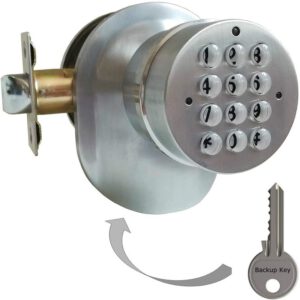
Electronic door knobs replace the key cylinder with a keypad, RFID reader, or Bluetooth module. They offer more access control flexibility — and in some cases, better security than a traditional key.
- Set multiple PIN codes for family members, housekeepers, or guests
- Some models log access history so you can see who entered and when
- Battery-powered with key backup options on most models
- Best used on interior doors or as a secondary lock on exterior doors
Before committing to a keypad or app-connected lock, read through whether smart locks are actually safe — there are real trade-offs around batteries, connectivity, and hacking risk worth understanding first.
How to Choose the Best Door Knob Lock for Your Home
Choosing the right lock doesn't have to be complicated. Work through these three factors in order and you'll narrow your options quickly — without overspending or under-protecting.
Step 1: Consider the Door's Location
Location determines the function you need. Ask yourself:
- Is this an interior door or an exterior entry point?
- Does it face weather, direct sunlight, or high humidity?
- How often is it used each day — once or dozens of times?
- Does it need to be part of a keyed-alike set with other locks?
Exterior-facing doors in exposed positions need weather-resistant finishes — satin nickel, oil-rubbed bronze, or stainless — and Grade 1 or Grade 2 hardware. Interior bedroom doors can use Grade 3 hardware without sacrificing anything meaningful.
Step 2: Understand ANSI Lock Grades
The ANSI/BHMA grading system rates residential and commercial locks on durability, security performance, and cycle life. Here's what each grade means in practical terms:
| Grade | Typical Use Case | Cycle Rating | Security Level | Typical Price |
|---|---|---|---|---|
| Grade 1 | Commercial or high-security residential | 250,000 cycles | Highest | $50–$120+ |
| Grade 2 | Residential exterior doors | 150,000 cycles | Medium-high | $30–$80 |
| Grade 3 | Interior and low-traffic doors | 100,000 cycles | Basic | $15–$40 |
Never install a Grade 3 lock on an exterior door. For most residential entry points, Grade 2 is the minimum — Grade 1 if you want commercial-level durability or live in a high-crime area.
Step 3: Match Material and Finish to Your Home
The material affects durability, weight, and long-term performance. Your main options:
- Solid brass: Corrosion-resistant, heavy, premium feel — excellent for exterior exposure
- Zinc alloy (zamak): Budget-friendly, lighter — acceptable for interior use only
- Stainless steel: Tough, weather-resistant, and works well in modern or coastal homes
For finish, choose something that matches your existing hardware — hinges, door handles, light fixtures. Common options are polished brass, satin nickel, matte black, and antique bronze. Consistency throughout your home looks more intentional and adds perceived value.
Simple Upgrades That Strengthen Any Door Knob Lock
You don't always need to replace a lock to improve your security posture. Sometimes targeted additions deliver more protection per dollar than a full swap.
- Add a deadbolt above the knob: The single most effective upgrade for exterior doors. A Grade 2 deadbolt resists kick-in and shimming attacks that knob locks simply can't handle on their own.
- Upgrade your strike plate: The factory strike plate uses short screws that pull free easily. Replace them with 3-inch screws anchored into the wall stud. This takes 10 minutes and stops most kick-in attempts cold.
- Add a door reinforcement kit: These wrap around the door edge and reinforce the area around the latch — the most common point of failure in a forced entry.
- Install a door bar or chain lock on the interior: Adds a secondary barrier when you're home, especially useful at night or for ground-floor entries.
- Rekey instead of replacing: If you moved in or lost a key, rekeying costs $15–$25 at a hardware store versus $40–$80 for a full replacement — and it's just as effective at voiding old key copies.
Quick win: Swapping your strike plate's standard 1-inch screws for 3-inch screws costs under $5 and dramatically improves your door's resistance to forced entry — without touching the lock itself.
When a full lock replacement is necessary, our guide on how to replace a front door lock with a keyed deadbolt walks you through the entire process step by step.
Door Knob Lock Mistakes Most Homeowners Make
Even experienced homeowners get this wrong. These are the most common errors — and how you can avoid them.
Mistake 1: Using a Knob Lock as the Only Exterior Lock
A door knob lock on an exterior door without a deadbolt is one of the most common residential security gaps. The latch bolt can be shimmed back or the knob forced with a few seconds of effort. Every exterior door should have both a knob lock and a separate deadbolt.
Mistake 2: Buying on Price Alone
Budget knob locks use thin die-cast metal and weak cylinders that bend, crack, or pick easily. A $10 knob on your back door isn't protecting much. Match your spending to the risk level of the door — spend more where it counts most.
Mistake 3: Ignoring the Door and Frame
A Grade 1 lock installed in a hollow-core door or a rotted, poorly anchored frame provides almost no protection. The hardware is only as strong as what it's mounted to. Check your door thickness, core type, and frame condition before buying any lock.
Mistake 4: Not Rekeying After Moving In
The previous owners — plus their contractors, house cleaners, neighbors, and real estate agents — may still have copies of your keys. Rekey every exterior lock as one of your first moves when you take possession of any home.
Mistake 5: Overlooking Interior Lock Quality
Interior locks matter more than people think. A solid privacy lock on a bedroom door can slow an intruder who has already breached your entry point. Don't default to the cheapest hardware just because it's an interior door.
Popular Door Knob Locks Worth a Closer Look
These aren't definitive rankings — they're practical examples of what's available across different categories and price points. Each one represents a different approach to the knob lock problem.
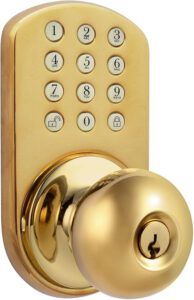
MiLocks TKK-02P Digital Knob — A keypad-entry knob designed for interior doors. Supports multiple PIN codes — useful for home offices, storage rooms, or any interior space where you want access control without physical keys. Battery-powered, easy to install, includes a mechanical key backup. A solid choice if you want keyless access on an interior door without the cost of a full smart lock.
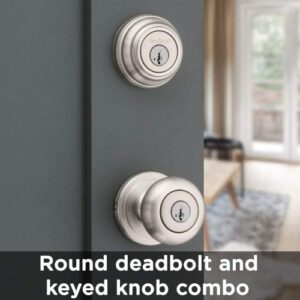
Kwikset SmartKey Combo Pack — Bundles a keyed entry knob with a single-cylinder deadbolt, both using Kwikset's SmartKey technology. You can rekey either lock yourself in about 15 seconds using the included tool — no locksmith needed. Both locks share the same key. A practical, cost-effective upgrade for any exterior door, and one of the more popular options among homeowners who move frequently or manage rentals.
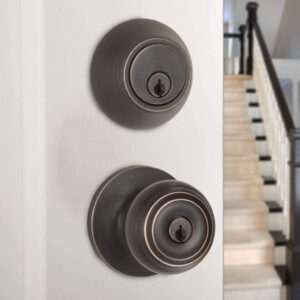
AmazonBasics Exterior Knob + Deadbolt — A budget-friendly combo for secondary exterior doors where matching aesthetics matter more than maximum security. Grade 3 hardware — not suitable as your primary entry lock, but fine for a back door or garage entry where you already have other security measures in place. Both come keyed alike out of the box.
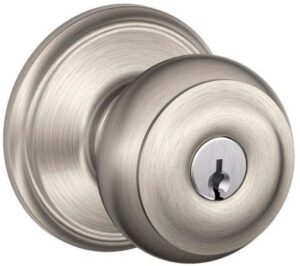
Schlage F51A Georgian — Schlage's F-series is widely respected in the residential security space. The F51A is a Grade 2 keyed entry knob with a pick-resistant cylinder and a solid brass construction. The Georgian style fits most traditional and transitional home aesthetics. Pair it with a Schlage B-series deadbolt and you can have both locks operate on the same key — a clean, reliable setup for most homes.
When Your Door Knob Lock Stops Working Right
Even quality locks develop problems over years of daily use. Most issues are fixable yourself without calling a locksmith — you just need to know where to look. For a more detailed repair walkthrough, our guide on how to fix a door knob yourself covers the most common problems with step-by-step solutions.
Stiff or Hard-to-Turn Knob
- Most likely cause: Dry internal mechanism, worn spring, or door and frame misalignment
- Fix: Apply a dry PTFE-based lubricant into the keyway and latch mechanism — avoid WD-40, which attracts dust. Work the knob back and forth to distribute it. If the door has swollen or shifted, the strike plate may need adjustment.
Loose or Wobbly Knob
- Most likely cause: Loose set screw or worn mounting rose plate
- Fix: Remove the decorative cover to expose the set screw — usually requires a small hex key or flathead. Tighten firmly. If the rose plate is cracked or the spindle is worn, replacement parts are inexpensive and widely available at hardware stores.
Key Won't Turn in the Cylinder
- Most likely cause: Worn key, debris inside the cylinder, or damaged pin tumblers
- Fix steps:
- Try a duplicate key — worn originals sometimes fail before the lock itself does
- Use compressed air to clear any debris from the keyway
- Apply a graphite lubricant (not oil) inside the cylinder and try again
- If none of these work, the cylinder needs rekeying or full replacement
- Important: If you're troubleshooting this after a suspected break-in attempt, replace the entire lock assembly rather than trying to repair the existing one.
Frequently Asked Questions
Are door knob locks enough for exterior doors?
No — door knob locks should never be used as the only lock on an exterior door. Their latch bolts are vulnerable to shimming and the knob mechanism can be defeated with lateral force. Always pair a knob lock with a Grade 1 or Grade 2 deadbolt on any exterior entry point.
What's the difference between ANSI Grade 1, 2, and 3 door knob locks?
Grade 1 is the strongest — built to commercial standards, rated for 250,000 cycles, and most resistant to picking and forced entry. Grade 2 is solid for residential exterior doors. Grade 3 is fine for interior and low-traffic doors only. Never use Grade 3 on an exterior door.
Can I install a door knob lock myself?
Yes, in most cases. Standard door knob locks are designed for DIY installation and require only basic tools — a screwdriver and sometimes a drill. If you're replacing an existing knob that matches the bore size, it typically takes under 30 minutes. New installations in an unprepped door take longer and require a hole saw.
How do I know if my door knob lock needs replacing versus rekeying?
Rekey when you move in, lose a key, or change tenants — the mechanism is still good, you just want new key combinations. Replace the lock when it's physically damaged, stiff even after lubrication, or has visibly worn internal parts. If the cylinder has been compromised in a break-in attempt, always replace it.
What's the best door knob lock for a rental property?
Look for a Grade 2 keyed entry knob with self-rekey technology — like Kwikset SmartKey or Schlage SecureKey. These let you change the key combination between tenants in under a minute with no locksmith required. Over multiple turnovers, the savings add up significantly compared to traditional rekeying or full replacement.
Next Steps
- Walk every exterior door in your home today and check whether each one has both a knob lock and a deadbolt. Any door with only a knob lock is a priority upgrade.
- Check the ANSI grade stamped on your current exterior knob locks. If they're Grade 3, plan to replace them with Grade 2 hardware.
- Replace your main entry door's strike plate screws with 3-inch screws anchored into the wall stud — this takes 10 minutes and costs under $5.
- If you recently moved in or lost a key, rekey all exterior locks before anything else. You can do it yourself with SmartKey tools or pay a locksmith $15–$25 per lock.
- For any interior door where you want keyless access — home office, storage room, workshop — look at electronic knob options and compare them to the best door knob locks for home security at your price point before buying.


About Vincent Foster
Greetings, This is Tom Vincent. I’m a home Security Expert and Web developer. I am a fan of technology, home security, entrepreneurship, and DIY. I’m also interested in web development and gardening. I always try to share my experience with my reader. Stay Connected and Keep Reading My Blog. Follow Me: Facebook, Twitter, Pinterest
Now you can get FREE Gifts. Or latest Free Security Cameras here.
Disable Ad block to reveal all the gifts. Once done, hit a button below