Americans pay more than $4 billion in locksmith fees every year — and a significant portion of those calls are for padlocks with missing or broken keys. If you need to know how to open padlock without key, you've got options. Four proven methods cover almost every padlock you'll encounter, from a thin-shackle shed lock to a heavy storage unit hasp. You don't always need a professional. This guide walks you through each approach step by step, so you can handle the situation yourself. For more hands-on security tips, browse our security guides.
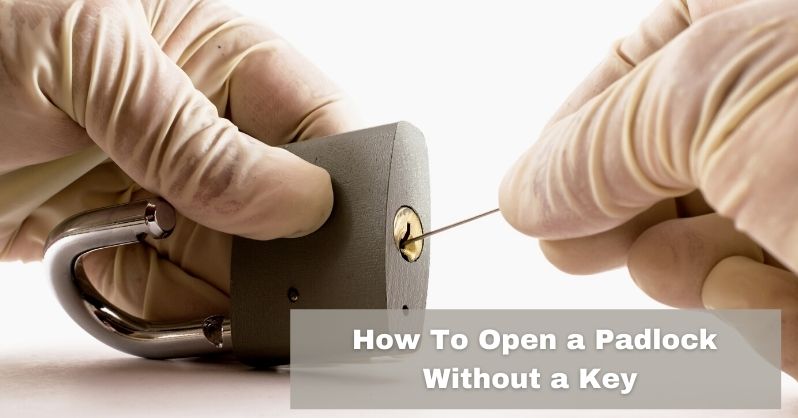
Before you do anything else, a quick note: every method in this guide is for padlocks you own or have legal permission to open. Using these techniques on someone else's property is a criminal offense. That said, getting locked out of your own storage, shed, or gym locker is a real headache — and knowing your options puts you back in control fast.
Here's the short version of how padlocks work. Inside the lock body is a row of spring-loaded pins — tiny metal cylinders stacked in pairs. The correct key raises each pin to a precise height, aligning all the gaps at what's called the shear line. Once aligned, the cylinder rotates and releases the shackle (the U-shaped metal bar you pull open). Every method in this guide either manipulates those pins or physically overpowers the lock's structure entirely.
Contents
4 Proven Methods to Open a Padlock Without a Key
These methods are ranked from least to most destructive. Try the non-destructive ones first — you might save the lock and avoid replacement costs. If the lock is cheap and past its prime, feel free to skip straight to bolt cutters and save yourself the trouble.
Method 1: The Shim Technique
The shim method is your first call for any spring-loaded padlock. It's quiet, fast, and leaves the lock intact. A shim is a thin strip of aluminum — cut from a soda can — that slides into the gap between the shackle and the lock body. It presses down on the locking pawl (the small internal catch that grips the shackle), freeing it.
Here's what to do:
- Cut two small M-shaped shims from an aluminum can using scissors
- Slide one shim down each side of the shackle gap simultaneously
- Press both shims down firmly while pulling upward on the shackle
- The lock pops open — usually within 30 seconds
This works best on single-locking padlocks, where only one side of the shackle is caught by the pawl. Double-locking padlocks engage catches on both sides and block shims entirely. If you've tried twice and nothing moves, move on.
If shimming fails, try lock picking with a bobby pin. Insert a bent bobby pin into the bottom of the keyhole as a tension wrench, applying light rotational pressure. Use a second pin with a small hook to push each internal pin upward until you feel a faint click — that's a pin setting. Work through all pins and the cylinder turns. It takes patience on a first attempt, but it works reliably on basic pin tumbler locks. For a solid overview of the underlying mechanics, Wikipedia's article on lock picking is a good starting point.
Method 2: The Hammer Technique

When shimming doesn't cut it, the hammer method is your next move. It works by sending a shock through the lock body that momentarily displaces the internal pins, giving you a brief window to pull the shackle open. This is most effective on low- to mid-quality padlocks.
- Hold the padlock with the shackle pointing downward
- Strike the side of the lock body firmly with a hammer — not the shackle itself
- Apply upward pressure on the shackle with your other hand simultaneously
- Two to four solid strikes usually do it
If six or seven hard strikes produce nothing, this lock has hardened internals or security pins and won't respond to impact alone. Time to escalate to a more aggressive approach.
Method 3: Wrench and Bolt Cutter
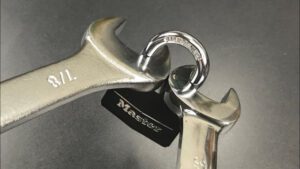
These are your power tools — reliable, fast, and definitive. Both destroy the lock, but they guarantee results on any standard padlock.
Wrench method: Slide the jaws of two adjustable wrenches onto the shackle, one on each arm of the U-bar. Twist in opposite directions with maximum force. The torque either snaps the shackle or breaks the locking mechanism inside. This works best on padlocks with thin shackles under 6mm in diameter.

Bolt cutters: Position the cutting jaws as close to the lock body as possible — the shackle is thinnest and weakest right where it enters the body. Apply steady closing force. Most standard padlocks cut in two to three seconds. For hardened steel shackles, you'll need heavy-duty 36-inch bolt cutters. Our detailed walkthrough on how to cut a lock with bolt cutters covers tool selection and exact technique for every shackle thickness.
Method 4: Compressed Air
This one surprises most people. A can of compressed air — the kind used to clean keyboards — sprayed upside down releases liquid that flash-freezes the lock's internal components. The rapid temperature drop causes the metal to contract slightly, which can release a sticky or partially seized shackle mechanism.
- Flip the compressed air can upside down
- Insert the straw nozzle directly into the keyhole
- Spray for 15–20 seconds until the lock body frosts over
- Immediately pull up on the shackle while the metal is contracted
This method works inconsistently — it's best for padlocks that are already partially compromised by age or corrosion. Don't expect it to open a new high-security lock. But if it's what you have on hand, it's worth a 30-second attempt before reaching for a hammer.
Method Comparison at a Glance
| Method | Tools Required | Difficulty | Destroys Lock? | Best For |
|---|---|---|---|---|
| Shim | Aluminum can, scissors | Easy | No | Single-locking budget padlocks |
| Bobby Pin Pick | 2 bobby pins | Medium | No | Basic pin tumbler padlocks |
| Hammer | Hammer | Easy | Sometimes | Low-quality padlocks |
| Wrench | 2 adjustable wrenches | Medium | Yes | Thin-shackle discount locks |
| Bolt Cutters | Bolt cutters (24"–36") | Easy | Yes | Any standard padlock |
| Compressed Air | Compressed air can | Easy | No | Corroded or old padlocks |
When You'll Actually Need These Skills
Common Lockout Scenarios
Padlock lockouts tend to follow predictable patterns. Matching your method to the situation from the start saves you 20 minutes of trial and error.
- Shed or storage unit: These typically use cheap padlocks. Start with shimming. If that fails, the hammer method or bolt cutters finish the job fast.
- Bike lock: Most bike padlocks have thin shackles under 9mm — standard bolt cutters cut them in seconds. No finesse needed.
- Luggage or gym locker: These locks are small and basic. A bobby pin pick usually works within five minutes on your first try.
- Gate or fence padlock: Often medium-grade and weather-beaten. Corrosion makes picking difficult, so go straight to bolt cutters after a quick shim attempt fails.
- Forgotten combination lock: If you've lost the combination rather than a key, the approach is different entirely — check our guide on how to open a Master Lock without the combination for those specific techniques.
The key is resisting the urge to apply maximum force on your first attempt. Most padlocks respond to finesse. Save the destructive tools for when you've confirmed a non-destructive method genuinely won't work.
Emergency Access Situations
Sometimes a lockout is more urgent than a simple inconvenience. A child accidentally locked in a gated yard, medications stored in a locked cabinet, or flooding threatening a storage unit — in those cases, skip the non-destructive methods entirely. Go straight to bolt cutters. Speed matters more than preserving the hardware.
For high-security locked storage like a gun safe or a security cabinet, padlock methods don't apply. The construction is different, and the stakes are higher. Our guide on how to open a gun safe without a key covers those techniques specifically, including manufacturer reset options and when to call a professional.
Dealing with a different type of lock? The same escalating logic applies. Our guide on how to pick a mailbox lock without a key walks through a similar decision tree for that scenario.
Padlock Security Myths Worth Busting
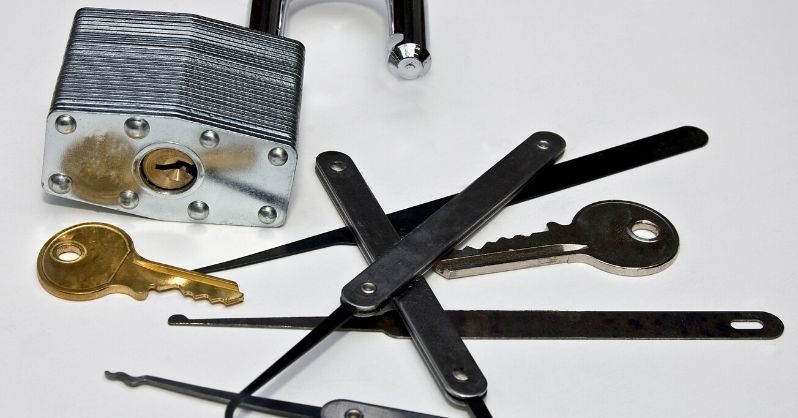
A few widely held beliefs about padlock security are flat-out wrong. Some leave you overconfident in a weak lock. Others make you underestimate what you can handle yourself. Here's the truth.
Myth: Expensive Padlocks Are Impossible to Bypass
Price is a real signal of quality — but not a guarantee of invincibility. A $50 padlock is meaningfully harder to defeat than a $5 one: better steel, hardened shackles, anti-pick security pins. But no padlock is completely bypass-proof given sufficient time and the right tools. Even premium brands like Abloy and Medeco have been opened by skilled locksmiths in controlled settings.
The actual goal isn't an unpickable lock. It's a lock that takes long enough to defeat that an opportunistic burglar moves on to an easier target. If bypassing your lock requires 45 minutes and specialty tools, most intruders won't bother. That's the real security calculation.
Myth: Lock Picking Requires Years of Training
Basic picking on a standard pin tumbler padlock is learnable in an afternoon. Locksport — competitive lock picking — is an active hobby with tens of thousands of participants worldwide. Channels dedicated to it have millions of subscribers. The floor is genuinely low for basic locks.
That said, high-security padlocks with security pins (spool pins and serrated pins) are meaningfully harder. These have unusual shapes that fool beginners into thinking a pin has set when it hasn't. If you want to go deeper on those distinctions, locksport communities are surprisingly welcoming and technically rigorous.
Myth: Shimming Works on Every Padlock
Shimming only works on single-locking padlocks — locks where only one side of the shackle is caught by a pawl. Double-locking padlocks engage catches on both sides of the shackle simultaneously, making shim insertion pointless. Most padlocks rated ANSI Grade 3 or higher are double-locking. If your lock has a "double-lock" label or an ANSI security grade stamped on it, skip the shim entirely and try picking or bolt cutters instead.
Mistakes That Make Everything Worse
The fastest way to turn a simple lockout into an expensive problem is rushing the wrong method. These are the mistakes people make most often — and exactly how to avoid them.
Applying Too Much Force Too Soon
Forcing a bobby pin into a keyhole and grinding it around is the fastest way to break a metal fragment off inside the lock. Now the keyway is jammed. Even if you find your original key later, the lock won't open. When you're picking, always use light tension on the wrench. If you feel hard resistance, ease off and reset. Rushing costs you the lock entirely.
The same applies with the shim method. Shoving a shim in with brute force bends the shim into the shackle gap permanently. Cut fresh shims, work with light pressure, and give the mechanism a moment to respond.
Using the Wrong Tool for the Lock Grade
Standard bolt cutters won't cut through a hardened boron-steel shackle. Regular pliers won't wrench off a quality padlock body. Mismatched tools waste your time and can injure your hands. Match your method to the lock before you start:
- Thin shackle (under 6mm) → standard 24-inch bolt cutters do the job
- Medium shackle (6–9mm) → heavy-duty 36-inch bolt cutters required
- Thick hardened shackle (9mm+) → angle grinder or professional locksmith
- Combination padlock → don't pick, try the manufacturer's reset procedure first
Having No Backup Key Plan
The best answer to "how to open padlock without key" is never needing to ask. Keep a spare key somewhere accessible off-site — give one to a trusted neighbor, or mount a small combination key lockbox nearby. For combination locks, store the code in a password manager rather than on a sticky note taped to the lock (which happens more than you'd think).
Two minutes spent on a spare key plan now prevents a 90-minute headache later. While you're thinking through access security, our guide on how to burglar-proof your home covers additional practical, low-cost upgrades worth making at the same time.
How to Keep Your Locks From Failing You

Most padlock failures — seized cylinders, stuck shackles, jammed mechanisms — are preventable. A few minutes of maintenance per year keeps your locks working reliably for a decade or more.
Lubricate Regularly
Dry pins stick. A dry keyway causes the cylinder to bind. A dry shackle channel corrodes and seizes. The fix takes 10 seconds: lubricate your padlocks every six months with graphite powder or a dry PTFE (polytetrafluoroethylene — a slippery synthetic coating) spray.
Do not use WD-40. It's a water displacer, not a lubricant. It leaves a sticky residue that attracts dust and gums up the pins over time. A small tube of graphite powder costs a few dollars and lasts for years. It's the cheapest maintenance investment in home security by a wide margin.
Protect Outdoor Locks
Outdoor padlocks face rain, humidity, salt air, and freezing temperatures — all of which accelerate internal corrosion. Use locks rated for outdoor exposure: look for a stainless steel or brass body with a hardened boron-steel shackle. If your lock is already showing rust, penetrating oil can free it temporarily, but replacement is the right long-term answer. A corroded lock gives you false confidence — it looks secure but fails when tested.
- Store rarely-used padlocks indoors during off-seasons
- Use a weatherproof lock cover or small plastic bag over outdoor locks in wet climates
- Inspect shackles annually for rust, pitting, or deformation — a weakened shackle is a security risk even if the lock opens normally
Keep Records and Spare Keys
Most lockouts happen because nobody wrote the combination down or cut a duplicate key. Solve that now. For keyed padlocks, engrave a reference number on the key fob and keep a labeled spare in a secure, off-lock location. For combination locks, enter the code in a password manager immediately after setting it.
If you manage multiple properties or frequently work with padlocks on gates, sheds, and access points, a consistent labeling system pays for itself in time saved. You'll always know which key goes where — and you'll always have a backup when one goes missing.
Key Takeaways
- Knowing how to open padlock without key starts with the right method: shim or pick for basic locks, hammer for low-quality locks, bolt cutters as a reliable last resort.
- No padlock is truly pick-proof — security is about making bypass time-consuming and difficult, not impossible, so that opportunistic intruders move on.
- The most common mistakes — excessive force during picking, mismatched tools, and skipping a backup key plan — are all avoidable with a little foresight.
- Regular lubrication with graphite powder and using outdoor-rated hardware prevents most padlock failures before they ever become a lockout crisis.


About Vincent Foster
Greetings, This is Tom Vincent. I’m a home Security Expert and Web developer. I am a fan of technology, home security, entrepreneurship, and DIY. I’m also interested in web development and gardening. I always try to share my experience with my reader. Stay Connected and Keep Reading My Blog. Follow Me: Facebook, Twitter, Pinterest
Now you can get FREE Gifts. Or latest Free Security Cameras here.
Disable Ad block to reveal all the gifts. Once done, hit a button below