If you need to know how to cut a padlock, here's the direct answer: clamp bolt cutter jaws on the shackle (the U-shaped metal bar), apply firm steady pressure, and the shackle snaps in under five seconds. That's the whole process. The rest is about picking the right tool, avoiding the mistakes that waste time, and doing it without hurting yourself. Browse more techniques in our lock-cutting guides section.
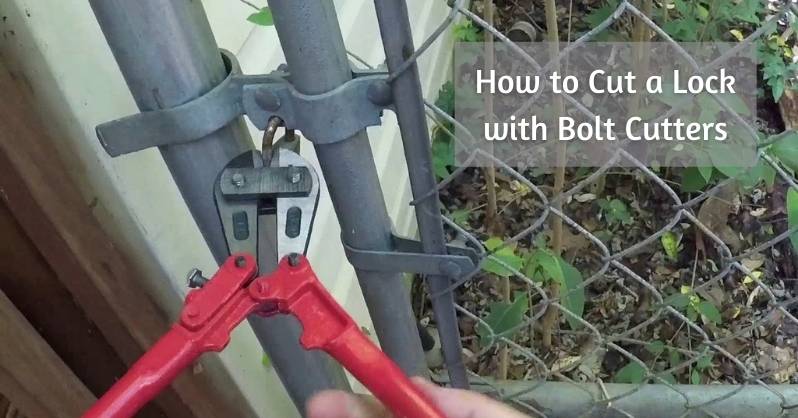
Bolt cutters work through mechanical leverage. When you squeeze the handles, a compound pivot joint multiplies your grip strength into several hundred pounds of cutting force at the jaws. That concentrated force is enough to shear through most standard padlock shackles — but only if your cutter is sized correctly for the job. A tool that's too small won't apply enough force, and you'll end up with sore hands and an intact lock.
This guide covers legitimate scenarios: a lost key, a rusted lock on a storage unit, a forgotten combination on a shed gate. If you want a non-destructive option first, read our guide on how to open a Master Lock without the combination — it could save you from cutting a lock you didn't need to destroy.
Contents
Step-by-Step: Cutting a Padlock with Bolt Cutters
Follow these steps in order and you'll get clean results on the first attempt. Skipping prep is the main reason people struggle.
Choosing the Right Bolt Cutter Size
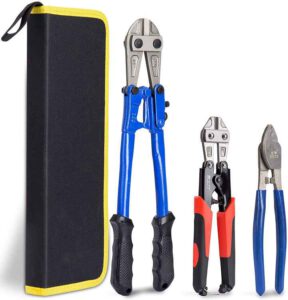
Bolt cutters come in lengths from 8 inches up to 42 inches. Longer handles mean more leverage, which means more cutting force. Here's the practical breakdown:
- 14–18 inch cutters — handle shackles up to 5/16 inch (8mm) diameter. Good for thin cable locks and cheap padlocks.
- 24 inch cutters — the sweet spot for most standard padlocks with shackles up to 3/8 inch (10mm).
- 36–42 inch cutters — tackle heavy-duty padlocks with shackles up to 1/2 inch (12mm) or slightly above.
Measure the shackle diameter before you buy or borrow a cutter. A quick visual comparison to a pencil (about 7mm) gives you a rough baseline. When in doubt, go one size up — a larger cutter on a small shackle is easier than a small cutter on a large one.
Where to Position the Jaws
Jaw placement is the single most important variable in a clean cut. Follow this exactly:
- Target one side of the shackle, as close to the padlock body as possible. The shackle is weakest where it curves down toward the body.
- Open the jaws wide enough to seat the shackle deep inside — not at the tip of the blades, but toward the back where the cutting force is highest.
- Keep the jaws perpendicular (at a 90-degree angle) to the shackle. An angled cut takes more force and wears out the blade faster.
Safety tip: Wear eye protection before cutting — shackle fragments can fly off at speed when the metal snaps.
The Cutting Technique
Once your jaws are positioned, the technique is simple but matters:
- Grip both handles firmly, keeping your fingers away from the pivot joint.
- Apply smooth, increasing pressure — don't jerk or pump the handles.
- For thick shackles, lean your body weight into the handles rather than relying on grip strength alone.
- If the lock spins freely, brace it against a solid surface or use a second person to hold it steady.
On a standard brass or zinc padlock, the shackle will snap with one firm squeeze. On hardened steel, you may need to rock the handles slightly back and forth while pressing to work the jaws through the material.
Padlock Myths That Could Get You Stuck
A few persistent myths cause people to waste time, buy the wrong tools, or give up when they shouldn't. Here's what the evidence actually shows.
Myth: Any Bolt Cutter Will Work
This is the number-one mistake. A 12-inch bolt cutter from a dollar store simply cannot generate enough force to cut a shackle thicker than a coat hanger. The physics don't allow it. Undersized cutters bend the shackle instead of shearing it, which damages the jaws and still leaves you with a locked padlock.
Always match the cutter to the shackle. If you don't know the shackle diameter, bring the lock to a hardware store and test before you buy. It takes two minutes and saves a lot of frustration.
Understanding how to cut a padlock properly also has a flip side: knowing what makes a lock resistant to cutting helps you choose better locks for your own property. If you're thinking about upgrading your home security after this, our guide on how to burglar-proof your home covers lock choices alongside other affordable upgrades.
Myth: A Bigger Shackle Always Means More Security
Shackle diameter matters, but material matters more. A large shackle made from ordinary steel is still cuttable with a heavy-duty bolt cutter. What actually resists cutting is hardened boron steel (a steel alloy with added boron for extreme hardness) — used in security-grade padlocks. According to Wikipedia's padlock article, cut-resistant padlocks use specially hardened alloys that cause bolt cutter jaws to slip or chip rather than shear cleanly.
So a cheap 50mm padlock with a thick shackle offers less real protection than a smaller high-security padlock with a hardened shackle. Don't judge security by size alone.
When Bolt Cutters Won't Get the Job Done
You've sized the cutter correctly, positioned the jaws properly, applied full force — and the shackle won't budge. Here's why that happens and what to do.
Hardened Steel and Cut-Resistant Shackles
Padlocks rated Grade 5 or higher by ASTM standards — and most padlocks labeled "cut-resistant" or "security grade" — use shackles that have been case-hardened (a heat-treatment process that creates an extremely hard outer layer). When bolt cutter jaws hit hardened steel, they deflect instead of biting in. You'll feel the jaws slip rather than dig.
Signs you're dealing with a hardened shackle:
- The jaws skid sideways no matter how you position them.
- The shackle shows no score marks after multiple attempts.
- The lock body has a security rating label (ASTM Grade 4+, ABUS Granit, Abloy Protec).
Pro insight: If jaws are slipping, try cutting at the very bottom of the shackle arch where the metal is slightly less hardened — but know that some locks genuinely require an angle grinder.
What to Try Instead
When bolt cutters fail, you have a few practical options:
- Angle grinder with a cutting disc — cuts through even hardened steel, but takes 30–60 seconds per cut and throws sparks. Wear gloves and eye protection.
- Hacksaw — works on softer shackles but is extremely slow on anything hardened. Only practical if you have 10–20 minutes and no power tools.
- Locksmith — if the lock is on something valuable or you need the surrounding hardware undamaged, call a professional. They carry specialized tools and can often open a lock without destroying it.
- Drilling the lock cylinder — for padlocks where the shackle is inaccessible, drilling through the keyway cylinder is sometimes faster than attacking the shackle.
For a garage situation where cutting isn't working, our detailed guide on how to pick a garage door lock without a key covers non-destructive entry methods that may apply.
Lock Removal Methods Compared
Not every lock situation calls for bolt cutters. Here's an honest look at all the common methods so you can pick the right one for your circumstances.
Side-by-Side Comparison
| Method | Time Required | Tools Needed | Works on Hardened Steel | Lock Destroyed | Skill Level |
|---|---|---|---|---|---|
| Bolt cutters | Under 10 seconds | Bolt cutters (correctly sized) | No | Yes | Beginner |
| Angle grinder | 30–60 seconds | Grinder + cutting disc + PPE | Yes | Yes | Beginner |
| Hacksaw | 10–20 minutes | Hacksaw + metal blade | Rarely | Yes | Beginner |
| Lock picking | 2–30 minutes | Pick set | Depends on mechanism | No | Intermediate–Advanced |
| Shimming | 1–5 minutes | Thin metal shim | N/A (attacks latch, not shackle) | No | Intermediate |
| Locksmith | 15–60 min (wait + work) | None (you call them) | Yes | Sometimes | None required |
Which Method Fits Your Situation
Use bolt cutters when speed matters, you have access to the shackle, and the lock is a standard hardware-store model. Use an angle grinder when bolt cutters have already failed or you know the lock is high-security. Choose picking or shimming when you want to preserve the lock — especially useful if the lock is still functional and you just lost the key.
When it comes to choosing your own padlocks going forward, apply what you've learned here in reverse: a lock that's hard to cut is one with a hardened shackle, minimal shackle exposure, and a double-locking mechanism. Knowing how to cut a padlock makes you a smarter buyer of padlocks, not just a better cutter.
Final Thoughts
Now that you know how to cut a padlock with bolt cutters — and when other methods make more sense — take one concrete step today: audit the padlocks currently securing your property. If any of them would fall in under ten seconds to the bolt cutter method described here, it's time to upgrade to a cut-resistant model. Browse our full collection of guides at SecureOne to find the right locks, cameras, and alarm systems to build a security setup that actually holds up.


About Vincent Foster
Greetings, This is Tom Vincent. I’m a home Security Expert and Web developer. I am a fan of technology, home security, entrepreneurship, and DIY. I’m also interested in web development and gardening. I always try to share my experience with my reader. Stay Connected and Keep Reading My Blog. Follow Me: Facebook, Twitter, Pinterest
Now you can get FREE Gifts. Or latest Free Security Cameras here.
Disable Ad block to reveal all the gifts. Once done, hit a button below