The best under bed gun safes solve a real problem: you need your home defense firearm accessible in seconds, not minutes, while keeping it completely locked away from children and unauthorized users. Under-bed storage puts your weapon exactly where you need it — within arm's reach from your sleeping position — without leaving it exposed on a nightstand or buried in a closet. Browse our complete gun safes guide to compare every storage option side by side before you decide.
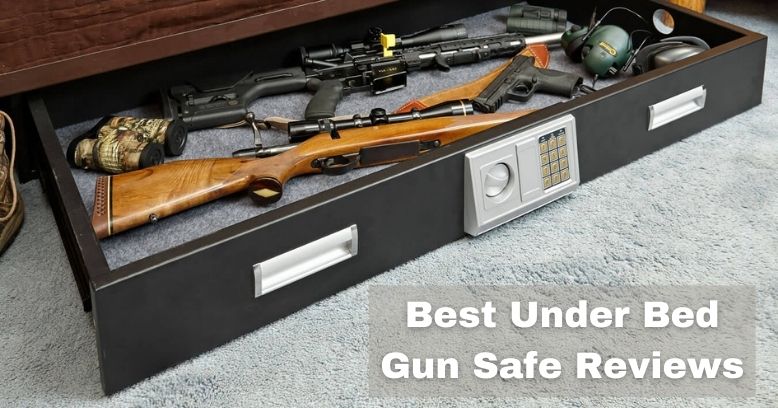
The market runs from basic cable-locked cases to heavy-gauge steel vaults with RFID entry. Some models hold a single handgun. Others fit a full-size rifle with room to spare. The right choice depends on what you're storing, how fast you need to access it, and how much clearance you actually have under your bed frame.
This guide covers six of the top models available, walks you through the critical buying factors, and clears up the mistakes and misconceptions that cost gun owners real money. If you want a stronger overall home defense setup, our guide on how to burglar proof your home covers every layer of protection worth building — gun storage is one important piece of that puzzle.
Contents
The Case for Under Bed Gun Storage
Why Location Matters More Than You Think
Most home defense situations happen at night. You're in your bedroom, the lights are off, and you have seconds — not minutes — to respond. A firearm stored in a closet or another room adds critical delay at exactly the wrong moment. Under-bed placement eliminates that delay entirely. You reach down, open the safe, and your firearm is in your hand — all without leaving the room or fumbling in the dark.
The position also provides natural concealment. Unlike a nightstand or visible gun rack, an under-bed safe is invisible to guests, service workers, and curious children who walk into your bedroom. It stays completely out of sight without requiring you to sacrifice accessibility. According to Wikipedia's overview of gun safes, secure firearm storage significantly reduces the risk of both theft and unauthorized use — and where you place that storage plays a major role in both outcomes.
The 6 Best Under Bed Gun Safes Reviewed
These six models consistently stand out for build quality, access speed, and real-world value.
1. SnapSafe Under Bed Safe
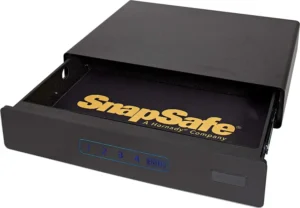
The SnapSafe is a long-gun drawer safe that accommodates rifles and shotguns up to 48 inches. Its 16-gauge steel construction and pry-resistant door make it one of the sturdier options in its price range. Pre-drilled anchor points let you bolt it directly to the floor through carpet, and the electronic keypad delivers reliable access. This is a strong choice for anyone storing an AR-pattern rifle or a long-barreled home defense shotgun under their bed.
2. Moutec Rapid Gun Storage Safe Drawer
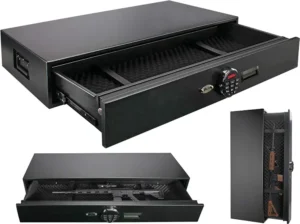
The Moutec is built for speed. Its biometric fingerprint reader opens in under a second, and the gas-strut lid springs open automatically — no pulling required. It holds two handguns with foam padding to protect finishes. An included cable tether makes it dual-purpose for vehicle use, so if you want one safe that works both at home and in your car, this is the model to consider.
3. MonsterVault Low Profile Underbed Gun Safe
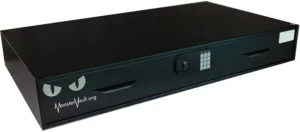
At just 3.5 inches tall, the MonsterVault slides under platform beds with minimal clearance. Despite that slim profile, it holds up to two rifles and uses a reinforced 12-gauge steel body with a California DOJ-approved lock. If your bed sits close to the floor, this is the model that actually fits where others won't. A motion-activated LED interior light is a genuinely useful feature for nighttime access in a dark room.
4. SafeArms Under Bed Gun Safe
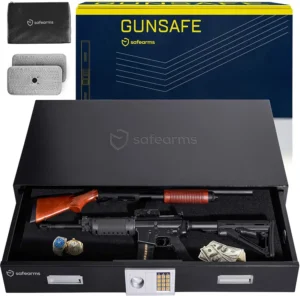
The SafeArms model is the capacity leader on this list. It holds up to six rifles or shotguns plus multiple handguns within a heavy-gauge steel body. It's heavier than most under-bed options, but the capacity and steel quality justify the trade-off. It fits well under king and queen frames and locks via a digital keypad with a backup key override for emergencies.
5. Titan Gun Safe Pistol Vault
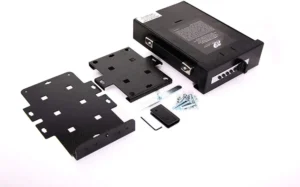
The Titan Pistol Vault is the most compact option here. It's designed for a single handgun and opens via a four-button simplex mechanical lock — no batteries required, ever. A steel cable tether anchors it to your bed frame, and the slim profile fits platform beds and tight spaces equally well. If you want a no-frills safe that works regardless of battery life or power outages, the Titan delivers exactly that.
6. Hornady Rapid Safe AR Gun Locker with RFID
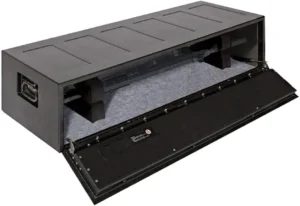
The Hornady Rapid Safe is the premium pick on this list. RFID touch-free entry means you tap a wristband, key fob, or sticker against the sensor and the lid springs open in under a second — no code, no contact, no hesitation. It holds an AR-15 or similar rifle alongside several handguns, backed by a 16-gauge steel body and four interior locking deadbolts. If access speed and capacity are your two top priorities, the Hornady is the benchmark everything else gets measured against.
How to Choose the Right Under Bed Gun Safe
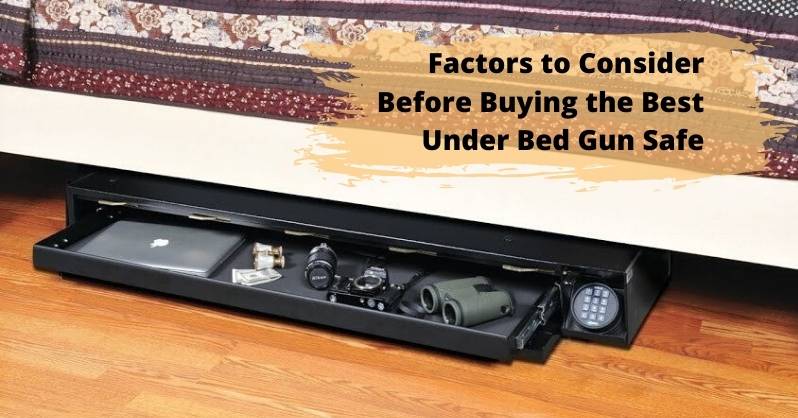
Size, Dimensions, and Fit
Start by measuring the clearance between your floor and the underside of your bed frame. Platform beds typically sit at 5–8 inches off the floor. Traditional frames with box springs can have 12–18 inches of clearance or more. Your clearance determines which models are physically compatible — buy before measuring and you may have wasted your money.
If you're storing long guns, also measure the interior length of the safe against your specific firearm. Most AR-15 and AK-pattern rifles collapse to 26–28 inches with a folding stock, but standard-configuration rifles often run 35–40 inches. Confirm the fit before you commit to a model.
Locking Systems Compared
The locking mechanism determines both your access speed and your safe's reliability under stress. Each system has real trade-offs worth understanding before you choose.
| Lock Type | Access Speed | Battery Required | Security Level | Best For |
|---|---|---|---|---|
| Biometric (Fingerprint) | Under 1 second | Yes | Medium–High | Fastest no-look access |
| RFID (Wristband/Fob) | Under 1 second | Yes | High | Touch-free nighttime access |
| Electronic Keypad | 3–5 seconds | Yes | Medium–High | Reliable everyday use |
| Simplex (Mechanical) | 2–4 seconds | No | Medium | Zero battery dependency |
| Key Lock | 5–10 seconds | No | Low–Medium | Backup access only |
For home defense, biometric and RFID systems are the fastest — especially in low-light conditions where you can't see a keypad clearly. If you choose an electronic keypad, understanding how to change the code on an electronic lock is worth your time — the same principles that apply to door locks carry over directly to most digital safe keypads.
Anchoring and Installation
Every under-bed safe needs to be anchored. Even a 30-pound steel box slides freely on hardwood or tile, and a determined intruder can drag an unanchored safe from under a bed in seconds and open it elsewhere at their leisure. Pre-drilled anchor points let you bolt the safe through carpet directly into floor joists. Here's how to do it right:
- Use lag bolts threaded into floor joists — drywall anchors are not strong enough for this application
- Position the safe with the lock face oriented toward your side of the bed
- Leave adequate clearance on the access side so the lid or drawer opens fully without obstruction
- If drilling isn't possible, loop a heavy-duty cable tether around a steel bed frame rail as a secondary option
- Test your full access sequence in the dark — from lying down — before you rely on it
Keeping Your Safe in Peak Condition
Electronic and Battery Maintenance
Battery-powered safes are only as reliable as the batteries inside them. Most electronic under-bed safes run on 4 AA batteries and last 12–18 months under normal use. Don't wait for a low-battery warning to act — replace batteries on a fixed annual schedule so you're never caught without access at the worst possible moment.
- Replace batteries every 12 months regardless of any indicator light status
- Keep a spare set of the correct battery type in your nightstand drawer
- Test the lock mechanism after every battery swap to confirm proper function
- If your safe includes a USB emergency power port, practice using it before you need it
- Use high-quality alkaline batteries — rechargeable NiMH cells run at 1.2V instead of 1.5V and can cause erratic behavior in some lock circuits
Pro Tip: Replace your safe's batteries on the same day you change your smoke detector batteries — it's a simple habit that prevents a critical failure at the worst possible moment.
Physical Care and Interior Cleaning
Under-bed environments collect dust faster than almost anywhere else in a home. That dust works its way into your safe's interior and coats your firearm's action over time. A quick quarterly routine keeps everything functioning properly and extends the life of both the safe and your stored firearm.
- Wipe down the exterior steel with a lightly damp microfiber cloth — never use spray cleaners near the lock face
- Vacuum the interior foam liner carefully; avoid compressed air near the electronic lock mechanism
- Apply a light coat of gun oil to any metal parts of your stored firearm every three months
- Place a silica gel desiccant packet inside the safe to manage humidity — under-bed spaces trap moisture, especially in humid climates
- Inspect the foam liner for dampness or mold; replace it at the first sign of either
Solving Common Under Bed Safe Problems
Lock Won't Open or Responds Slowly
An electronic lock that hesitates or fails outright is almost always a battery issue. Before assuming the hardware is broken, replace the batteries with fresh alkaline cells and test again. If the problem persists after a change, check whether the keypad registers individual button presses — a completely dead keypad may need a factory reset per your manual.
- Biometric reader not recognizing your print: Clean the scanner with a dry cloth and re-enroll your fingerprint under good lighting conditions
- RFID not triggering: Move closer — most sensors require the tag within 2–4 inches
- Keypad not illuminating: Replace batteries immediately and use your backup key as a temporary measure
- Key won't turn smoothly: Apply a small amount of graphite powder to the keyway; never use oil-based lubricants in a key cylinder
Warning: Never attempt to force open a stuck electronic safe — prying the door can permanently damage the locking bolts and void your warranty. Use the manufacturer's bypass key or contact support before applying any force.
Battery Drain and Power Issues
If your batteries are dying in under three months, the safe likely has an always-on feature running continuously. Some models with motion-activated lighting, Bluetooth connectivity, or persistent RFID scanning draw power around the clock — consuming batteries two to three times faster than a standard keypad-only safe. Check your safe's settings menu for options to disable continuous polling or ambient lighting when not actively needed.
If drain continues even with features disabled, the lock circuit itself may have a fault. Contact the manufacturer — most reputable brands cover electronic failures under warranty for at least one year from purchase date.
Mistakes Gun Owners Make with Under Bed Safes
Skipping the Anchor
The single most common mistake is purchasing a well-built safe and then never anchoring it. Weight alone doesn't protect you. A 30-pound steel box still slides freely across a hardwood floor or gets lifted off a carpeted surface. A motivated intruder can drag an unanchored safe out in seconds and open it at their leisure somewhere else.
Anchoring takes about 20 minutes and permanently eliminates this vulnerability. If you rent or can't drill into your floor, a steel cable looped around a solid bed frame rail is a credible alternative — not as secure as bolted anchor points, but far better than nothing. For a similar perspective on securing other storage points in your home, see our guide on how to secure cabinets and drawers — the anchoring logic applies directly.
Ignoring Access Speed Under Real Conditions
You may have tested your safe in daylight, fully awake, with both hands free. A home defense scenario looks nothing like that. You need to test your access from a lying position, in the dark, while groggy — because that's the actual scenario you're preparing for.
- Biometric readers can fail on sweaty, cold, or injured fingers — have your PIN memorized as a backup
- RFID wristbands need to be within reach — either on your wrist or on your nightstand while you sleep
- Mechanical simplex locks work in any condition, but require solid muscle memory to operate blind
- Practice your full access drill once a month until it's completely automatic
Your smart door locks protect your entry points effectively, but your under-bed safe is your last line of defense if someone is already inside your home. Both systems need to work without a second of hesitation.
Under Bed Gun Safe Myths Worth Clearing Up
Myth: A Locked Safe Stops Every Intruder
No under-bed safe in the $150–$500 price range will withstand a determined attacker with power tools for more than a few minutes. These safes are designed to stop opportunistic theft and prevent unauthorized access by children — not to survive a sustained, focused assault. That's the honest truth, and it's important to understand before you treat your safe as a complete solution.
The real goal is to make theft slow enough that the risk outweighs the reward. Anchoring your safe, pairing it with a monitored alarm system, and keeping your front doors secured creates a layered defense far more effective than any single product. An under-bed safe is one component of that system — not the whole system.
Myth: A Cable-Locked Pistol Case Is Just as Good
It isn't. A cable looped through a trigger guard or around a carrying handle can be cut with standard bolt cutters in under 30 seconds. That's a cable-locked case doing its job — providing a minimal deterrent. A steel-body safe with a positive locking mechanism provides a fundamentally different level of protection that doesn't compare on the same scale.
Equally widespread is the belief that storing a gun on a high shelf or in an inconvenient spot provides adequate child safety. Children climb, explore, and find things adults are certain they won't find. Physical locks are the only reliable child-safety measure for stored firearms. No storage location — however creative or inconvenient — substitutes for a locked safe. If you're serious about home security at every layer, our guide on burglar-proofing your home addresses exactly this kind of layered thinking in detail.
Frequently Asked Questions
What are the best under bed gun safes for home defense?
The Hornady Rapid Safe AR Gun Locker and the Moutec Rapid Gun Storage Safe Drawer are the top picks for home defense use. Both open in under one second, accommodate a home defense firearm securely, and anchor to a bed frame. Your final choice should come down to whether you're storing a handgun or a long gun — the Moutec handles pistols, while the Hornady fits rifles comfortably.
How much clearance do I need under my bed for an under bed gun safe?
Most under-bed gun safes require between 3.5 and 8 inches of vertical clearance. Measure the gap between your floor and the underside of your bed frame before purchasing. If you have a platform bed with minimal clearance, the MonsterVault at 3.5 inches tall is specifically engineered for that situation.
Are under bed gun safes effective at preventing child access?
A properly locked and anchored under-bed safe is an effective child-safety measure. The key word is anchored — a safe that can be dragged out from under the bed and worked on elsewhere provides much less protection. Electronic and biometric locks are strong deterrents for young children who cannot operate the locking mechanism, but physical anchoring is what makes the container truly difficult to remove.
Do under bed gun safes need to be bolted down?
Yes, every under-bed safe should be anchored. An unanchored safe — regardless of its weight — can be dragged out and removed in seconds. Most quality models include pre-drilled anchor points and mounting hardware. Use lag bolts into floor joists for the strongest hold. If drilling isn't an option, a heavy-duty cable tether looped around a steel bed frame rail is a workable secondary choice.
Which locking system is fastest for nighttime access?
RFID and biometric systems are the fastest, both opening in under one second without requiring you to locate or see the lock. RFID is generally more reliable in adverse conditions because biometric readers can struggle with wet, cold, or injured fingers. Whichever system you choose, keep a memorized PIN backup so you're never completely locked out if the primary method fails.
Can an under bed gun safe hold a rifle or shotgun?
Yes. The SnapSafe Under Bed Safe, SafeArms Under Bed Gun Safe, and Hornady Rapid Safe AR Locker are designed specifically for long guns. Before purchasing, measure your firearm's overall length — both with the stock extended and folded if applicable — and compare it against the safe's interior dimensions to confirm it actually fits your specific configuration.
How often should I replace batteries in an electronic under bed safe?
Replace batteries every 12 months regardless of whether any low-battery indicator has activated. Use high-quality alkaline batteries rather than rechargeable NiMH cells, which operate at a lower voltage and can cause erratic behavior in some electronic lock circuits. Keep a spare set nearby so a dead battery never locks you out unexpectedly.
Is an under bed gun safe more secure than a nightstand gun safe?
Under-bed safes generally offer better security because they're out of sight and can be bolted directly to the floor — two significant advantages over a nightstand unit. Nightstand safes are more visually convenient but remain visible to anyone who enters your bedroom. For home defense access speed, both serve a similar purpose, but the under-bed placement wins on concealment and anchoring options.
Final Thoughts
Choosing from the best under bed gun safes comes down to three things: the clearance under your bed, the firearm you're storing, and the locking system you can operate reliably without light or full alertness. Pick your model, anchor it to the floor, replace the batteries on schedule, and practice your access routine until it's completely automatic. If you're ready to take the next step, visit our gun safes category to compare additional models and find the one that fits your bedroom, your firearm, and your home defense plan.


About Vincent Foster
Greetings, This is Tom Vincent. I’m a home Security Expert and Web developer. I am a fan of technology, home security, entrepreneurship, and DIY. I’m also interested in web development and gardening. I always try to share my experience with my reader. Stay Connected and Keep Reading My Blog. Follow Me: Facebook, Twitter, Pinterest
Now you can get FREE Gifts. Or latest Free Security Cameras here.
Disable Ad block to reveal all the gifts. Once done, hit a button below