Have you ever been locked out of your own home, staring at a deadbolt that refuses to budge, wondering if there's any way in besides calling a locksmith at midnight? There is — and learning how to pick a deadbolt lock is more approachable than most people expect. This guide covers the tools, the real step-by-step process, and the insider knowledge that turns a frustrating lockout into a five-minute fix. Whether you're a curious homeowner or someone who just lost their keys, everything you need is here. For a broader look at home protection, browse our full library of home security guides.
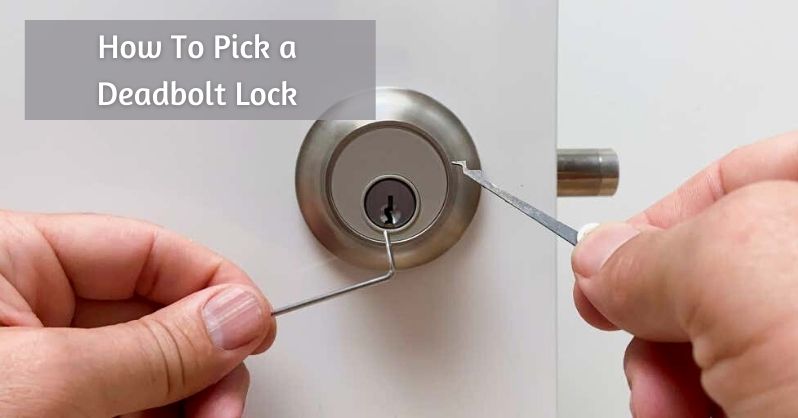
Deadbolts are the gold standard of residential door locks — they resist kick-ins, won't spring open from a credit card swipe, and use a bolt that extends deep into the door frame. But every pin tumbler mechanism (the internal system inside most deadbolts) operates on the same basic principle, and that principle has a physical weakness. Understanding that weakness makes you a smarter homeowner, not a criminal. You'll know exactly what separates a pickable lock from one that makes a real intruder walk away.
One non-negotiable ground rule before anything else: picking a lock you don't own, without explicit permission, is illegal. Every technique in this guide applies only to your own locks or locks you have clear written authorization to open. With that established, let's get into it.
Contents
- What Lock Picking Tools Actually Cost
- The Ground Rules Before You Touch Any Lock
- How to Pick a Deadbolt Lock Step by Step
- Insider Tips That Speed Up the Process
- When the Lock Won't Budge: Troubleshooting
- Real Scenarios Where This Skill Saves You
- Making Your Deadbolt Much Harder to Pick
- Frequently Asked Questions
- Final Thoughts
What Lock Picking Tools Actually Cost
Entry-Level Kits and What They Include
You don't need to spend much to get started. A basic beginner pick set runs between $10 and $25 and gives you everything required to work on a standard pin tumbler deadbolt. These kits typically include a short hook, a medium hook, a snake rake, a city rake, and two tension wrenches. That's all a beginner genuinely needs.
- Hook pick — the workhorse for single pin picking, lets you target one pin at a time
- Short hook — better for tight keyways with less room to maneuver
- City rake / snake rake — for faster raking on standard pin tumbler locks
- Top-of-keyway tension wrench — lighter grip, more room for your pick above it
- Bottom-of-keyway tension wrench — more torque, useful on stiffer cylinders
The tension wrench is the most critical tool in the kit. Without it, your pick does absolutely nothing — the tension wrench is what creates the mechanical pressure that lets pins set above the shear line (the gap between the cylinder and its housing). If you're just starting, master tension before you worry about pick technique.
Mid-Range and Professional Sets
Once you've worked through the basics, a 20 to 32-piece intermediate set opens up more lock types and gives you finer tool profiles for tighter keyways. These cost between $30 and $55. Professional sets — 40 pieces or more — run $60 to $120 and handle everything from high-security cylinders to dimple locks. Use the table below to choose the right level for your situation.
| Kit Level | Pieces | Typical Cost | Best For |
|---|---|---|---|
| Beginner | 6–8 | $10–$25 | Standard pin tumbler deadbolts, learning fundamentals |
| Intermediate | 20–32 | $30–$55 | Pin tumbler, wafer, and lever locks |
| Professional | 40–50+ | $60–$120 | High-security cylinders, dimple locks, locksport |
| Bobby pin (DIY emergency) | N/A | $0 | Basic locks with loose tolerances only |
One buying tip: don't go for the cheapest stainless-steel set that bends on the first tight lock. Picks made from tempered steel transmit feedback from inside the cylinder to your fingertips — and that feedback is everything when you're feeling for a binding pin. Quality tools make a bigger difference than most beginners expect.
The Ground Rules Before You Touch Any Lock

Legal Considerations by State
In most U.S. states, owning lock picks is perfectly legal as long as there's no intent to commit burglary. However, states including Virginia, Ohio, and Nevada restrict possession without a locksmith license, classifying picks as potential burglary tools. The laws vary significantly, and ignorance isn't a defense.
According to Wikipedia's overview of lock picking, many jurisdictions apply "intent to use" clauses — meaning the context of possession matters as much as the act itself. A pick set in your home workshop reads very differently to law enforcement than picks found in your jacket pocket near a commercial property.
Legal warning: Carrying lock picks in public without a clear lawful reason can be treated as possession of burglary tools in strict states. Keep your picks at home or on your own property during training sessions — don't transport them casually.
When Picking Is Actually Appropriate
There are three situations where picking your own deadbolt makes sense:
- You're locked out of your own property and a locksmith isn't immediately available
- You're practicing on a lock you own as part of learning or locksport
- You're a licensed locksmith responding to an authorized service call
In every other situation, call a professional. If the problem is a lock that won't turn rather than a lost key, picking may not even be the solution — a mechanical fault needs a mechanical fix, not picking technique. Diagnose the real issue before reaching for your picks.
How to Pick a Deadbolt Lock Step by Step
A standard deadbolt uses a pin tumbler mechanism. Inside the cylinder, a series of spring-loaded pin stacks sit at different heights — driver pins on top, key pins below. When the correct key is inserted, it lifts each stack to exactly the right height so the gap between the driver and key pin aligns with the shear line. That alignment lets the cylinder rotate and the bolt retract. Picking replicates that alignment one pin at a time, using tension and a hook pick instead of a cut key.
Tools You Need
- A tension wrench (top-of-keyway or bottom-of-keyway, depending on keyway width)
- A hook pick for single pin picking, or a rake for the faster raking method
- A practice lock with a transparent or cutaway body — optional but highly recommended for beginners
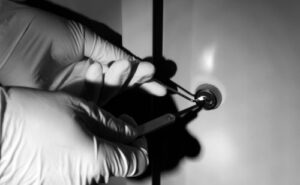
The Single Pin Picking Method
Single pin picking (SPP) is the most reliable method for deadbolts. It takes more patience than raking, but it works on tighter locks and gives you far better control over the outcome.
- Insert the tension wrench into the bottom of the keyway. Apply light rotational pressure in the direction the key turns — think the weight of a finger resting on it, not a grip.
- Insert the hook pick above the tension wrench and push it to the back of the keyway.
- Find the binding pin. With light tension applied, one pin will feel stiffer than the others. That's the binding pin — the slight cylinder rotation puts mechanical pressure on it while the rest float freely.
- Lift the binding pin slowly until you feel or hear a faint click. That click means the driver pin has caught above the shear line. The cylinder will rotate a tiny amount.
- Move to the next binding pin. After each set, a new pin becomes the binding pin. Repeat until all pins are set.
- Rotate the cylinder. Once all pins are above the shear line, the cylinder rotates fully and the bolt retracts.
This process takes beginners anywhere from two minutes to twenty. Tension consistency is everything — too much and pins jam, too little and set pins drop back. The moment you feel a pin set, freeze your tension hand and don't touch it.
The Raking Method
Raking is faster and requires less precision. Instead of setting each pin individually, you scrub the rake back and forth while applying tension. The randomized motion sets multiple pins at once — or fast enough that they're all set before the unset ones drop back down.
- Insert the tension wrench and apply the same light rotational pressure as with SPP.
- Insert the rake (city rake or snake rake) and push it to the back of the keyway.
- Scrub the rake in and out rapidly while varying the depth and angle. Don't use a single consistent motion — deliberately vary the pressure and direction.
- Every few seconds, increase tension slightly and try to rotate the cylinder. If it doesn't turn, ease tension back and continue scrubbing.
- The lock will open when enough pins set simultaneously under the scrubbing motion.
Raking works well on cheap, loose deadbolts with wide tolerances. On tighter, higher-quality locks, single pin picking is more reliable. Most beginners start with raking because the faster feedback loop keeps it motivating while they develop a feel for tension.
Insider Tips That Speed Up the Process
Reading the Lock by Feel
The biggest difference between a beginner and an experienced picker isn't the tools — it's the ability to read feedback from inside the lock. Every click, every bit of give, every fraction of cylinder rotation tells you something specific. When you're starting out, work on a transparent practice lock so you can see what's happening while you feel it. That visual confirmation builds muscle memory faster than anything else.
- Spongy, springy feel = no tension on that pin, it's not binding
- Stiff, resistant feel = binding pin — this is the one to lift
- Small click + slight cylinder rotation = pin set successfully, move on
- Sudden drop = you over-lifted or lost tension — start that pin again
This feedback-reading skill transfers across lock types. If you've ever wondered how to open a padlock without a key, the same binding pin principle applies — most padlocks use the same pin tumbler mechanism in their cylinders, and the tactile cues are nearly identical once you know what you're feeling for.
Mastering Tension Control
Pro tip: Tension is the variable beginners consistently get wrong. Start lighter than you think you need. You can always increase it — but too much tension is the single biggest reason pins jam and refuse to set at all.
Use the top-of-keyway tension wrench when you're working on a narrow keyway — it leaves more room to maneuver your pick above it. The bottom-of-keyway wrench gives more torque and is better when you need to feel the cylinder rotate. Switching between the two can break a sticking point on a lock that's resisting your current approach — sometimes the angle of tension is the only thing standing between you and an open door.
The same tension discipline applies when working on other lock types around the house. If you've ever dealt with file cabinet locks, you'll find the tension principle identical — though those use wafer or disc detainer mechanisms rather than pin stacks, so the feedback feels slightly different.
When the Lock Won't Budge: Troubleshooting
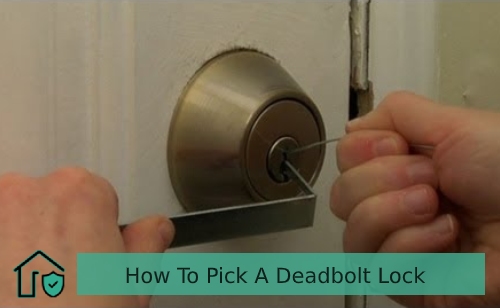
A Pin Won't Set
If you keep finding the same pin over and over and it refuses to set regardless of how carefully you lift it, you're almost certainly using too much tension. Ease off — almost imperceptibly — and try again. Reducing tension by just a fraction often releases the jam and lets the pin find the shear line.
A second cause is a worn or corroded pin stack that doesn't move smoothly. Old locks that haven't been lubricated in years develop pin friction that fights against your pick. A small shot of dry PTFE lubricant (polytetrafluoroethylene — a fine dry spray sold at hardware stores) into the keyway can free up sticky pins without making the cylinder slippery. If you're dealing with a lock that has broader mechanical issues, the guide on common door lock problems covers a full diagnostic approach that goes beyond picking.
The Lock Springs Back
You set every pin, start rotating the cylinder — and then click, all the pins drop and the cylinder springs back to neutral. This is the most discouraging beginner experience, and it's almost always caused by losing tension at the critical moment of rotation.
- Don't relax your tension hand until the cylinder has completed its full rotation
- If your wrench slips, try the other orientation — top vs. bottom of keyway
- A worn tension wrench with no grip texture will slip far more easily; replace it
- On a recently lubricated lock, you may need slightly more tension than usual because the cylinder turns more freely
A lock that won't turn at all — even with a key in it — is a separate problem entirely. That's mechanical failure, not a picking challenge. Before spending time on technique, rule out a broken cylinder or seized bolt using this guide on fixing a lock that won't turn. Picking a mechanically broken lock won't open it regardless of your skill level.
Real Scenarios Where This Skill Saves You
Home Lockout Situations
The most common reason homeowners learn to pick a deadbolt is a simple lockout — you leave for work, the door swings shut behind you, and your keys are sitting on the kitchen counter. An emergency locksmith visit costs anywhere from $75 to $250 depending on your area and the hour. A $15 pick set pays for itself the first time it gets you back inside without a service call, and every lockout after that is free.
The skill transfers to scenarios beyond your front door. If you drive and find yourself locked out of your vehicle, some of the same conceptual thinking applies — though car locks use different mechanisms and typically require specialized automotive tools rather than standard picks. This guide on how to pick a car lock from outside covers those specific techniques if you need them.
Other Locks You Might Encounter
Once you understand the pin tumbler principle, you recognize it everywhere — interior bedroom door locks, padlocks, some filing cabinet locks, older mailbox locks. That recognition does two things: it helps you open locks when you need to, and it helps you evaluate which locks are worth spending money on versus which ones are security theater.
For interior doors where you want quick, pick-resistant reinforcement without replacing the lock, a portable device like the Addalock portable door lock is worth knowing about. It works on the door itself rather than the lock cylinder, so it can't be bypassed by picking the pin tumbler at all. It's a smart addition to any room where you want a secondary layer of protection that operates completely independently from the deadbolt.
Making Your Deadbolt Much Harder to Pick
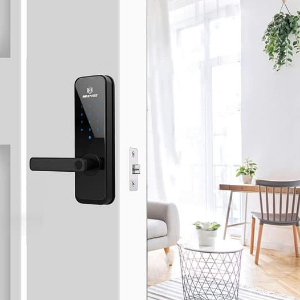
High-Security Lock Options
Now that you understand how picking works, you're equipped to make an honest assessment of your own deadbolt. Standard pin tumbler deadbolts — the kind that ship pre-installed on most residential doors — are pickable by an experienced picker in under a minute on a good day. Here's what genuinely makes a lock harder to defeat:
- Security pins (spool pins and serrated pins) — create false sets that mimic the feel of a real set, throwing off the picker's feedback. Found in Medeco, Mul-T-Lock, and Abloy cylinders.
- Sidebar mechanisms — add a secondary locking element that can't be defeated by standard tension plus pick technique alone, requiring a completely different attack vector.
- High pin count — 6 or 7 pins instead of the standard 5 increases the number of combinations a picker must navigate to open the lock.
- Tight machining tolerances — high-quality cylinders have tighter gaps at the shear line, making pin setting harder and reducing the window for a successful pick.
If your current deadbolt is a builder-grade lock that came with your house, consider replacing it. This guide on how to install a deadbolt lock walks through the full replacement process — including how to measure your door thickness and choose the right cylinder for your door prep.
Adding Extra Security Layers
No single lock makes a door truly impenetrable. Layering is the smart approach. A high-security deadbolt combined with a reinforced strike plate, a door bar, and a video doorbell creates a system where defeating any one element doesn't compromise the whole setup.
- Replace the 3/4-inch screws in your strike plate with 3-inch screws that reach the door frame stud — kick-ins account for far more break-ins than picking
- Add a door bar or security bar for bedrooms where you want interior reinforcement
- Install a video doorbell or outdoor camera so you can see who's at the door before opening it
- Consider a smart lock with tamper alerts — you'll get a notification the instant someone starts probing your deadbolt
The goal isn't to make your door impossible to breach — it's to make it take long enough that an intruder moves on to an easier target. Most residential burglaries are crimes of opportunity, and even 60 extra seconds of meaningful resistance changes the math entirely.
Frequently Asked Questions
Can all deadbolt locks be picked?
Standard pin tumbler deadbolts can be picked with the right tools and technique. High-security deadbolts with spool pins, sidebar mechanisms, or patented keyways are significantly more resistant and require advanced skills or specialized tools to defeat. No lock is truly pick-proof, but high-security cylinders make picking impractical for the vast majority of would-be intruders.
How long does it take to learn how to pick a deadbolt lock?
Most beginners can open a basic practice deadbolt within a few focused hours. Getting consistently fast — under two minutes on a standard lock — typically takes several weeks of regular practice sessions. Single pin picking takes longer to master than raking but works reliably on a wider range of lock types, including tighter cylinders that resist the raking method entirely.
Is it legal to carry lock picks?
In most U.S. states, owning and carrying lock picks is legal as long as you have no intent to use them for burglary. However, some states — including Virginia, Ohio, and Nevada — restrict possession without a locksmith license. Always check your local laws before purchasing a pick set, and when in doubt, keep picks at home rather than carrying them in public.
Can a deadbolt be picked with a bobby pin?
Yes, but it's considerably harder than movies suggest. You need to bend one bobby pin into a makeshift tension wrench and another into a rough hook shape. It works on cheap deadbolts with loose tolerances, but tighter locks resist the imprecise shape of a bobby pin pick. Dedicated picks made from tempered steel give you far better tactile feedback and a much higher success rate on real-world locks.
What is the difference between raking and single pin picking?
Raking uses a serrated or wavy pick scrubbed back and forth to set multiple pins randomly at once. It's faster but unreliable on tight locks with close tolerances. Single pin picking sets each pin individually by finding and lifting the binding pin one at a time. SPP takes longer but works on a wider range of deadbolts, including higher-quality cylinders that simply absorb raking attempts without opening.
Final Thoughts
Learning how to pick a deadbolt lock gives you something most homeowners don't have: a real, hands-on understanding of how your front door security actually works — and where it falls short. Take an afternoon, grab a basic pick set and a practice lock, work through the steps in this guide, and then turn that knowledge toward your own deadbolt. If it opens easily, upgrade it. The time you spend now is far less painful than the lockout, the locksmith bill, or the break-in you didn't see coming.


About Vincent Foster
Greetings, This is Tom Vincent. I’m a home Security Expert and Web developer. I am a fan of technology, home security, entrepreneurship, and DIY. I’m also interested in web development and gardening. I always try to share my experience with my reader. Stay Connected and Keep Reading My Blog. Follow Me: Facebook, Twitter, Pinterest
Now you can get FREE Gifts. Or latest Free Security Cameras here.
Disable Ad block to reveal all the gifts. Once done, hit a button below