Have you ever watched a door swing hard into your wall and thought, "there has to be a better way"? There is — and it starts with understanding the different types of door stoppers available for your home. From a basic rubber wedge to heavy-duty security bars, every type solves a specific problem. This guide walks you through all 11 types with real pictures, so you can match the right stopper to every door in your house. For a broader look at what to consider before buying, start with our door stoppers resource guide.
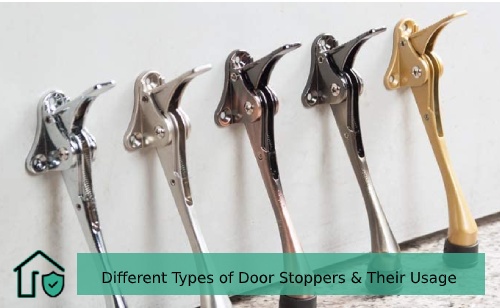
A door stop is any device that controls a door's movement — holding it open, limiting how far it swings, or blocking it from being pushed open from the outside. That last function is more important than most people realize. The right stopper can prevent wall damage, reduce noise, and even add a meaningful layer of security to a room or entry point. Choosing the wrong one, though, means it either falls short or gets in the way.
If you're already planning upgrades to your entry points, pairing a quality stopper with one of the best front doors for home security creates a much stronger overall setup. But first, let's look at all 11 types so you know exactly what you're working with.
Contents
What Door Stoppers Actually Do — and Why It Matters
A Simple Tool With Real Benefits
Door stoppers do three things well: they protect walls and furniture from impact, they hold doors open when you need airflow or hands-free access, and the security-focused versions resist forced entry. Homes with kids, pets, or heavy foot traffic benefit the most because an uncontrolled door can pinch fingers, scratch hardwood floors, and leave crescent-shaped dents in drywall that cost real money to repair.
The type of stopper you need depends on how the door is used. A bathroom door in a quiet house has very different requirements from a front entry door in a busy household. Before choosing, it helps to measure your front door correctly — knowing the door's weight, size, and swing radius narrows down which stoppers are even compatible.
The Security Side of Door Stoppers
Most stoppers are convenience tools, but a handful are genuinely security devices. Security door stops and wedge-style bars are designed to prevent a door from being opened even when the lock is bypassed. This makes them a useful backup in apartments, hotel rooms, and bedrooms. If you've read about how portable door locks work, you'll notice they operate on the same friction-based principle — just in a different form factor. Together with a solid deadbolt or smart lock, they create multiple layers that an intruder has to defeat.
The 11 Different Types of Door Stoppers Explained
Wall-Mounted and Baseboard Stoppers
Wall-mounted door stoppers screw into the baseboard or wall directly behind where the door swings. When the door opens, the knob or edge contacts the rubber tip of the stopper instead of the wall. They're the most common type for interior doors, easy to install, and nearly invisible once in place. Baseboard versions mount lower — at floor trim level — and are a good option when there's limited wall space or when furniture blocks higher placement.
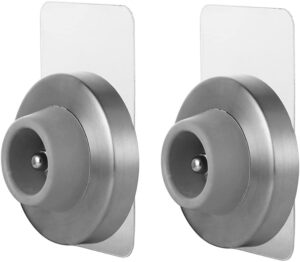
Heavy-duty baseboard versions use a larger rubber bumper and a thicker mounting plate, making them suitable for solid wood or steel doors that hit with more force. If you have tile or hardwood floors where drilling into the floor isn't ideal, these are often the first type to consider.
Spring, Floor-Mounted, and Hinge Pin Stoppers
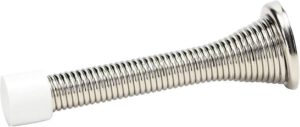
Spring door stoppers are the small coiled metal stops often found near the base of interior doors. They flex when the door hits them, absorb the impact, and spring back into shape. Inexpensive and easy to install, they work well for lightweight doors. The trade-off is durability — they can bend permanently if a heavy door hits them repeatedly.
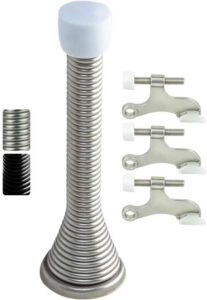
Floor-mounted door stops bolt directly into the floor and stand upright to catch the door at a fixed stopping point. They're more stable and better suited to heavy doors than spring types. If your door swings into an open area with nothing behind it, a floor mount is often the cleanest solution.
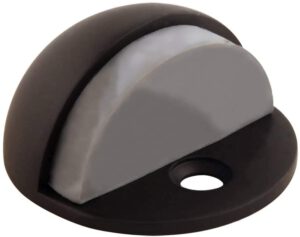
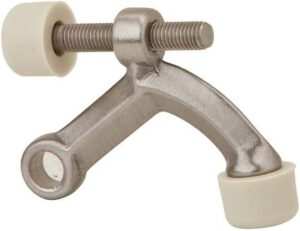
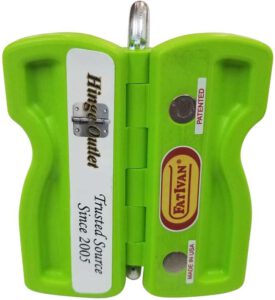
Hinge pin door stops clip onto one of the door's existing hinge pins and extend a small arm that presses against the door frame to limit swing. No drilling required — which makes them a top pick for renters. They only work on standard hinged doors, and they're not designed to handle very heavy or frequently used doors.
Magnetic and Hook Stoppers
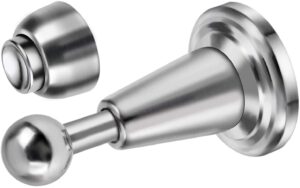
Magnetic door stoppers use a two-piece magnet system — one part mounts to the wall or floor, the other attaches to the base of the door. When the door swings to the open position and the two pieces connect, the magnet holds it perfectly still without any visible wedge or arm sticking out. This is the cleanest aesthetic option and works well in open-plan spaces where you want the door to stay open without anything cluttering the floor.
Hook stoppers operate on a similar hold-open principle, using a hook on the door that latches onto a catch on the wall. You see them often on older homes, barn-style doors, and utility rooms. They're simple and reliable, but they only hold the door at one fixed angle — so placement matters a lot.
Pro tip: Magnetic stoppers need precise alignment between both pieces — if they're even slightly off, the hold will feel weak and the door will drift. Always dry-fit the position before you drill any holes.
Security Stops, Sliding Stoppers, and Door Chocks
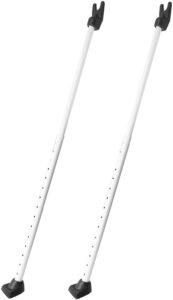
Security door stops wedge under the door from the inside, using friction and downward pressure to resist forced entry even when the lock has been bypassed. This makes them a practical option for bedrooms, hotel rooms, and street-level apartments. They pair well with advice on how to lock a door without a conventional lock — both approaches focus on using physical force resistance when standard hardware isn't enough.
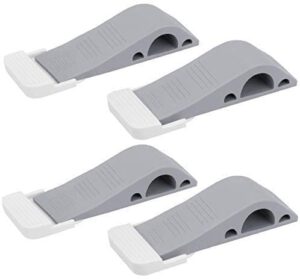
Sliding security door stoppers mount at the base of the door frame. You slide them into the path of the door when you want to block entry, and slide them clear when you need normal use. They're especially popular on sliding patio doors. Door chocks — the classic tapered rubber or plastic wedge — are the simplest option of all. No tools, no installation, no commitment. You push one under the door and it holds through friction alone. They're cheap, portable, and work on almost any surface.
Automatic Door Closers
An automatic door closer is technically the inverse of a stopper — it's a hydraulic or spring-loaded arm that pulls the door shut after each use instead of holding it open. But it's grouped with door stoppers because it solves the same underlying problem: an uncontrolled door. You've seen them on commercial building entrances and fire exit doors. In residential settings, they're increasingly popular on garage-to-home entry doors and utility rooms, where keeping the door reliably closed matters for both fire safety and energy efficiency.
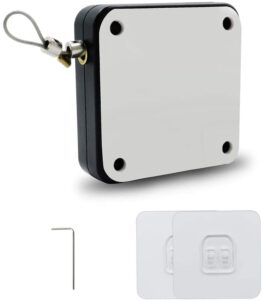
Most residential closers are adjustable — you can set the closing speed so the door doesn't slam. They pair naturally with smart locks and deadbolts to create a fully self-contained entry system. If you're exploring that route, the guide on different types of door locks is a helpful companion read.
| Type | Mounting | Best For | Renter-Friendly | Security Use |
|---|---|---|---|---|
| Wall-Mounted | Wall / baseboard | Interior doors, all weights | Yes (small holes) | No |
| Baseboard (Heavy-Duty) | Baseboard trim | Heavy solid-core doors | Yes (small holes) | No |
| Spring | Baseboard / floor | Lightweight interior doors | Yes | No |
| Floor-Mounted | Floor | Heavy doors, open areas | No (floor drilling) | No |
| Hinge Pin | Door hinge | Renters, lightweight doors | Yes (no drilling) | No |
| Magnetic | Wall or floor + door | Open-plan rooms, aesthetics | Partial | No |
| Hook | Wall + door | Barn / utility doors | Yes | No |
| Security Door Stop | Floor (no fasteners) | Bedrooms, hotel rooms | Yes (no drilling) | High |
| Sliding Security Stop | Door frame / floor | Sliding doors, patio doors | Partial | Medium |
| Door Chock / Wedge | None (freestanding) | Temporary, travel | Yes | Low |
| Automatic Closer | Door frame + door | Garage, fire doors | No | Indirect |
Keeping Your Door Stoppers in Good Condition
Checks Worth Making Regularly
Door stoppers don't need much attention, but a quick check every few months prevents small problems from becoming bigger ones. For screwed-in types — wall-mounted, baseboard, floor-mounted — check that the fasteners are still tight. Vibration and repeated door contact can loosen screws over time, especially in high-traffic areas. A stopper that's worked loose sits at the wrong angle and may fail to catch the door at all.
For spring stoppers, look for visible bending or permanent deformation. A bent spring stopper no longer sits at the right height and will let the door knob make contact with the wall on a hard swing. Replacing them costs very little and takes under five minutes. For magnetic stoppers, check that the catch plate on the door lines up cleanly with the floor or wall magnet — misalignment is the most common reason they stop working effectively.
Cleaning and Replacing Worn Parts
The rubber tips and bumpers on most stoppers wear down with use. You'll notice they start to compress permanently, leaving the metal base closer to the surface it's meant to protect. Most manufacturers sell replacement tips, and they thread on or press-fit — no tools needed. For security door stops, check the non-slip base regularly. Dirt and dust reduce friction, which is exactly what these stoppers rely on. Wipe the base clean and test the grip before depending on one for actual security use.
Tips for Choosing and Positioning the Right Stopper
Match the Stopper to Your Door Type
Start with the door's weight and how it's hung. A hinge pin stopper is fine for a hollow-core interior door but will bend out of shape on a solid wood or steel exterior door. Floor-mounted stops handle heavier doors, but you need to consider your flooring — drilling into tile requires care, and some older floors may not anchor well. If you're unsure about your door's exact dimensions, it helps to know standard front door dimensions before purchasing floor hardware, since the stopping point needs to be in the right place relative to the door's travel.
For a complete decision framework covering door weight, floor type, swing radius, and aesthetics, the guide on how to choose the right door stopper covers all 11 criteria in detail. And if you'd rather build one yourself, there's also a step-by-step tutorial on how to make a door stopper at home using basic materials.
Getting the Installation Right
- Position the stopper before drilling. Hold the door open at the angle you want it stopped, then mark the wall or floor directly behind the door's contact point. Don't guess — measure twice.
- Use wall anchors in drywall. Screwing directly into drywall without an anchor will result in a stopper that pulls free the first time a door hits it hard. If you can't hit a stud, use a proper drywall anchor rated for the stopper's impact load.
Warning: Never install a floor-mounted stop directly in front of a door that swings over carpet — the stopper height assumes a flat, hard surface, and carpet compression can throw off the stopping angle enough to let the door make wall contact anyway.
Mistakes That Can Undermine Your Door Stopper
Picking the Wrong Type for Your Floor
The most common mistake is choosing a stopper based on looks alone without accounting for the floor surface. A rubber-tipped spring stopper installed on a smooth tile floor may slide when hit hard, especially if the screw anchor is weak. A door chock wedge — which relies entirely on friction — barely works on polished concrete or glazed tile. If your floors are particularly smooth, look for stoppers with wider, textured bases, or opt for a wall-mounted version that doesn't touch the floor at all.
Another overlooked factor is the door's swing clearance. If furniture, a baseboard heater, or a rug sits in the door's path, the stopper placement needs to account for that obstacle. A stopper installed at the wrong point in the swing will either let the door hit the furniture first or stop the door too early to be useful.
Loose Fittings and Ignored Wear
Leaving a loose stopper in place is worse than having no stopper at all. A wall-mounted stop with a stripped screw hole may stay in position for a few weeks, then rotate out of the way right when a door hits it — sending the knob directly into the wall. If a screw hole has become too wide to hold securely, fill it with wood glue and a wooden toothpick, let it cure fully, and re-drive the screw. This simple fix works on most wood baseboards and door frames.
Don't overlook wear on security door stops either. If you rely on one for actual security — say, as a bedroom backup — test its grip on your specific floor regularly. A worn base on a smooth floor might give just enough under a firm kick to defeat its purpose. For those situations, pairing it with a quality deadbolt ensures you're not depending on friction alone.
Frequently Asked Questions
What is the most secure type of door stopper?
Security door stops — the wedge-style versions that slide under the door from the inside — offer the most resistance to forced entry because they work through friction and downward pressure, independent of any lock mechanism. Some models are reinforced with steel for even higher resistance. They're most effective on inward-swinging doors with hard flooring.
Can I install a door stopper without drilling?
Yes. Hinge pin door stops clip onto an existing hinge pin with no drilling required. Rubber door chocks (wedges) need no installation at all — they slide under the door and hold through friction. Magnetic options sometimes use adhesive-backed plates instead of screws, though these are less reliable on high-traffic doors.
How do I choose between a wall-mounted and floor-mounted door stopper?
If there's a solid wall or baseboard behind the door's swing path and you'd rather avoid drilling into your floor, a wall-mounted stopper is the easier choice. Floor-mounted stops are better when the door swings into an open area with no wall nearby, or when you need a more heavy-duty solution for a solid wood or metal door.
Do door stoppers work on carpet?
Some types work better than others. Floor-mounted and wall-mounted stoppers work fine regardless of floor type because they're anchored in place. Rubber wedge chocks, however, have very poor grip on carpet and tend to slide or get pushed under rather than holding the door. On carpet, a wall-mounted or hinge pin stopper is a much more reliable choice.
Can a door stopper replace a deadbolt or door lock?
No. A standard door stopper is a convenience and protection tool, not a security substitute for a proper lock. Even security-grade door stops work best as a supplemental layer alongside a deadbolt or smart lock — not as a standalone solution. For a full picture of how door locks and stoppers work together, the overview of different types of door locks explains each lock's role in a layered security setup.
The right door stopper is the one you never notice — because it's quietly doing its job every single time the door moves.


About Vincent Foster
Greetings, This is Tom Vincent. I’m a home Security Expert and Web developer. I am a fan of technology, home security, entrepreneurship, and DIY. I’m also interested in web development and gardening. I always try to share my experience with my reader. Stay Connected and Keep Reading My Blog. Follow Me: Facebook, Twitter, Pinterest
Now you can get FREE Gifts. Or latest Free Security Cameras here.
Disable Ad block to reveal all the gifts. Once done, hit a button below