Roughly 34% of home burglaries happen through the front door — and most involve a lock that was either too weak or never upgraded. Understanding the types of deadbolts explained in this guide gives you a real advantage. Each deadbolt design targets a specific security level, door type, and lifestyle need. This guide covers all 8 types so you can match the right lock to your home. For broader coverage, explore our home security resource center.
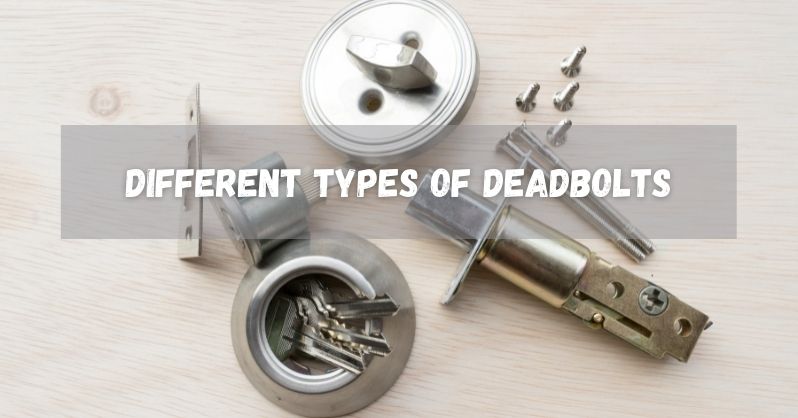
A deadbolt works differently from a spring latch. You have to actively turn a key or thumb turn to move the bolt. That mechanic makes it far harder to bypass with a credit card or shimming tool. If you want to see how deadbolts compare to other options, the 10 different types of door locks guide gives you a full breakdown.
Not every deadbolt suits every door. Your door material, location, and security needs all factor in. Read through each type below before you buy — the wrong choice can leave a gap in your security you didn't expect.
Contents
What Makes a Deadbolt Different From Other Locks
The Mechanics Behind the Bolt
Most door locks use a spring latch. The latch snaps back automatically when the door closes. That convenience comes at a cost — spring latches can often be defeated with a thin card or a bump key in seconds.
A deadbolt uses a fundamentally different mechanism:
- No spring — the bolt does not retract on its own
- Solid steel bolt — extends at least 1 inch into the door frame when locked
- Manual operation only — requires a key or thumb turn to move the bolt in either direction
- Hardened construction — Grade 1 deadbolts resist significant force per ANSI/BHMA grading standards
That combination makes a deadbolt your single most important door lock. It's not a convenience feature — it's a serious barrier.
ANSI/BHMA Grades Explained
When you shop for deadbolts, you'll see grade ratings on the packaging. Here's what they actually mean for your security:
- Grade 1 — Highest security. Withstands the most physical attacks. Used in commercial and high-risk residential settings. This is what you want on your front door.
- Grade 2 — Mid-range security. Suitable for most residential exterior doors. A solid choice for side and back doors.
- Grade 3 — Entry-level security. Adequate for interior or very low-risk doors only. Avoid this grade on any exterior door.
Always look for Grade 1 or Grade 2 on any door that faces the outside. Grade 3 is too weak for real-world forced entry scenarios.
The 8 Types of Deadbolts Explained
Here's a full rundown of every major deadbolt design you'll encounter. Each one has distinct strengths, weaknesses, and an ideal application.
1. Single Cylinder Deadbolt
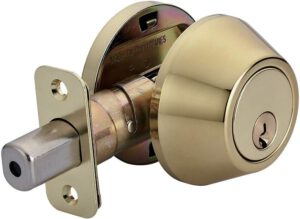
The single cylinder deadbolt is the most common residential lock in North America. It uses a keyed cylinder on the exterior and a thumb turn on the interior. You lock and unlock from inside without a key.
- Best for: Standard front and back doors with no glass nearby
- Pros: Fast interior exit, widely available, affordable, easy DIY install
- Cons: If glass is near the door, an intruder can break it and reach the thumb turn
- Price range: $20–$80
This is the right starting point for most homeowners. It balances security, cost, and convenience well. Just make sure there's no glass within arm's reach of the thumb turn.
2. Double Cylinder Deadbolt
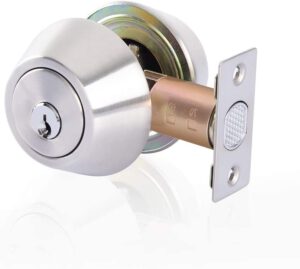
A double cylinder deadbolt requires a key on both sides. There is no thumb turn at all — you need a key to exit just as much as to enter.
- Best for: Doors with glass panels, sidelights, or windows within arm's reach of the lock
- Pros: Eliminates the "break glass, reach in, turn the thumb turn" attack entirely
- Cons: Creates a fire egress risk — you need a key to get out during an emergency
- Price range: $25–$90
Fire safety warning: If you install a double cylinder deadbolt, always keep a key hung nearby on the inside — never inside the lock itself. During a fire, you need to exit in seconds, not search for a key.
Some local fire codes restrict or prohibit double cylinder deadbolts in residential settings. Check your local regulations before installing one.
3. Lockable Thumb Turn Deadbolt
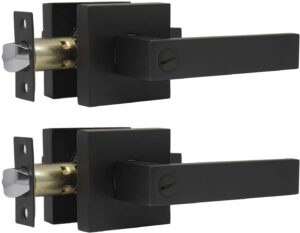
The lockable thumb turn deadbolt gives you the best of both worlds. The interior thumb turn can be locked with a small key — so it behaves like a double cylinder when you need extra security, but can be released quickly for emergency exit.
- Best for: Rental properties, vacation homes, doors with nearby glass where fire safety matters
- Pros: More secure than a standard single cylinder; thumb turn unlocks fast without a key in emergencies when left in open mode
- Cons: Slightly more complex to operate; costs more than a standard deadbolt
- Price range: $40–$120
This is the smart middle-ground solution if you have glass near your door but don't want to risk being trapped in a fire with a standard double cylinder.
4. Keyless Electronic Deadbolt
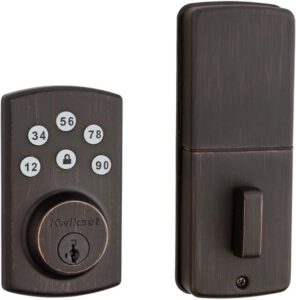
An electronic keyless deadbolt replaces the key cylinder with a keypad, touchscreen, or fingerprint reader. You enter a PIN code to lock or unlock. No physical key required.
- Best for: Families who lose keys, short-term rental hosts, Airbnb properties
- Pros: Multiple user codes, no key copying risk, audit trail on some models
- Cons: Requires regular battery changes; PIN codes can be guessed if not rotated
- Price range: $50–$200
Most models include a backup key slot for when the battery dies. Always test this backup before you lock yourself out for the first time. Change your PIN codes periodically — especially after service workers or house guests use them.
5. Rim Deadbolt
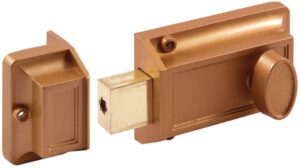
A rim deadbolt mounts on the surface of the door rather than inside it. It doesn't require cutting a hole through the door face — the lock body sits on the interior surface and bolts to a strike plate on the frame.
- Best for: Apartments, rental units, older buildings where door modification isn't allowed
- Pros: Easy installation with minimal tools; great as a supplemental lock
- Cons: Less secure than a mortise or cylindrical deadbolt; visible hardware can look dated
- Price range: $20–$70
Rim deadbolts work best as a secondary lock alongside your main cylindrical deadbolt — not as your only line of defense. They add a second locking point that an intruder has to defeat separately.
6. Vertical (Jimmy-Proof) Deadbolt
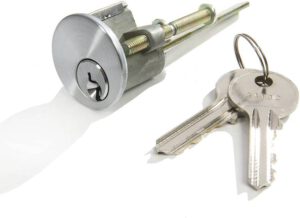
The vertical deadbolt — commonly called a jimmy-proof deadbolt — uses interlocking rings that engage vertically rather than a horizontal bolt sliding into a strike plate. That design makes prying with a crowbar or jimmy tool nearly impossible.
- Best for: High-crime areas, apartment doors, doors that swing outward
- Pros: Extremely resistant to prying and forced entry attacks; surface-mounted so no deep hole drilling needed
- Cons: Requires a matching interlocking strike; bulkier appearance than a standard deadbolt
- Price range: $30–$100
If your neighborhood has elevated break-in risk, adding a vertical jimmy-proof deadbolt as a secondary lock is one of the most effective physical upgrades available. It directly defeats the most common forced-entry method — prying the door away from the frame.
7. Mortise Deadbolt
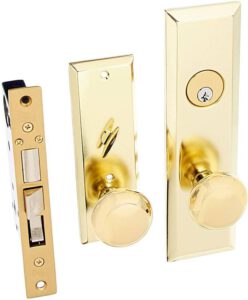
A mortise deadbolt fits inside a recessed pocket cut directly into the door edge. The entire lock mechanism lives inside the door itself — not just a bolt that pokes through it. That makes the door and lock act as a single structural unit.
- Best for: High-security residential doors, commercial properties, exterior doors on older homes with thick door stiles
- Pros: Strongest deadbolt available; difficult to kick in, drill, or pry; extremely durable over decades of use
- Cons: Requires precise door edge cutting; professional installation strongly recommended; higher cost
- Price range: $80–$300+
Mortise locks are the standard in many European countries and are the gold standard for residential security in the U.S. market. If you want maximum protection and your budget allows it, this is the top pick.
8. Smart Deadbolt
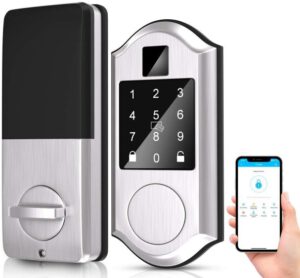
A smart deadbolt connects to your home's Wi-Fi or Bluetooth network. You control it from a smartphone app, voice assistant, or smart home hub. Many models support auto-lock, remote access, guest codes, and real-time activity logs.
- Best for: Tech-forward homeowners, families with kids, remote property managers, vacation rental hosts
- Pros: Remote lock and unlock, real-time entry alerts, temporary guest codes, integration with Alexa and Google Home
- Cons: More expensive; depends on Wi-Fi and battery; vulnerable to cyberattacks if firmware is not kept updated
- Price range: $100–$350
Before buying, read up on whether smart locks are truly safe for your needs. You should also understand how smart locks work before managing them day to day. When you're ready to compare specific models, the best smart deadbolt locks guide covers the top-rated options available right now.
Deadbolt Types Side by Side
Use this quick comparison to narrow down your options. The types of deadbolts explained above each have a clear niche — this table makes the differences obvious at a glance.
| Deadbolt Type | Security Level | Interior Exit | Best Use Case | Avg. Price | DIY Install |
|---|---|---|---|---|---|
| Single Cylinder | Good | Thumb turn (no key) | Standard residential door | $20–$80 | Yes |
| Double Cylinder | Very Good | Key required | Doors adjacent to glass panels | $25–$90 | Yes |
| Lockable Thumb Turn | Very Good | Thumb turn (lockable) | Rentals, glass-adjacent doors | $40–$120 | Yes |
| Keyless Electronic | Good–Very Good | Keypad or thumb turn | Key-free households, Airbnb | $50–$200 | Yes |
| Rim Deadbolt | Moderate | Thumb turn (no key) | Apartments, secondary lock | $20–$70 | Yes |
| Vertical / Jimmy-Proof | Excellent | Thumb turn (no key) | High-crime areas, outward doors | $30–$100 | Yes |
| Mortise Deadbolt | Excellent | Thumb turn (no key) | Max security, commercial doors | $80–$300+ | No (pro recommended) |
| Smart Deadbolt | Good–Excellent | App, keypad, or thumb turn | Connected homes, remote access | $100–$350 | Yes |
Which Deadbolt Works Best for Your Home
Your specific situation determines the right choice. Here's how to think through it systematically.
By Door Type
- Solid wood or fiberglass exterior door: Any deadbolt works well. Start with a Grade 1 single cylinder as your baseline.
- Door with glass sidelights or panels nearby: Choose a double cylinder or lockable thumb turn deadbolt.
- Hollow-core door: Reinforce the door first. No deadbolt compensates for a door that folds under a kick.
- Metal apartment door: A rim deadbolt or vertical jimmy-proof deadbolt installs without major modification and adds a real second layer.
- Old wood door with thick stiles: A mortise deadbolt slots in cleanly and strengthens the door structurally.
By Living Situation
- Single-family homeowner: Single cylinder Grade 1 for standard doors. Upgrade to mortise for maximum protection.
- Renter: Rim deadbolt or portable deadbolt — check your lease before drilling anything.
- Short-term rental host: Keyless electronic or smart deadbolt for easy guest code management and remote access.
- Family with young children: Smart deadbolt with auto-lock prevents kids from wandering out undetected.
- Elderly or mobility-impaired: Keyless electronic or lever-style smart deadbolt — easier to operate than a standard key cylinder.
By Security Priority
- Budget-conscious: Grade 1 single cylinder — reliable protection at low cost, widely available.
- Maximum physical security: Mortise deadbolt or vertical jimmy-proof deadbolt paired with a reinforced strike plate.
- Convenience priority: Smart deadbolt or keyless electronic for key-free daily life.
- Layered security: Combine a primary cylindrical deadbolt with a secondary rim or vertical deadbolt at a second locking point.
If you're starting from scratch or upgrading an existing lock, check the step-by-step guide to replacing a front door lock before you buy — it covers backset measurement, hole sizing, and installation basics that will save you a return trip to the hardware store.
What You Need to Install a Deadbolt
Most standard deadbolts are DIY-friendly. You don't need a locksmith for a single or double cylinder install on a properly prepped door. Here's what to gather before you start.
Basic Tool List
- Drill with a 2-1/8" hole saw (for the face bore) and a 1" spade bit (for the edge bore)
- Chisel and mallet — for mortising the strike plate recess into the door frame
- Tape measure and pencil
- Door latch template — usually included inside the lock packaging
- Phillips and flathead screwdrivers
- 3" wood screws for the strike plate anchor (this matters — see below)
What to Check Before You Start
Measure these three things before ordering any deadbolt online:
- Door thickness: Most deadbolts fit doors between 1-3/8" and 1-3/4" thick. Non-standard doors need an extension kit.
- Backset: The distance from the door edge to the center of the existing hole — typically 2-3/8" or 2-3/4". Your new deadbolt must match this measurement exactly.
- Existing hole diameter: If you're replacing a lock, the hole is already cut. Confirm the new lock fits the existing hole size before buying.
When to Call a Locksmith
Some installs are genuinely beyond DIY scope:
- Mortise deadbolts — require precise routing of the door edge pocket
- Doors with significant warping, swelling, or frame damage
- Commercial-grade installations where tolerances must be exact
- Historic doors where cutting a standard hole would cause irreversible damage
A professional locksmith typically charges $50–$150 for a standard cylindrical deadbolt install. For a mortise deadbolt, budget $100–$250 including labor.
Deadbolt Mistakes That Weaken Your Security
Even the best deadbolt won't protect you if it's installed wrong or used carelessly. These are the most common errors — and how to avoid them.
Installation Mistakes
- Using short screws on the strike plate. This is the single biggest installation mistake. The strike plate holds the door shut when someone kicks it. Standard box screws are only 3/4" long — they anchor only into the door jamb molding, not the structural stud behind it. Replace them with 3" screws that reach the wall stud. This one change dramatically increases kick resistance.
- Misaligning the bolt and strike plate. A bolt that doesn't fully extend into the strike plate opening gives you almost no real protection. Test full engagement before calling the install done.
- Putting a Grade 1 deadbolt on a hollow-core door. The lock will hold. The door won't. Reinforce hollow or weak doors with a door security bar or steel frame kit before relying on any deadbolt.
Usage Mistakes
- Leaving the double cylinder key in the lock. It defeats the purpose entirely. Store a key on a hook near the door — visible from the inside but not reachable through broken glass.
- Never rotating keyless codes. Old codes from former tenants, repair workers, or houseguests stay active until you change them. Rotate codes every 90 days or whenever someone's access should end.
- Ignoring low-battery warnings on electronic locks. A dead battery can lock you out or leave the bolt in an undefined state. Change batteries proactively — at least once per year, or when the lock warns you.
- Relying on a single deadbolt for a vulnerable entry point. High-risk doors benefit from a second locking mechanism at a different point on the door — rim or vertical deadbolt at the top or bottom stile.
Buying Mistakes
- Choosing Grade 3 locks on exterior doors to save $15 — it's not worth it
- Buying a smart deadbolt without verifying app compatibility with your phone's OS version
- Not confirming the backset measurement before ordering online — a wrong-backset deadbolt cannot be installed without routing a new hole
- Picking a finish that clashes with existing hardware — purely aesthetic, but worth five minutes of thought
- Buying a deadbolt without checking whether it's compatible with your existing door prep (pre-drilled holes may be a different size than your new lock requires)
Frequently Asked Questions
What is the most secure type of deadbolt?
The mortise deadbolt offers the highest level of physical security. Because the entire mechanism is recessed inside the door, it resists kicking, drilling, and prying far better than surface-mounted alternatives. For homeowners who want strong security without professional installation, a Grade 1 vertical (jimmy-proof) deadbolt is the next best choice and is fully DIY-friendly.
Is a double cylinder deadbolt legal in residential homes?
Double cylinder deadbolts are legal in most U.S. states, but certain local fire codes restrict or prohibit their use in residential occupancies because they slow emergency egress. Always check your local building and fire code before installing one. If your local code is unclear, a lockable thumb turn deadbolt is a safer alternative that offers similar security without the fire risk.
Can a deadbolt be picked or bumped open?
Yes — most standard deadbolts are technically vulnerable to picking and bump key attacks. However, high-security deadbolts with anti-pick pins, anti-bump cylinders, and hardened steel construction make these attacks significantly harder and slower. Look for ANSI/BHMA Grade 1 locks that explicitly list anti-pick, anti-bump, and anti-drill resistance on the packaging.
How long does a typical deadbolt last?
A quality mechanical deadbolt can last 20–30 years with minimal maintenance — occasional lubrication with graphite powder is usually all it needs. Electronic and smart deadbolts have shorter lifespans due to electronic components, typically 5–10 years before performance degrades. Replace any deadbolt that sticks, shows corrosion, or no longer engages the strike plate cleanly.
Next Steps
- Measure your door's backset and thickness right now — it takes two minutes and prevents ordering the wrong lock entirely.
- Check the ANSI grade stamped on your current deadbolt. If it's Grade 3 on any exterior door, schedule an upgrade to Grade 1 or Grade 2 this week.
- Pull out your strike plate and look at the screw length. If the screws are under 2 inches, replace them with 3-inch screws immediately — this is the fastest security upgrade you can make today at almost no cost.
- If any of your exterior doors have glass within arm's reach of the thumb turn, switch to a double cylinder or lockable thumb turn deadbolt to close that specific vulnerability.
- If you manage access for multiple people — family members, cleaners, contractors — evaluate a smart or keyless electronic deadbolt so you can issue, revoke, and track individual access codes without duplicating physical keys.


About Vincent Foster
Greetings, This is Tom Vincent. I’m a home Security Expert and Web developer. I am a fan of technology, home security, entrepreneurship, and DIY. I’m also interested in web development and gardening. I always try to share my experience with my reader. Stay Connected and Keep Reading My Blog. Follow Me: Facebook, Twitter, Pinterest
Now you can get FREE Gifts. Or latest Free Security Cameras here.
Disable Ad block to reveal all the gifts. Once done, hit a button below