Last winter, a coworker discovered that someone had rifled through her home office filing cabinet. The drawer looked completely normal from the outside, but the thin factory lock had been bypassed in under a minute. That experience made a lot of people around her stop and ask themselves how well their own documents were actually protected.
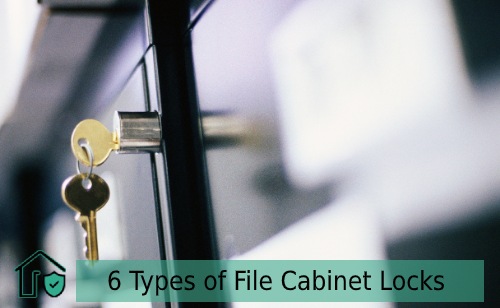
If you store tax records, contracts, medical files, or personal paperwork at home or at the office, understanding the different types of file cabinet locks is one of the most practical steps you can take. Each lock type comes with its own set of strengths, and some are far more resistant to tampering than others. This guide walks you through all six options clearly so you can make a confident decision. For a broader overview of your options, visit our complete guide to file cabinet locks.
According to Wikipedia's overview of lock security, a lock is only as effective as its weakest component — and in many filing cabinets, that weakness is the lock itself. Factory-installed locks on budget cabinets are often more of a formality than a real barrier. Knowing what you have, and what you could upgrade to, puts you in control. Whether you're managing a home office or handling sensitive business records, the right lock makes a measurable difference.
Contents
- Which Types of File Cabinet Locks Work Best for Your Needs
- Keeping Your File Cabinet Lock in Good Working Order
- When to Upgrade Your Lock — and When to Leave It Alone
- How File Cabinet Lock Types Compare: Strengths and Weaknesses
- Building a Long-Term Document Security Strategy
- Mistakes That Leave Your Files More Vulnerable Than You Think
- Frequently Asked Questions
Which Types of File Cabinet Locks Work Best for Your Needs
The types of file cabinet locks on the market today range from simple spring-loaded pins to fingerprint-controlled digital systems. Most cabinets ship with a basic lock that handles low-risk situations just fine — but there are much better options if your files actually matter. Here's a clear breakdown of all six types and what each one is genuinely suited for.
Electronic Cabinet Locks
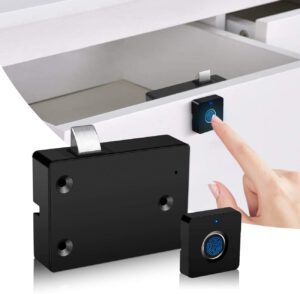
Electronic cabinet locks use a keypad, RFID card, or fingerprint reader to control access. You don't need a physical key — you enter a code or tap a credential, and the lock disengages. This makes them a strong choice for offices where multiple people need access but you still want to track who's coming in and out. Most models run on standard batteries and include a manual override key as a backup.
They tend to cost more than mechanical options, typically $50 to $200 or higher depending on features. But if your cabinet holds client contracts, medical records, or payroll files, that price difference is often easy to justify. The ability to change codes without calling a locksmith — or to revoke access without collecting a physical key — is genuinely useful in a shared space.
Tubular Cylinder Locks
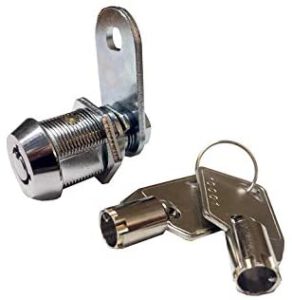
A tubular cylinder lock — sometimes called a barrel lock — uses a circular key that fits into a round housing. You'll find these on vending machines, bike locks, and file cabinets alike. They're compact and widely available as replacement parts, which makes them a practical upgrade option for most standard filing cabinets.
The important thing to know is that tubular cylinder locks vary widely in quality. Budget versions can be picked or drilled with basic tools and a few minutes of effort. Higher-end versions from reputable manufacturers are considerably more resistant to tampering. If you're moving away from a flimsy factory lock, a quality tubular cylinder strikes a reasonable balance between cost and protection.
Cam Locks
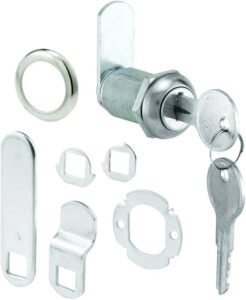
Cam locks are flat, rotating mechanisms where the key turns a small metal "cam" (a flat rotating piece) to secure or release a drawer. They're incredibly common in filing cabinets, lockers, and office desk drawers — and they're inexpensive enough that many manufacturers install them as factory standard without a second thought.
The trade-off is real: basic cam locks offer minimal security. They can often be bypassed with a thin strip of metal or a bump key. That said, for situations where you're mainly trying to deter casual snooping rather than stop a determined person, a cam lock does its job without complication. If your files are genuinely sensitive, consider it a starting point, not a final answer.
Locking Bars
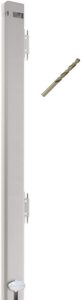
A locking bar — sometimes called a file cabinet bar lock — is a metal rod that runs vertically through all the drawer handles at once, secured at the top with a padlock or integrated lock cylinder. When the bar is in place, not one drawer in the cabinet can be opened, regardless of what happens to the individual drawer locks.
Locking bars are one of the most visible and affordable deterrents you can add to an existing cabinet. The physical presence of the bar signals immediately that the cabinet is secured. They work especially well as a secondary layer — even if someone gains access to your workspace, they can't quickly or quietly pull files. The main drawback is that they typically require a separate padlock, adding one more item to your key ring.
Padlocks (Steel Padlocks)
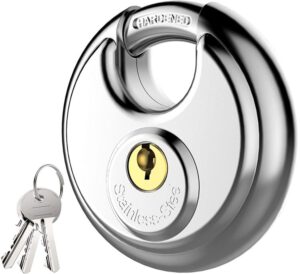
A steel padlock paired with a hasp attachment gives you a portable and flexible security option for almost any filing cabinet. The quality range is enormous. Thin brass padlocks can be cut with basic tools or shimmed open in seconds. Hardened steel shackle locks from established brands are a different story entirely — designed to resist bolt cutters, picking, and drilling.
Before choosing a padlock for your cabinet, it helps to understand how they fail. Our guide on how to open a padlock without a key walks through the most common vulnerabilities, which makes it easier to shop for a model that's actually resistant to them. Look for a padlock with a shrouded shackle (one that's partially enclosed by the body) and a pick-resistant cylinder for meaningful protection.
Plunger / Tubular Push Locks
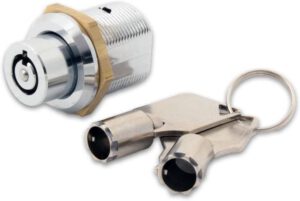
Plunger locks — also called tubular push locks — use a spring-loaded pin that locks into place when you close the drawer. You insert a key and rotate it slightly to release the mechanism. They're fast to operate and require no knob or lever, which makes them a popular factory choice for lateral file cabinets and general office furniture.
The convenience factor is genuine. The security level, though, sits roughly on par with a standard cam lock. Plunger locks work best in low-risk environments where speed and ease of access matter more than high-level protection. If your cabinet came with one and your files aren't particularly sensitive, there's no urgent reason to replace it — but you should know what you're working with.
Keeping Your File Cabinet Lock in Good Working Order

Even a well-made lock will fail if you don't give it basic attention. A lock that sticks, jams, or turns roughly is signaling that something is wrong — and ignoring it usually means the problem gets worse until the lock fails completely, often at the least convenient moment.
Start with lubrication. Most pin-tumbler and cylinder locks respond well to a graphite powder lubricant applied to the keyway once a year or so. Graphite is dry, so it won't attract dust or gum up the mechanism over time the way oil-based sprays can. If a key starts feeling stiff or gritty when you turn it, a small puff of graphite powder through the keyway usually solves the problem quickly.
Keep the exterior of the lock clean as well. Dust and debris work their way into mechanisms gradually, especially in workshop or garage environments. A quick wipe with a dry cloth every few months is all it takes to keep grime from becoming a bigger issue.
Pay attention to your drawer alignment too. A cabinet that's been bumped or moved slightly out of position can put stress on the lock bolt (the piece that slides into a catch to secure the drawer). If the drawer feels sticky or stiff even when it's unlocked, alignment might be the problem rather than the lock itself. The same diagnostic approach used for door hardware applies here — our overview of common door lock problems and repairs covers the principles that transfer directly to cabinet locks.
If you're using an electronic lock, check the battery level every six months. Most models give a low-battery warning light or beep, but it's easy to dismiss. A dead battery at the wrong time forces you to dig out a manual override key you may not have seen since installation day. Make a habit of testing the override key during routine battery checks so you know it still works and you know where it is.
When to Upgrade Your Lock — and When to Leave It Alone
Not every filing cabinet needs a heavy-duty lock. If you're storing user manuals and old utility bills in a cabinet at home, a basic cam lock is probably adequate. The real question is a simple one: what happens if someone gets into this cabinet without your knowledge?
You should seriously consider upgrading if your cabinet holds Social Security numbers, financial account details, medical records, client data, legal documents, or identification materials like passports and birth certificates. For those categories, a cheap factory lock is not a reasonable solution — the consequences of a breach are too significant.
Think carefully about your physical environment as well. A home office that visitors occasionally pass through, a shared workspace, or a common area carries meaningfully more risk than a private room you're the only one who enters. Shared physical access raises the probability that even a basic lock will eventually be tested, whether intentionally or through simple curiosity.
On the other hand, if your cabinet sits inside a room with its own locked door, inside a building with controlled entry, and only you ever approach it, your factory lock may actually be sufficient. Layered physical security — a locked building, a locked room, a locked cabinet — can compensate for a weaker lock at the final layer. Defense in depth matters.
For temporary setups like rented offices or shared coworking spaces, spending heavily on a permanent lock modification may not make sense. In those situations, a quality padlock and locking bar can deliver solid protection without any irreversible changes to a cabinet you don't own.
How File Cabinet Lock Types Compare: Strengths and Weaknesses

Every lock type involves trade-offs between cost, convenience, and actual security. The table below puts all six side by side so you can see where each one stands at a glance. Keep in mind that security ratings reflect a typical version of each type — a premium tubular cylinder from a reputable brand is considerably more secure than a budget one, even though they carry the same category name.
| Lock Type | Security Level | Ease of Use | Typical Cost | Best For |
|---|---|---|---|---|
| Electronic Lock | High | Very Easy | $50–$200+ | Multi-user offices, sensitive records |
| Tubular Cylinder | Medium–High | Easy | $15–$80 | General home or office use |
| Cam Lock | Low–Medium | Easy | $5–$30 | Low-risk storage, basic deterrence |
| Locking Bar | Medium | Moderate | $20–$60 | Secondary deterrence layer |
| Padlock | Medium–High | Easy | $10–$100+ | Flexible and portable setups |
| Plunger Lock | Low | Very Easy | $5–$25 | Convenience, low-risk environments |
Price is worth paying attention to here. The gap between a $10 padlock and a $60 padlock isn't just branding — it reflects real differences in pin count, shackle material, and pick resistance. If you're serious about protecting something, avoid the lowest price point in any category.
Building a Long-Term Document Security Strategy
Choosing one lock and calling it done is a reasonable first step. But if you want your document security to hold up over years rather than months, it helps to think about your cabinet lock as one layer in a broader approach — not the whole system.
Start by taking stock of what you actually keep in the cabinet. Most people store a mix of low-sensitivity files (old utility bills, warranties, manuals) alongside high-sensitivity ones (tax returns, bank statements, legal paperwork) in the same drawer. If that sounds familiar, consider separating them. Keep truly sensitive originals in a lockbox or fireproof safe, and use the filing cabinet for lower-priority copies and working documents.
Think seriously about key control. A lock is only as secure as the keys that open it. If you've handed out cabinet keys to people who no longer need access — former employees, past roommates, old business partners — rekeying or replacing the lock is a smart move, not an overreaction. Many quality cylinder locks can be rekeyed by a locksmith for less than the cost of a brand-new lock.
Consider disaster scenarios too. File cabinet locks do nothing against fire or flood. A separate fireproof document bag or small safe is worth having for truly irreplaceable originals like property deeds and birth certificates. The filing cabinet becomes the right place for copies and day-to-day reference documents, while the safe handles irreplaceables.
Finally, pair your cabinet security with basic room-level controls. A locked door between your cabinet and the outside world adds a layer that any intruder has to clear before reaching your files. Multiple barriers mean more time, more noise, and more risk for anyone attempting unauthorized access — all of which work in your favor.
Mistakes That Leave Your Files More Vulnerable Than You Think
Even people who do invest in a decent lock sometimes undermine their own security without realizing it. A few patterns come up repeatedly.
The most common one is accepting the factory lock without evaluating it. Most filing cabinets ship with a basic cam or plunger lock — functional enough to pass product packaging requirements, but not designed for real security. Just because a lock came with the cabinet doesn't mean it's appropriate for what you're storing.
Another mistake is keeping the cabinet key in an obvious spot. A key taped under the cabinet, tucked into a nearby desk drawer, or hanging on a hook beside the unit effectively cancels out the lock entirely. Anyone with access to your space will check those spots immediately. Store your cabinet key separately from the cabinet itself — in a wallet, a key safe, or another secured location away from the cabinet.
People also underestimate how quickly a lost key becomes a real security issue. If a key goes missing, the right move is to rekey or replace the lock right away — not wait and see if it turns up. Every day you wait is a day you're operating on an assumption that may be wrong.
For electronic lock users, skipping proper setup of the manual override key is a surprisingly common oversight. When the battery dies unexpectedly, that shortcut becomes a significant problem. Take ten minutes during installation to set up the override key correctly and store it somewhere you'll actually remember.
Finally, don't overlook the cabinet itself. A strong lock on a weak cabinet is a false sense of security. If the cabinet body can be pried apart or the drawer physically forced, lock quality becomes largely irrelevant. Match your lock investment to the quality of the cabinet — and if the cabinet is flimsy, consider that part of your upgrade plan too.
Frequently Asked Questions
What is the most secure type of file cabinet lock?
Electronic locks and high-quality tubular cylinder locks from reputable brands offer the strongest protection for most situations. Electronic locks add the benefit of keyless access control and easy code changes, while premium cylinder locks are highly pick- and drill-resistant. The best choice depends on your specific needs — electronic locks suit shared offices well, while a quality cylinder works fine for single-user home setups.
Can I replace a filing cabinet lock myself?
In many cases, yes. Cam locks and tubular cylinder locks are often straightforward to swap out — you typically need a screwdriver and the correct replacement size for your cabinet's lock housing. Electronic locks usually include detailed installation guides. That said, if you're unsure about the mechanism or don't want to risk damaging the cabinet, a locksmith can handle the replacement quickly and inexpensively.
How do I know if my existing cabinet lock is good enough?
Ask yourself two questions: what are you storing, and who has access to the space? If the files contain sensitive personal or financial information and the cabinet is in a shared area, a factory-standard cam or plunger lock is likely not enough. If you're storing low-sensitivity documents in a private, locked room, your current lock may be perfectly adequate. Evaluate the risk level of the content, not just whether the drawer latches.
Are electronic file cabinet locks worth the extra cost?
For shared offices or anywhere multiple people need access, electronic locks are often worth it. The ability to change access codes without collecting physical keys, combined with no risk of losing a key, makes them genuinely practical. For a solo home office with sensitive but not critical documents, a quality mechanical lock at a lower price point may serve you just as well. Weigh the added cost against how much the access control features matter to your situation.
What should I do if I lose my filing cabinet key?
Act quickly. Your first step is to try contacting the cabinet manufacturer — many use standardized key codes and can send a replacement key if you have the code stamped on the lock or original paperwork. If that's not possible, a locksmith can pick or drill the lock and replace it. Once access is restored, replace the lock entirely rather than simply having a new key cut. Treat a lost key the same way you'd treat a lost password — assume it could be in the wrong hands and change it.
The lock you ignore today is the one that fails you when it matters most — choose it as carefully as you'd choose what to keep inside.


About Vincent Foster
Greetings, This is Tom Vincent. I’m a home Security Expert and Web developer. I am a fan of technology, home security, entrepreneurship, and DIY. I’m also interested in web development and gardening. I always try to share my experience with my reader. Stay Connected and Keep Reading My Blog. Follow Me: Facebook, Twitter, Pinterest
Now you can get FREE Gifts. Or latest Free Security Cameras here.
Disable Ad block to reveal all the gifts. Once done, hit a button below