What's the point of a deadbolt on your front door if your most important documents are sitting loose in a desk drawer? If that question just made you pause, you're already thinking in the right direction. The best drawer safes for home office use give you fast, discreet access to your most valuable items — without giving up real security. Whether you're protecting a handgun, passport, cash, or confidential paperwork, a drawer safe fits neatly into your existing setup. Check out the full safes guide to compare all your secure storage options.
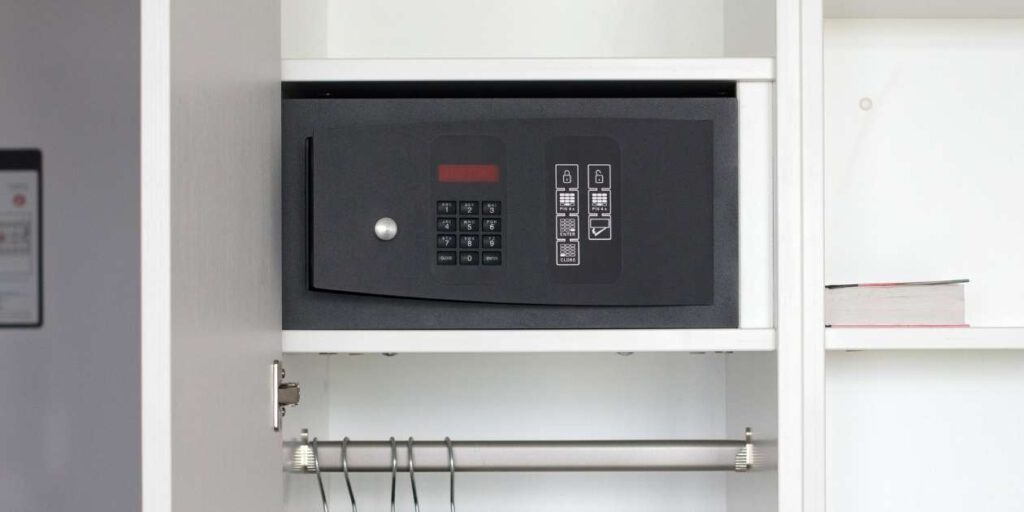
Drawer safes are designed to slide into a standard desk or nightstand drawer — or mount directly inside one — keeping your valuables hidden in plain sight. They're compact, relatively affordable, and offer a level of quick access that a floor safe or wall safe simply can't match. That accessibility is exactly why they've become popular with homeowners, remote workers, and small business owners alike.
According to Wikipedia's overview of safes, modern residential safes are classified by both their resistance to unauthorized entry and their fire protection ratings. Drawer safes typically fall into the "security container" category — they prioritize access control over fire resistance. That distinction matters when deciding what to store inside one. This guide walks you through the key decisions: where to use a drawer safe, which models are worth considering, which lock type fits your needs, and which mistakes can quietly cancel out your security.
Contents
Where Drawer Safes Make the Most Sense
Before you buy anything, it helps to think about where a drawer safe will live and what it needs to do. The right fit for a home office desk looks different from what you'd want on a bedroom nightstand or in a retail back room. Context shapes everything.
Home Office and Remote Work
If you work from home, your desk likely holds more sensitive material than you realize. Think tax returns, client contracts, business credit cards, or a backup drive with confidential files. A drawer safe mounted inside your file cabinet or under your desk gives those items a dedicated, locked home. You can retrieve what you need in seconds without unlocking an entire room or a bulky floor safe.
- Store documents you use regularly but can't leave lying in the open
- Keep a backup house key or spare car key secure but accessible
- Protect a personal firearm in a dual-use office and guest room
- Secure external hard drives containing client data or business backups
One thing to keep in mind: if other people have access to your workspace — a cleaning service, visiting family, or clients — a visible but locked safe is a reasonable deterrent. It signals that access requires effort, and effort is what most opportunistic thieves want to avoid.
Bedside and Bedroom Use
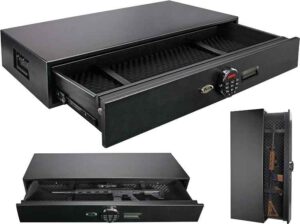
Nightstand drawer safes are one of the most popular use cases, and for good reason. You want your firearm or emergency cash within arm's reach while you sleep — but completely inaccessible to a child or a house guest. A bedside drawer safe solves both problems at once.
The key requirement for this location is fast access in low light. A backlit keypad or biometric fingerprint reader works far better here than a traditional key lock. Fumbling for keys in the dark defeats the whole purpose of having fast access in an emergency.
Small Business Settings
Small offices, retail back rooms, and reception desks are all practical spots for a drawer safe. You might use one to secure petty cash, backup PIN codes, or spare access credentials. In shared environments, a drawer safe with a programmable code lets you update access without calling a locksmith whenever staff turnover happens.
For shared access situations, look for models that support multiple user codes. Some mid-range electronic safes allow two to four separate access codes — useful when you want to know who opened the safe and when, without relying on an honor system.
Popular Drawer Safe Models Side by Side
Finding the best drawer safes for home office use means sorting through a crowded market. The table below gives you a side-by-side reference for some of the most commonly reviewed models. Prices vary by retailer, so treat those ranges as rough guides rather than exact figures.
| Model | Lock Type | Interior (approx.) | Steel Gauge | Best For |
|---|---|---|---|---|
| Amazon Basics Slim Drawer Safe | Electronic Keypad | ~190 cu. in. | 18-gauge | Budget home office |
| Moutec Rapid Gun Storage Safe | Electronic Keypad | ~330 cu. in. | 16-gauge | Bedside firearm storage |
| Moutec Biometric Handgun Safe | Biometric + Key Backup | ~260 cu. in. | 16-gauge | Quick-access bedroom |
| Paragon Lock and Safe Premium | Electronic Keypad | ~270 cu. in. | 18-gauge | Home office documents |
| INVIE Electronic Digital Safe Box | Electronic + Key | ~300 cu. in. | 18-gauge | General home use |
Budget and Entry-Level Options
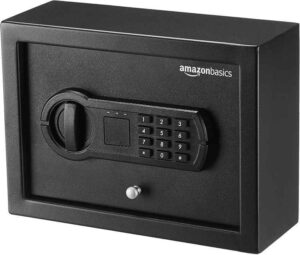
Entry-level drawer safes typically run under $60 and are built from 18-gauge steel. They're good enough to stop a casual snooper, but won't hold up to a determined break-in with tools. If your main concern is keeping curious hands out — a child in the house, a houseguest, or a visiting contractor — a budget model covers that need reasonably well.
- Most include a programmable 3–8 digit keypad with a button lockout after failed attempts
- A backup override key is typically included — store it somewhere other than the same drawer
- Interior foam padding protects handguns and small electronics from scratches
- Hinges and locking bolts are often the weakest points at this price tier
If you're adding security to multiple storage areas in the same room, you might also look at magnetic cabinet locks as a complementary layer for other furniture you want to restrict access to.
Mid-Range and Premium Picks
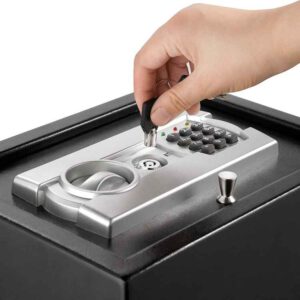
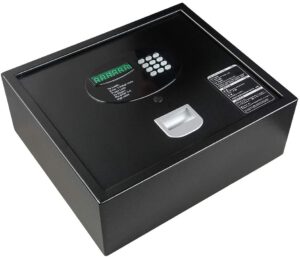
Mid-range safes in the $60–$150 range use 16-gauge steel and often include dual-access options — a keypad plus a physical key backup, or biometric plus key. The jump from 18 to 16-gauge steel makes a meaningful difference in pry resistance, even though the numbers look similar on paper. Thicker steel requires more time and more tool pressure to defeat.
At the premium end ($150 and up), you start seeing features like:
- Solid steel locking bolts that are 1/2 inch or thicker
- Anti-pry tabs built into the door frame
- Biometric readers that store 10–20 fingerprints for multiple users
- Interior LED lighting for low-light access
- Reinforced anchor points rated for heavier mounting loads
Whether premium features justify the cost depends entirely on what you're storing. For a handgun, business documents, or jewelry with real value, the extra investment is reasonable. For general paperwork or a spare key, a mid-range model is probably sufficient.
Lock Types and Features That Matter
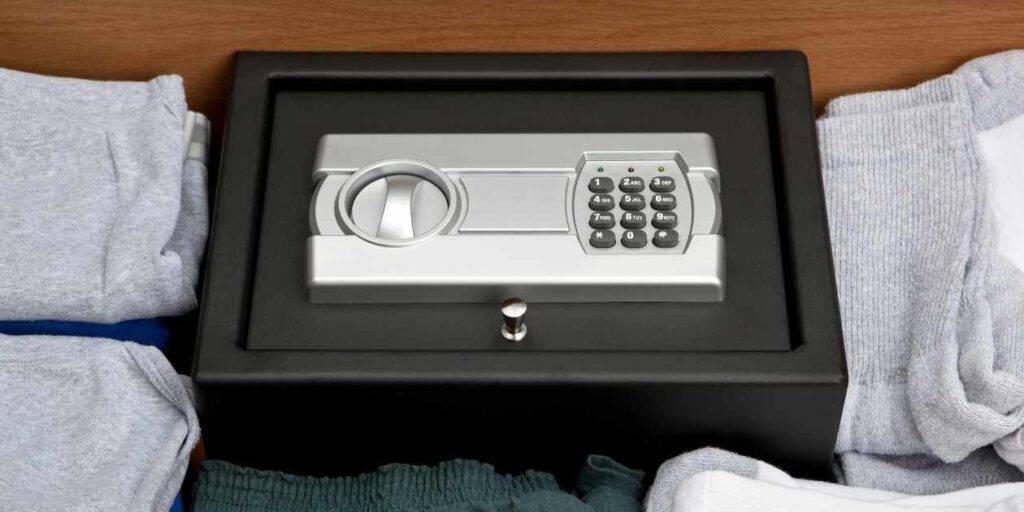
The lock is the most important component of any safe. The steel box itself is a deterrent — the lock is what actually stops unauthorized access. Here's how the main types stack up against each other.
Electronic Keypad Locks
Electronic keypad locks are the most popular choice in drawer safes, and for good reason. You punch in a 4–8 digit code and the door opens in under two seconds. No key to lose, no dial to fumble with in the middle of the night.
- Most models lock out after 3–5 wrong code attempts, typically for 30 seconds to 3 minutes
- Codes are reprogrammable — change them without calling a locksmith
- Batteries (usually AA or AAA) need replacing roughly every one to two years depending on use frequency
- A backup key override is standard — keep it stored somewhere other than the safe itself
Keypad locks are a solid middle ground between convenience and security. If you're thinking about upgrading other access points in your home at the same time, it's worth reading about whether smart locks are genuinely safe — many of the same electronic reliability questions apply to both product categories.
Biometric Fingerprint Locks
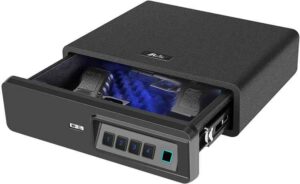
Biometric safes read your fingerprint and open in about one second. That speed matters most in a bedside or emergency-access situation — no code to remember under stress, no key to locate, just press and it opens.
A few things to understand before you buy a biometric model:
- Budget biometric sensors have higher false-rejection rates — they sometimes won't read your print if your fingers are dry, wet, or dirty
- Higher-end models store 5–20 fingerprints, so you can register multiple users or multiple fingers per person
- Always choose a model that also includes a keypad or physical key backup — biometrics alone can fail
- Capacitive sensors (found in pricier models) outperform optical sensors in low-light and adverse conditions
Biometric locks offer the fastest access but carry the highest risk of failure when it matters most. They're best for people who are willing to test and re-register their fingerprints periodically to keep read rates reliable over time.
Key and Combination Locks
Traditional key locks and mechanical combination dials don't need batteries and won't fail due to a depleted power supply. That reliability is their biggest selling point. If you're storing something you rarely access — a spare passport, a backup credit card, emergency cash — a simple key lock may be all you need.
The downside is the key itself. Lose it, and you're looking at a locksmith or a drill. Mechanical combination dials, meanwhile, require memorizing a sequence and spinning a dial with precision, which isn't ideal for fast access. If you want to understand how different lock mechanisms compare in terms of vulnerability, the guide on different types of padlocks covers the underlying mechanics of each locking system clearly.
Mistakes That Undermine Your Safe's Security
Buying the right safe is only half the job. How you install and use it determines whether it actually protects anything. These are the most common ways people accidentally cancel out their own investment.
Skipping the Anchor Bolts
This is the single biggest mistake people make with drawer safes. An unanchored model can be picked up and walked out in under thirty seconds. A properly bolted safe requires tools and significant time to remove — two things a burglar typically wants to avoid. Most safes ship with pre-drilled mounting holes and hardware. Use them.
If you're mounting to a wooden drawer bottom, choose bolts long enough to pass through the drawer floor and into the structure beneath. If you're surface-mounting under a desk, make sure the screws go into solid wood, not just a thin decorative veneer. The mounting is often stronger than the safe itself if done correctly.
Picking the Wrong Size
Many buyers underestimate how much they'll want to store over time. A safe that fits perfectly today may feel cramped within a year. A few practical rules to avoid this:
- Measure your drawer's interior before buying — most safes list exterior dimensions, which are always larger than usable space
- Leave clearance for the door to swing open, typically 2–4 inches of front clearance
- If storing a handgun, verify the interior dimensions accommodate your specific firearm including any mounted accessories
- At the entry level, a slightly larger safe costs only a few dollars more — size up when you're unsure
Ignoring Steel Gauge
Steel gauge — the thickness of the safe's walls — is one of the most important specs, but it's often buried or omitted in product listings. Lower gauge numbers mean thicker steel. An 18-gauge safe pries open noticeably more easily than a 14-gauge model under the same force.
For low-risk contents like general documents or a spare key, 18-gauge is often acceptable. For firearms, large amounts of cash, or anything genuinely costly to replace, look for 16-gauge or better. If a listing doesn't state the gauge, check the full specification sheet or contact the seller directly before buying.
The Real Trade-Offs of Drawer Safes
No security product is perfect, and drawer safes are no exception. Understanding the genuine limits of what you're buying helps you layer your security appropriately rather than expecting one product to handle everything.
What Works Well
- Speed of access — faster than any floor safe or wall safe for daily-use items
- Discretion — hidden inside existing furniture, invisible to a casual scan of the room
- Affordability — functional options start under $50, making security accessible at nearly any budget
- Flexibility — works equally well in bedrooms, home offices, vehicles, and retail spaces
- Child safety — even a basic electronic lock reliably keeps young children out of reach of firearms or medications
For most people, the combination of quick access and reasonable deterrence fits their actual risk profile well. The majority of residential break-ins are opportunistic — a locked safe, even a modest one, raises the effort bar enough to redirect attention to easier targets.
Where They Fall Short
Drawer safes are not fire safes. Most have no meaningful fire resistance at all. If protecting documents or digital media from fire matters to you, use a separate fire-rated document bag or fireproof lockbox alongside your drawer safe — not instead of one.
They're also not built to stop a determined attacker with tools and time. A good drawer safe resists prying and grabbing, but a grinder or drill can eventually defeat most consumer models if the attacker has privacy and patience. The realistic goal isn't impenetrability — it's making access slow, noisy, and difficult enough that theft becomes unattractive.
- Not fire rated — don't store irreplaceable items without additional fire protection
- Limited interior space — standard letter-size documents often don't fit flat
- Electronic models require periodic battery changes to stay functional
- Budget models have weaker pry resistance than their marketing typically implies
Think of a drawer safe as one important layer in a broader security approach — not your only line of defense. Pairing it with solid entry-point security, reliable door locks, and if relevant, a monitored alarm system creates a much more complete picture.
Frequently Asked Questions
What is the best drawer safe for a home office?
The best drawer safe for a home office depends on what you're storing and how often you need access. Electronic keypad models built from 16-gauge steel offer the best balance of daily convenience and solid security. Look for a model that includes anchor bolt hardware and a physical key backup in case the battery dies.
Can a drawer safe be bolted down inside a desk drawer?
Yes — most drawer safes are designed specifically to be bolted in place from the inside. Pre-drilled mounting holes and hardware are typically included. Use bolts long enough to pass through the drawer floor and into solid structure beneath for the most secure installation. An unanchored safe can be carried out in seconds.
How thick should the steel be on a drawer safe?
For general home use, 18-gauge steel is adequate as a deterrent against casual access. For higher-value items like firearms or substantial amounts of cash, 16-gauge or better offers meaningfully better pry resistance. Check the product specification sheet before buying — this detail isn't always listed prominently in listings.
Are biometric drawer safes reliable enough to depend on?
Biometric safes at the budget end can have inconsistent read rates, especially when your fingers are dry, wet, or dirty. Mid-range models with capacitive sensors perform more reliably over time. Always choose a biometric model that also includes a keypad or physical key backup — you don't want to be locked out in an emergency because the sensor failed.
Do drawer safes protect against fire?
Most drawer safes offer no meaningful fire protection. They are security containers designed to resist unauthorized access, not heat or flames. If fire protection matters for your stored items, pair your drawer safe with a separate fire-rated document bag or fireproof lockbox — not as a substitute, but as an additional layer.
What items are best stored in a drawer safe?
Common items include handguns and ammunition, passports and identification documents, spare credit cards or emergency cash, jewelry, backup hard drives, and small business records. Avoid storing irreplaceable documents without additional fire protection, since most drawer safes carry no fire rating whatsoever.
How do I decide between an electronic keypad and a biometric lock?
If you prioritize fast access in low-light or emergency situations, a biometric lock is the better choice — provided you buy a mid-range or better model with a reliable sensor. If you want consistent, low-maintenance access without worrying about sensor failures, an electronic keypad is more dependable. In either case, always choose a model with a backup key override.
Can someone break into a drawer safe with basic tools?
A budget drawer safe can be defeated with pry bars or a drill given enough time and privacy. The purpose of a drawer safe is deterrence — making access difficult and time-consuming enough to discourage opportunistic theft. For higher-value storage, choose a thicker-gauge model with reinforced locking bolts, and always anchor it in place to eliminate the option of simply carrying it away.
The best drawer safe is the one you actually bolt down, use consistently, and treat as one layer of a larger plan — because a safe sitting loose in a drawer is just an expensive box.


About Vincent Foster
Greetings, This is Tom Vincent. I’m a home Security Expert and Web developer. I am a fan of technology, home security, entrepreneurship, and DIY. I’m also interested in web development and gardening. I always try to share my experience with my reader. Stay Connected and Keep Reading My Blog. Follow Me: Facebook, Twitter, Pinterest
Now you can get FREE Gifts. Or latest Free Security Cameras here.
Disable Ad block to reveal all the gifts. Once done, hit a button below