Can you really save Ring Doorbell video without subscription fees attached? Absolutely — and there are more ways to do it than Ring's marketing might lead you to believe. Ring's Protect Plan gives you convenient cloud storage, but it's entirely optional. Whether you're cutting costs, reclaiming your privacy, or simply building a more intentional smart home security setup, this guide walks you through every practical method for capturing and keeping your Ring doorbell footage locally, on your own schedule and without paying a monthly fee.
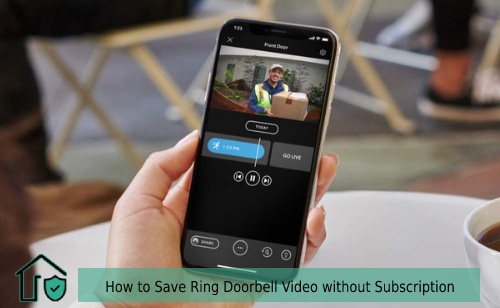
Here's the reality: Ring doorbells are genuinely useful devices. They detect motion, push real-time alerts to your phone, stream live HD video, and let you talk to anyone at your door through two-way audio. What they don't do for free is record and store that footage automatically. Without a Protect Plan, you can watch live — but the moment you navigate away, that video is gone. Ring's free tier is essentially a live-view camera. To actually hold onto recordings, you have to take a more active approach.
The good news is that this doesn't have to be complicated. Some of the methods below take less than five minutes to set up. Others require more technical steps, but none of them are beyond a motivated homeowner. Let's start with how Ring handles video under the hood — because understanding that makes every other step click into place.
Contents
- How Ring's Video Storage Actually Works
- When Local Saving Makes Sense — and When It Doesn't
- Tools and Methods You'll Need to Save Ring Footage
- How to Save Ring Doorbell Video Without Subscription: Simple to Advanced
- Keeping Your Local Video Library Clean and Reliable
- Smart Habits to Get More From Your Ring
- Frequently Asked Questions
How Ring's Video Storage Actually Works
The Cloud-First Design
Ring was built from the ground up as a cloud-connected system. When your doorbell detects motion or someone rings the bell, it wakes up and starts streaming video to Ring's servers — which are operated by Amazon, Ring's parent company. That video gets processed, stored, and made available through the Ring app. It's a seamless experience, but it comes with two important trade-offs: cost and control. You pay a monthly fee for storage, and your footage lives on someone else's servers.
Understanding this matters because Ring does not natively support local storage the way many dedicated security cameras do. There's no SD card slot in a Ring doorbell. There's no built-in NVR (Network Video Recorder — a device that records camera footage directly to a local hard drive) compatibility out of the box. Everything the device records goes up to the cloud first. That's the design choice Ring made, and it's the gap that all the local saving methods below are working around.
What the Free Tier Actually Gives You
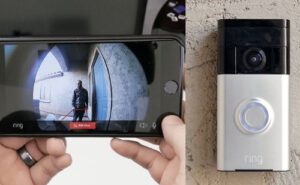
Without a Protect Plan, Ring still gives you quite a bit to work with. You get live view (watch your camera feed in real time from anywhere), motion and doorbell alerts, two-way talk, and the ability to share your live feed with others. What you don't get is automatic event recording, video history, or the ability to save clips from inside the Ring app. It's a solid set of features — but for most homeowners, real-time video without any playback isn't enough. If you want to go back and check what happened while you were asleep or at work, you need a strategy for capturing and storing that footage yourself. And if you're still deciding whether a video doorbell is even the right device for your setup, this breakdown of a video doorbell vs. a traditional security camera lays out the key trade-offs clearly.
When Local Saving Makes Sense — and When It Doesn't
Good Reasons to Go Local
There are a few situations where saving Ring footage locally is clearly the right call. Privacy is the biggest one. Not everyone is comfortable with home security footage stored on a corporate server, accessible to a third party under certain legal or policy conditions. Local storage puts you fully in control — you're the only one who has that footage. Cost is another major factor. Ring's Protect Plan runs several dollars per month per device, and that adds up quickly if you have more than one camera. Saving locally puts that money back in your pocket permanently.
Reliability is a third reason worth taking seriously. Cloud storage depends on both your internet connection and Ring's servers being up simultaneously. If your ISP goes down or Ring experiences an outage, you lose access to your footage at the exact moment you might need it most. Local storage doesn't have that single point of failure. And if you're dealing with a specific security incident — a package theft, a vandalism attempt, a suspicious vehicle — having your own copy makes it much easier to hand footage to law enforcement or your insurance company without navigating Ring's data request process.
When You Might Want to Stick With the Cloud
Local saving isn't the right fit for everyone. If you're not particularly tech-savvy and the idea of managing files, software, or network storage feels overwhelming, a Ring subscription might genuinely be worth the cost for the simplicity it provides. Cloud storage also gives you one protection that local storage can't: if your device is stolen, a burglar can't take your cloud backup with it. If you have just one doorbell and you mostly use it for convenience rather than serious security monitoring, the math might favor the subscription. There's no universal right answer here — it depends on your priorities, your comfort level, and how seriously you're approaching your home's overall protection.
Tools and Methods You'll Need to Save Ring Footage
Software and Apps
The most accessible tools for getting started are screen recording software and third-party automation platforms. Screen recorders let you capture your Ring live view directly on your phone or PC. Apps like AZ Screen Recorder on Android, or the built-in screen recording feature on iOS, let you hit record while watching your Ring live feed and then save that file locally. It's not elegant, but it works immediately with no additional accounts or setup required. For a more automated approach, platforms like Home Assistant — an open-source smart home hub you run on your own hardware — can integrate with Ring via a supported plugin and trigger recordings automatically whenever motion is detected.
Another popular option is IFTTT (If This Then That), a web automation service. You can create a free "applet" that activates when Ring detects motion and saves a snapshot or notification log to a folder you control, like Dropbox or Google Drive. It's not full video, but it gives you a timestamped record of every motion event — which is often exactly what you need to establish a pattern or support an incident report. For a broader look at how dedicated camera systems handle local storage as part of a complete setup, this guide to the best home security camera systems covers several strong alternatives that pair well with a Ring doorbell.
Hardware Options
On the hardware side, your main options are a dedicated Windows PC running Blue Iris (a popular NVR application), a Raspberry Pi running open-source software like Frigate or Shinobi, or a standalone NVR unit connected to your local network. Blue Iris supports Ring doorbells via RTSP (Real-Time Streaming Protocol — a standard for streaming video over a network), though accessing Ring's RTSP stream requires some community-developed workarounds since Ring doesn't officially expose it. The trade-off with any hardware solution is more setup work upfront, but once it's running you get continuous local recording with no ongoing cost.
| Method | Difficulty | Cost | Saves Full Video? | Automated? |
|---|---|---|---|---|
| Phone Screen Recording | Beginner | Free | Yes | Manual only |
| IFTTT Automation | Beginner | Free / low cost | Snapshots only | Yes (on motion) |
| Home Assistant + Ring Integration | Intermediate | Free (own hardware) | Yes | Yes |
| Blue Iris (Windows NVR) | Advanced | ~$70 one-time | Yes, full HD | Yes |
| Raspberry Pi + Frigate | Advanced | ~$50–100 hardware | Yes, full HD | Yes |
How to Save Ring Doorbell Video Without Subscription: Simple to Advanced
Beginner-Friendly Methods
If you're new to all of this, start with screen recording. Open your Ring app, tap your camera to pull up the live view, and start your phone's built-in screen recorder before any action begins. When you're done, the recording saves as a video file directly to your camera roll. From there you can back it up anywhere — AirDrop it to a Mac, upload it to Google Photos, or copy it to a USB drive. It's completely manual and requires you to be watching the feed in real time, but for capturing a specific incident you've already been alerted to, it's fast, reliable, and free.

The next step up is IFTTT. Create a free account, connect your Ring account, and set up an applet that automatically saves a snapshot to Google Drive or Dropbox whenever your doorbell detects motion. Once configured, it runs completely in the background with no manual involvement needed. The snapshot quality won't match full video, but for building an automatic timestamped log of activity at your door, it's a genuinely useful solution that costs nothing and takes about ten minutes to set up.
Advanced Local Recording Setups
For users who want continuous, fully automated local recording, Home Assistant is the most popular open-source path. It's a smart home platform you run on your own hardware — typically a Raspberry Pi or a small dedicated PC — that integrates with Ring using the platform's official Ring component. Once connected, it can trigger automations based on Ring events, including saving the live stream as a local video file. The initial setup takes a few hours and requires some comfort with configuration files, but the result is a powerful, self-hosted recording system that you own completely and control entirely. For anyone already exploring connected home security devices — including researching whether smart locks and connected devices are secure enough for serious use — Home Assistant is a natural fit for centralizing everything.
Blue Iris is the other heavy-hitter for advanced users, especially if you already have a Windows PC that stays on most of the time. It's a paid NVR application (around $70 as a one-time purchase) that supports a wide range of cameras and has one of the best-developed feature sets in the home NVR space. Once configured, it handles motion detection, scheduled recording, remote access, and automatic file management — all locally, without any recurring fees.
Keeping Your Local Video Library Clean and Reliable
Naming and Folder Structure
Once you start saving Ring footage locally, organization becomes important fast. A few months of unorganized clips is a nightmare to search through when you actually need something. Set up a simple folder structure from day one: organize by year, month, and date, with each video file named by timestamp. Something like doorbell_2024-03-15_08-42.mp4 takes seconds to create and makes retrieval instant. If you're saving from multiple cameras or devices at different entry points, add the camera location as a prefix. Consistency matters more than perfection — a simple system you actually stick to beats an elaborate one you abandon after a week.
For screen-recorded clips saved to your camera roll, develop the habit of immediately moving them to a dedicated folder. Phone camera rolls fill up fast and important security footage can easily get buried or accidentally deleted during a storage purge. Even a simple "Ring Recordings" folder on your desktop is meaningfully better than letting clips pile up in a general downloads folder with everything else.
Maintaining Your Storage Over Time
Local storage has one challenge that cloud storage handles automatically: you have to manage it yourself. Hard drives fail. SSDs have limited write cycles. USB drives get lost or corrupted. Think about redundancy from the start. If you're running a Home Assistant or Blue Iris setup, point your recordings at an external hard drive and set up an automatic backup to a second drive — or even a personal cloud service you control, like Nextcloud. The classic 3-2-1 backup rule (three copies of data, on two different media types, with one stored off-site) is a reasonable benchmark even for home security footage.
Also keep an eye on how much space you're consuming. A Ring doorbell recording continuously at 1080p generates several gigabytes of footage per day in a busy household. Most NVR software lets you configure automatic deletion of files older than a set number of days — 30 or 60 days is a reasonable retention window for most homeowners. If you're saving manually, build a monthly cleanup into your routine. Treat it like rotating a filing cabinet. Regular maintenance is what separates a reliable system from one that quietly fills up and stops working when you need it most.
Smart Habits to Get More From Your Ring
Optimize Motion Zones First
Before worrying too much about recording methods and storage capacity, make sure your Ring doorbell is actually capturing what matters. Ring lets you define custom motion zones — specific areas of the camera's field of view that trigger alerts — and adjust sensitivity. If your doorbell faces a busy street, you could easily get dozens of false triggers per day, generating hours of footage to sort through. Tightening your motion zones to focus on your porch, walkway, and driveway makes every recorded clip relevant and keeps your storage needs manageable. Better motion zone setup means fewer wasted recordings right from the start.
Also use Ring's Smart Alerts feature, which is available even on the free tier. It can distinguish between people, packages, motion, and vehicles. Configuring these alerts helps you build a clearer picture of your doorbell's activity and reduces noise — which is especially valuable when you're manually reviewing locally saved footage after an incident.
Combine Methods for Better Coverage
No single method is perfect on its own. Screen recording requires you to be present. IFTTT gives you snapshots rather than video. Home Assistant takes real setup time. The smartest approach is often to combine two methods based on what you actually need. Use IFTTT to automatically log motion events as snapshots — that gives you a reliable, timestamped audit trail in the background. Supplement it with manual screen recording for specific incidents where you want full video detail. If you later decide to go deeper, adding Home Assistant on top gives you full automation and continuous coverage.
Think of saving Ring video locally as a layered approach — which is honestly how good home security works across the board. Individual methods have gaps; overlapping systems don't. And if at some point you find that local recording alone isn't giving you the coverage you want, Ring offers a 30-day free trial of its Protect Plan, so you can evaluate the cloud option and compare it directly to your local setup before committing to anything.
Frequently Asked Questions
Can I save Ring Doorbell video without a subscription at all?
Yes. While Ring's cloud storage requires a Protect Plan, you can capture and save footage locally using your phone's screen recorder, IFTTT automations, or third-party NVR software like Home Assistant or Blue Iris. None of these methods require a Ring subscription of any kind.
Does Ring have a built-in local storage option?
No. Ring doorbells don't include an SD card slot and don't natively support local NVR recording. All video goes to Ring's cloud servers by default. Saving locally requires third-party tools or integrations that work alongside the Ring device.
What is the easiest way to save Ring video without a subscription?
The easiest method is your phone's built-in screen recorder. Open the Ring app, start your screen recorder, then watch the live view. When you're done, the video saves to your camera roll. It's fully manual, but requires no extra apps or accounts and works immediately.
Can I use Home Assistant to record Ring doorbell footage locally?
Yes. Home Assistant has an official Ring integration that connects to your Ring account and lets you trigger automations based on Ring events, including saving video clips to local storage. It requires a few hours of setup but provides fully automated, continuous local recording once running.
Is it legal to record and save footage from my Ring doorbell?
Recording footage from your own Ring doorbell on your own property is generally legal in most places. However, laws around recording individuals in shared or public spaces vary by jurisdiction. Check your local regulations, particularly if your camera's field of view extends beyond your own property line.
Will saving Ring videos locally affect my doorbell's performance?
No. The local saving methods described here run on your phone, PC, or a separate hub — not on the Ring device itself. Your doorbell's performance, battery life, and normal functionality are completely unaffected by how you choose to capture and store footage on your end.
How much storage space do I need to save Ring footage locally?
It depends on your doorbell's activity level and the quality of recordings. A Ring doorbell at 1080p uses roughly 1–2 GB per hour of continuous footage. For motion-triggered recordings with a 30-day retention window, plan for 50–100 GB as a practical starting point for a single doorbell.
Your doorbell footage belongs to you — and with the right approach, you can keep it that way without handing anyone a monthly fee for the privilege.


About Vincent Foster
Greetings, This is Tom Vincent. I’m a home Security Expert and Web developer. I am a fan of technology, home security, entrepreneurship, and DIY. I’m also interested in web development and gardening. I always try to share my experience with my reader. Stay Connected and Keep Reading My Blog. Follow Me: Facebook, Twitter, Pinterest
Now you can get FREE Gifts. Or latest Free Security Cameras here.
Disable Ad block to reveal all the gifts. Once done, hit a button below