If you're looking into how to install cabinet locks, here's the short answer: most options take under 30 minutes and require only basic household tools. Whether you're childproofing a kitchen, locking down medication in a bathroom, or securing sensitive documents in an office, there's a lock type designed for your exact situation. For a broader look at protecting your space, browse our home security guides — cabinet security fits into a layered approach that starts at the front door and works inward.
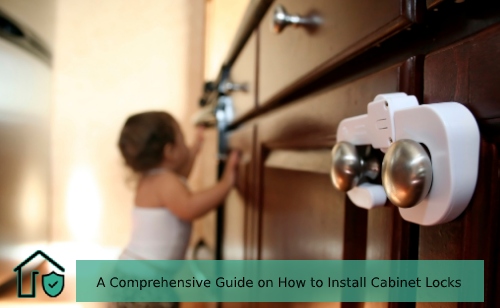
Cabinet and drawer security is one of those things people overlook until something goes wrong — a child gets into cleaning chemicals, a coworker rifles through confidential files, or a medication goes missing. The fix doesn't require a contractor or expensive hardware. With the right lock type and a clear set of steps, you can handle this yourself in an afternoon.
This guide walks you through choosing between simple and advanced options, a practical step-by-step install process, smarter strategies for getting more from your setup, and how to troubleshoot the problems that show up once the lock is already on.
Contents
Simple vs. Advanced: Choosing the Right Cabinet Lock
Adhesive and Magnetic Locks for Everyday Use
If you're new to cabinet security, two options stand out for their ease of installation: adhesive strap locks and magnetic locks. Both are popular for childproofing and general household use.
- Adhesive strap locks attach to the inside of a cabinet door and an adjacent surface. They hold the door closed until you squeeze or slide a release tab. No drilling, no tools — just peel and press.
- Magnetic cabinet locks mount inside the cabinet with screws and stay completely hidden from view. You open them by pressing a magnetic key against the outside of the door. They're a clean solution where aesthetics matter.
Both work well at slowing down a curious child. Neither will stop a determined adult for long. If your goal is actual access restriction — not just a delay — you'll need something more substantial.
Pro tip: Before applying any adhesive-backed lock, clean the mounting surface with isopropyl alcohol and let it dry fully. Skipping this step is the single biggest reason adhesive locks fail within the first few weeks.
Keyed and Electronic Locks for Higher Security
When you need to genuinely restrict access, step up to a keyed or electronic option.
- Cam locks (cylindrical locks that drill into the door or drawer front and turn with a flat key) are the most common choice for filing cabinets and office furniture. Simple, reliable, and inexpensive.
- Bar locks run a steel rod through a row of cabinet handles and secure one end with a padlock. Strong and affordable, though not the most polished look.
- Electronic cabinet locks use keypads or RFID cards to control access. Some integrate with broader smart lock systems for centralized management across an office or home.
| Lock Type | Best For | Installation Difficulty | Security Level | Approximate Cost |
|---|---|---|---|---|
| Adhesive Strap Lock | Childproofing | Very easy (no tools) | Low | $5–$20 |
| Magnetic Lock | Childproofing, clean look | Easy (screws) | Low–Medium | $15–$40 |
| Cam Lock | Office drawers, filing cabinets | Moderate (drill required) | Medium | $10–$30 |
| Bar Lock + Padlock | Garages, workshops | Easy | Medium–High | $20–$60 |
| Electronic Lock | Offices, shared spaces | Moderate | High | $50–$200+ |
Match the lock to the actual threat you're addressing. A magnetic lock is perfect for keeping a toddler away from under-sink chemicals. It won't hold up against a determined adult.
How to Install Cabinet Locks Step by Step
Tools and Prep Work
Before you buy anything, check the cabinet material. Solid wood holds screws firmly. Thin particleboard — common in flat-pack furniture — doesn't grip well under repeated stress. If your cabinets are particleboard, use wider screws, pre-drill carefully, or choose adhesive-backed hardware designed for that material.
For most installs, you'll need:
- Tape measure and pencil
- Power drill with appropriate bit sizes
- Flathead and Phillips screwdrivers
- Painter's tape for marking drill positions
- Level (useful for bar locks or when installing multiple units in a row)
The U.S. Consumer Product Safety Commission recommends securing all household chemical and medication storage as a baseline — especially in homes with young children. Having the right hardware before you start saves a second trip to the hardware store.
Installing Common Lock Types
Adhesive strap locks:
- Wipe both mounting surfaces with isopropyl alcohol and let them dry completely.
- Peel the adhesive backing and press one end onto the cabinet door, the other onto the frame or adjacent door.
- Hold firm for 60 seconds. Don't put any load on it for 24 hours.
Magnetic locks:
- Hold the lock body against the inside of the cabinet door where you want it and mark the screw holes with a pencil.
- Pre-drill if you're working with hardwood. Soft wood and particleboard usually don't need it.
- Mount the strike plate on the cabinet frame so it lines up with the latch when the door is closed.
- Test with the magnetic key before calling the job done.
Cam locks:
- Use a hole saw or spade bit to drill a hole matching the diameter listed on your lock's packaging — usually 3/4" to 1".
- Insert the cam lock cylinder from the front and secure the retaining nut from the back.
- Attach the cam (the rotating bar) to the cylinder and test that it engages the cabinet frame cleanly when turned.
If you've worked through a door handle installation before, this process will feel familiar. Cabinet hardware just has less tolerance for misaligned holes, so mark twice before drilling.
Smarter Strategies for Securing Drawers and Cabinets
Thinking Beyond the Individual Lock
A lock is only as strong as what it's mounted on. A few steps that most guides skip:
- Check the hinges before installing the lock. Exposed or loose hinges are a bigger vulnerability than the lock mechanism itself. Tighten hinge screws or replace short screws with longer ones that bite into solid wood behind the panel.
- Consolidate sensitive items. Instead of locking 10 different cabinets, group hazardous materials, valuables, or confidential documents into one or two spots and secure those well.
- Step up to a drawer safe for real valuables. A drawer safe offers significantly more protection than any surface-mounted cabinet lock if you're storing cash, jewelry, or sensitive documents.
- Label what's locked and why. In office environments, most forced-open locks happen because someone didn't know it was locked — not because someone was trying to break in deliberately.
Worth knowing: In shared office spaces, most unauthorized access to locked cabinets happens during moves or office renovations — not deliberate break-ins. Controlled key copies and a simple key log often outperform expensive electronic solutions.
Office Cabinet Security Tips
Office cabinets face different demands than home cabinets. Multiple users, legal requirements around document storage, and heavy daily use all change what works.
- Use a master-key system if you have multiple locked cabinets — one key for the manager, individual keys for each team member.
- Track key copies in a simple spreadsheet. You'd be surprised how many offices don't know how many copies of a key exist.
- For RFID or keypad locks, set up unique access codes per employee so you can revoke access without re-keying everything when someone leaves.
- If digital files on physical media are part of your storage, consider how your cabinet setup connects to your broader security posture — whether that's a camera covering the file room or an alarm on the door.
Fixing Common Cabinet Lock Problems
Lock Won't Catch or Stay Closed
This is the most frequent complaint after a DIY install. Here's what's usually behind it:
- Misaligned strike plate: The latch and the receiver plate aren't meeting squarely. Loosen the strike plate screws, shift it slightly in the right direction, and retighten.
- Swollen wood: Humidity causes wood to expand, especially in kitchens and bathrooms. If the door is sticking or slightly warped, a small amount of sanding on the door edge often solves it.
- Wrong cam length: On cam locks, if the rotating bar is too short it won't reach the cabinet frame. Replacement cams come in multiple lengths — check your lock brand for compatible parts.
- Failed adhesive: Strap locks lose grip over time, especially in humid environments. Replace the adhesive pad (most brands sell refills separately) or switch to a screw-mounted option for a permanent fix.
When to Replace Instead of Repair
Sometimes repair isn't the right call. Replace the lock when:
- The key cylinder is worn and the key turns stiffly or skips
- The cabinet door or frame is warped beyond what adjustment can fix
- You've lost the key and the lock model doesn't support rekeying
- The lock body is visibly corroded — common in bathrooms and kitchens with steam
If you're replacing a cam lock and want to step up in capability, this is a natural point to consider an electronic option. It's worth understanding whether smart locks are the right fit for your specific situation before committing to a purchase.
Frequently Asked Questions
What is the easiest cabinet lock to install without drilling?
Adhesive strap locks are the easiest option — they press onto the cabinet surface with a peel-and-stick backing and require no tools at all. Magnetic locks are a close second; they use screws but no drilling is needed for softer cabinet materials. Both work well for childproofing situations where you don't want to permanently modify the cabinet.
Can I install cabinet locks on cabinets made of particleboard?
Yes, but with some adjustments. Standard wood screws can strip out of particleboard quickly. Use coarser-threaded screws designed for particleboard, go slightly wider in diameter than the recommended screw size, and avoid over-tightening. For lightweight applications, adhesive-backed locks often perform better on particleboard than screw-mounted ones.
How do I know if my cabinet lock needs to be rekeyed or replaced?
If the key turns smoothly but the cam doesn't engage the frame, the issue is usually mechanical alignment — adjustable without replacing the lock. If the key itself is difficult to turn, feels gritty, or the cylinder wobbles, the lock internals are worn and replacement is the cleaner fix. Most standard cam locks are inexpensive enough that replacement is often more practical than sourcing a replacement cylinder.
Next Steps
- Walk through your home or office and identify every cabinet or drawer that holds hazardous materials, valuables, or confidential documents — then prioritize which ones to secure first.
- Choose a lock type from the comparison table above that matches your security needs and cabinet material, then pick up the hardware before starting.
- Install locks on your highest-priority cabinets using the step-by-step instructions above, checking alignment before fully tightening any mounting screws.
- If you're in a shared space, create a key log or access record so you always know who has access to what.
- Consider whether a drawer safe makes sense for your most sensitive items — a cabinet lock slows people down, but a quality safe is a significantly harder target.


About Vincent Foster
Greetings, This is Tom Vincent. I’m a home Security Expert and Web developer. I am a fan of technology, home security, entrepreneurship, and DIY. I’m also interested in web development and gardening. I always try to share my experience with my reader. Stay Connected and Keep Reading My Blog. Follow Me: Facebook, Twitter, Pinterest
Now you can get FREE Gifts. Or latest Free Security Cameras here.
Disable Ad block to reveal all the gifts. Once done, hit a button below