Around 16 million American households reported mail theft to the U.S. Postal Inspection Service in a single year — and that figure doesn't count the people who simply lost their mailbox key and couldn't access their own mail. If you're dealing with a locked mailbox and no key in sight, knowing how to pick a mailbox lock is a practical skill you can use right now, without waiting on a locksmith or paying for one. This guide covers the full process: how the lock works, what tools you need, and the exact steps to get it open. It's part of our broader resource on home lock techniques at SecureOne.
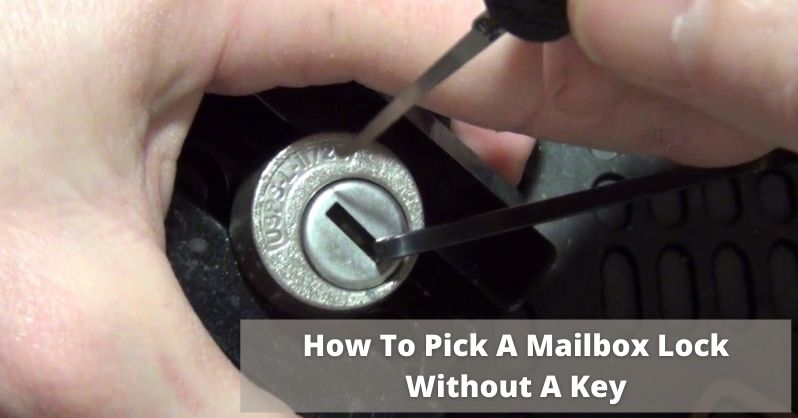
Most mailbox locks use the same fundamental design as the lock on your front door — just simpler. Fewer pins, looser tolerances, and cheaper manufacturing mean mailbox locks respond well to picking, even with improvised tools. A couple of bent paperclips and a few minutes of patience are genuinely all it takes for the majority of residential mailbox hardware.
One thing to be clear about before you start: picking a lock you own is completely legal. Picking a lock that belongs to someone else — or a communal mailbox you don't have rights to — is a federal offense under postal regulations. Everything in this guide assumes you're working on your own property. The skills involved also apply to other lock types; our guide on how to pick a car lock from outside covers the same tension-and-pick fundamentals in a different context.
Contents
- When You Actually Need to Pick Your Mailbox Lock
- Understanding How Mailbox Locks Work
- The Tools You Need to Pick a Mailbox Lock
- How to Pick a Mailbox Lock: Step-by-Step Methods
- Picking vs. Replacing vs. Calling a Locksmith
- The Risks and Rewards of DIY Lock Picking
- Keeping Your Mailbox Lock in Good Shape
When You Actually Need to Pick Your Mailbox Lock
Lost Keys Are More Common Than You Think
Most people have exactly one mailbox key. Unlike a house key, it never gets duplicated. You carry it on a separate ring, set it down once, and it's gone. The result is a completely functional lock standing between you and your mail, with no practical recourse short of picking it or calling a locksmith who will charge a service fee that dwarfs the cost of the lock itself.
Picking the lock gives you immediate access and lets you confirm the lock is still working before you spend money replacing it. Once you're in, you get a duplicate key cut — most hardware stores handle mailbox keys for under five dollars — and the problem is solved permanently. Knowing how to pick a mailbox lock means you're never stuck in that situation again.
Inherited Properties and Keyless Handoffs
Moving into a new home often comes with a mailbox that has no key attached. Sellers forget, landlords lose track of hardware, and previous tenants walk off with keys they never returned. That's a security problem beyond the inconvenience. An unknown number of key copies in unknown hands means your incoming mail isn't secure at all. Picking the lock gets you access while you source a replacement, and replacing the lock eliminates the risk entirely.
If you're doing a full security review of a new property, our guide on how to burglar-proof your home covers every lock, entry point, and vulnerability worth checking when you move in.
Understanding How Mailbox Locks Work
The Pin Tumbler Mechanism
Almost every residential mailbox uses a pin tumbler lock (a cylinder with spring-loaded pin stacks inside). Each stack has two pieces: a key pin on the bottom and a driver pin on top. Without a key, the driver pins sit across the shear line — the boundary between the rotating inner cylinder (called the plug) and the fixed outer housing. That cross-over is what prevents the lock from turning.
When the correct key is inserted, its cuts raise each key pin to precisely the right height. Every driver pin lifts to exactly the shear line at the same moment, clearing the boundary and allowing the plug to rotate. According to the Wikipedia article on pin tumbler locks, this design has been in continuous use since the mid-1800s and remains the dominant lock mechanism worldwide. The principle hasn't changed — and neither has the basic approach to picking it.
Why Mailbox Locks Are Easier to Pick Than Door Locks
A quality residential deadbolt typically has five or six pins. Most mailbox locks have three or four. Fewer pins means fewer points to work through. Mailbox hardware also tends to have looser manufacturing tolerances — the tiny clearances between moving parts are less precise, which means pins reach the set position more easily under picking pressure. This isn't a defect. It's a deliberate trade-off: mailboxes are built for daily convenience, not high-security applications. That trade-off works in your favor when you're locked out.
The Tools You Need to Pick a Mailbox Lock
Improvised Tools You Already Have
You need two things: a tension wrench and a pick. The tension wrench applies light rotational pressure to the plug while you manipulate the pins. The pick lifts the pins one at a time. Both can be made from materials sitting in any desk drawer.
For the tension wrench, take a bobby pin and bend it into an L-shape. The short end goes into the bottom of the keyway; the long end gives you something to press. Alternatively, a thin flathead screwdriver works well if it fits without blocking the rest of the keyway. For the pick, straighten out a second bobby pin or a paperclip, then bend a small hook — about 2–3 millimeters — at one tip. That hook is what catches and lifts each pin stack.
Pro tip: Use the absolute lightest tension you can manage on the wrench — too much pressure causes pins to bind at the wrong height and makes the whole process far harder than it needs to be.
Dedicated Lock Pick Tools
If improvised picks feel too slippery or imprecise, a basic entry-level pick set solves the problem. You'll want a short hook pick (sometimes labeled Hook 1) and a small flat tension wrench. For simple three- and four-pin locks like most mailboxes, a rake pick is often faster than single-pin picking — it has a wavy profile that sets multiple pins simultaneously through a quick in-and-out rocking motion. The total investment for a beginner set is typically between fifteen and forty dollars. Our guide to picking locks for beginners covers what to look for in a starter kit and which picks to learn on first.
How to Pick a Mailbox Lock: Step-by-Step Methods
The Paperclip Method (Beginner)
Start by preparing your two tools. Take one paperclip and straighten it fully, then bend a small hook at one end — this is your pick. Take a second paperclip, bend it into an L-shape, and trim the long arm so it sits comfortably at the bottom of the keyway without crowding your pick. This is your tension wrench.
Insert the tension wrench into the bottom of the keyway and apply very light pressure in the direction the key would turn — just enough to feel a slight resistance. Hold that pressure steady. With your pick above the tension wrench, feel toward the back of the lock for the rearmost pin. Push it upward gently. You're looking for a very slight give or a soft click — that's the pin setting at the shear line. Move to the next pin forward and repeat. Work your way toward the front. When all pins are set, the plug rotates and the lock opens. For most mailbox locks with three or four pins, the full process takes one to three minutes once you have a feel for the pressure.
Using a Hook Pick and Tension Wrench (Advanced)
With proper tools, you have two reliable approaches: single-pin picking and raking. Single-pin picking follows the same logic as the paperclip method, but quality metal tools give you better tactile feedback and more control. You can feel pin set points more clearly, which speeds everything up considerably.
Raking is faster still. Insert a rake pick above the tension wrench, apply light tension, and move the rake in and out with a slight up-and-down rocking motion. On a three-pin lock, this often sets all pins within seconds. The technique takes a little practice to find the right rhythm, but once you do, simple locks open almost automatically. Our full guide on how to pick a door lock applies these same techniques to higher-pin-count locks if you want to develop the skill further.
Warning: Never apply heavy tension while picking — you risk permanently scoring the plug or snapping an improvised tool inside the keyway, turning a simple lockout into a mandatory replacement job.
Picking vs. Replacing vs. Calling a Locksmith
Cost and Time Breakdown
Before you commit to any approach, it helps to see the full picture side by side. Here's how the main options compare for a standard residential mailbox lockout:
| Option | Typical Cost | Time Required | Skill Level | Best Situation |
|---|---|---|---|---|
| DIY picking (improvised tools) | $0 | 1–10 minutes | Low | Functional lock, lost key |
| DIY picking (pick set) | $15–$40 one-time | Under 2 minutes | Low to moderate | Recurring lockouts |
| Locksmith call | $50–$150 | 30–90 min wait | None required | Damaged lock, no patience |
| Lock replacement | $15–$60 for hardware | 20–40 minutes | Low | Worn lock or unknown key copies |
For most people with a functioning lock and a missing key, DIY picking is the obvious first move. But if you've been locked out repeatedly, or if your current mailbox offers minimal security, upgrading the hardware makes more sense than repeatedly picking a weak lock. Our roundup of the best residential locking mailboxes covers the top-rated options at every price point, including models with higher pin counts that resist picking much more effectively.
The Risks and Rewards of DIY Lock Picking
What Could Go Wrong
The most common way to damage a lock during picking is applying too much tension. Excessive rotational pressure on the plug causes pins to bind at wrong positions, which can score the inner cylinder or — worse — snap a makeshift tool inside the keyway. A broken tool fragment lodged in the lock is difficult to remove and often means replacing the lock outright. Heavily corroded locks are especially vulnerable; if your mailbox hasn't been maintained and the key already sticks, proceed carefully and consider whether replacement makes more sense before you start.
There's a security implication worth acknowledging too. A lock you open in two minutes with a bent paperclip is a lock with almost no physical deterrence value. If mail theft is a real concern in your neighborhood, successfully picking your own mailbox should prompt you to upgrade, not just to make a spare key. A lock you can pick easily is one that a motivated thief can pick easily too.
When DIY Is Clearly the Right Call
Picking your own mailbox is the right move when the lock is functional, the key is simply missing, and a locksmith fee feels wildly out of proportion to the problem — which it almost always does for something this small. It's also the right move when you're locked out at an hour when locksmiths charge premium rates. If you own the property, you have full flexibility. Renters should check their lease first; some agreements require notifying the landlord about lock issues even when you handle the fix yourself.
Tip: The moment you successfully pick the lock, go make a duplicate key — most hardware stores cut mailbox keys for under five dollars, and having two copies eliminates the problem permanently.
Keeping Your Mailbox Lock in Good Shape
Lubrication and Cleaning
Mailbox locks live outside year-round. Rain, humidity, dust, and temperature swings steadily degrade internal components. A stiff or gritty lock is a lockout waiting to happen — and it's entirely preventable. Lubricate your mailbox lock once or twice a year with a dry lubricant: graphite powder works well, as does any PTFE-based spray. Avoid WD-40, which is a water displacer, not a true lubricant — it attracts grit over time and gums up pin stacks. To apply, insert the nozzle into the keyway, apply a small amount, then insert and cycle the key several times to distribute the lubricant through the mechanism.
If the lock feels sticky even after lubrication, compacted debris may be the issue. A few short bursts of compressed air clears the keyway without introducing moisture. This takes thirty seconds and can restore a sluggish lock to smooth operation immediately.
When to Replace Rather Than Maintain
Some locks are past the point of useful maintenance. Visible corrosion, a key that wobbles or catches, or a lock with an unknown key history are all clear signals that replacement is the better investment. Mailbox lock cylinders are inexpensive — replacement hardware typically runs between fifteen and forty dollars — and swapping one out requires only a screwdriver and about twenty minutes. When you replace, choose a lock with at least five pins for meaningful resistance against picking, and verify it's rated for outdoor exposure.
If you're upgrading security across your whole property at the same time, our guide on how to install a deadbolt lock walks through the process for entry doors, and our overview of common smart door lock types is worth a read if you're considering electronic options for interior doors alongside your mailbox upgrade.
Frequently Asked Questions
Is it legal to pick your own mailbox lock?
Yes, picking a lock on property you own is legal. Federal law prohibits tampering with mailboxes belonging to others or those managed by the postal service, but your personal residential mailbox is your property. Always confirm ownership before attempting to pick any lock.
How long does it take to pick a mailbox lock?
Most residential mailbox locks have three to four pins and open quickly once you understand the technique. With improvised tools and no prior experience, expect one to five minutes. With a dedicated pick set and basic familiarity, many mailbox locks open in under sixty seconds.
Can I pick a mailbox lock without any tools at all?
No. You need at minimum two objects: something to apply rotational tension to the plug and something to lift the pins. A bobby pin bent into two different shapes, or two paperclips configured for each role, is sufficient. Without tension, no picking technique works.
Will picking my mailbox lock damage it?
Picking with light, controlled tension causes no damage to a functioning lock. The risk comes from applying too much pressure or using a tool that breaks inside the keyway. If you feel grinding resistance that doesn't resolve with lighter touch, stop and consider whether the lock is too worn or corroded to pick safely.
What should I do immediately after picking my mailbox lock?
Get a duplicate key cut right away at a hardware store — mailbox keys typically cost under five dollars to copy. If you don't know how many copies of the existing key are out there, replace the lock entirely. A new lock resets the security situation completely and eliminates any uncertainty about who has access.
A lock you can open with a paperclip in two minutes is a lock that's telling you something — listen to it, then replace it with one that doesn't.


About Vincent Foster
Greetings, This is Tom Vincent. I’m a home Security Expert and Web developer. I am a fan of technology, home security, entrepreneurship, and DIY. I’m also interested in web development and gardening. I always try to share my experience with my reader. Stay Connected and Keep Reading My Blog. Follow Me: Facebook, Twitter, Pinterest
Now you can get FREE Gifts. Or latest Free Security Cameras here.
Disable Ad block to reveal all the gifts. Once done, hit a button below