What separates a truly secure property from one that just looks protected? The answer — more often than not — is coverage. Fixed cameras guard a single angle. The best outdoor PTZ security cameras actively sweep your perimeter, lock onto movement, and zoom in close enough to capture a license plate from 60 feet away. If you want to compare PTZ options alongside the full range of surveillance solutions, the camera reviews hub is a solid starting point.
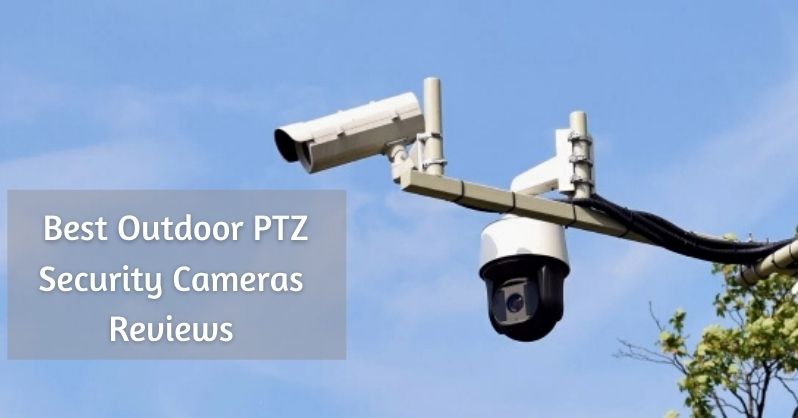
Pan-tilt-zoom technology has moved well past commercial surveillance into mainstream home security — and the quality-to-price ratio has never been better. A single PTZ unit mounted at a property corner covers the driveway, the side gate, and the backyard fence line with motorized precision. Optical zoom — not digital interpolation — captures actionable detail at distances that reduce any fixed camera's frame to noise.
This guide reviews eight top PTZ cameras, explains the specs that actually matter, surfaces the installation mistakes that kill your coverage before it starts, and gives you a maintenance protocol that keeps these cameras performing through every season. Whether you're building a new system or upgrading from fixed cameras, the answers are below.
Contents
- What PTZ Technology Actually Does for Your Outdoor Security
- The Best Outdoor PTZ Security Cameras: Eight Top Picks
- Entry-Level vs. Professional PTZ Systems: How to Choose
- Installation Mistakes That Undermine Your PTZ Coverage
- Diagnosing and Fixing Common PTZ Camera Problems
- Long-Term Maintenance to Keep Your PTZ Cameras Field-Ready
- Frequently Asked Questions
What PTZ Technology Actually Does for Your Outdoor Security
PTZ cameras operate on a fundamentally different principle than fixed units, and understanding that difference changes how you plan your entire system. According to Wikipedia's overview of PTZ camera mechanics, these cameras use motorized mounts to rotate horizontally (pan), move vertically (tilt), and adjust focal length (zoom) — all remotely or automatically in response to motion triggers.
For home security, this translates into three concrete advantages:
- Area coverage: A PTZ camera with 355° pan range covers what three or four fixed cameras would. Fewer blind spots, fewer mounting points, fewer cable runs.
- Subject tracking: Auto-tracking models follow a person or vehicle across the full pan range. The camera stays on the target — not on an empty frame after the subject exits the field of view.
- Optical zoom: A 5X optical zoom closes the effective distance dramatically. A 25X zoom — like the SUNBA unit below — makes a camera mounted 40 feet away behave like one mounted at 5 feet from the subject.
PTZ cameras also scale differently than fixed arrays. You don't just add more cameras as your coverage needs grow — you reposition existing units to handle new angles. That's a real operational advantage on large properties.
How PTZ Compares to Fixed and Wide-Angle Cameras
Wide-angle lenses capture more frame area but compress distance and reduce usable detail at range. Fixed varifocal cameras give you manual zoom with no active movement. PTZ combines both capabilities with live control and automated tracking. If your threat model includes perimeter intrusion across a large area, a fixed camera cannot match what even an entry-level PTZ delivers.
If you're thinking about how to burglar-proof your home as a complete system, PTZ cameras belong in the outdoor perimeter layer — paired with motion-activated lighting and robust entry-point hardware for maximum deterrence depth.
The Best Outdoor PTZ Security Cameras: Eight Top Picks
1. SUNBA 601-D25X 5MP PoE+ PTZ
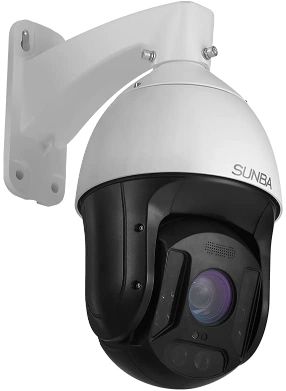
The SUNBA 601-D25X is the benchmark for long-range optical performance in its price tier. At 25X optical zoom with a 5MP Sony CMOS sensor, this camera delivers actionable detail at distances most home PTZ units can't touch. Infrared night vision reaching 1,000 feet sounds like marketing until you mount it at a property boundary and watch it lock onto a figure in complete darkness at 200 yards.
- Sensor: 5MP Sony CMOS
- Optical zoom: 25X
- Night vision: IR up to 1,000ft
- Power: PoE+ (802.3at)
- Audio: Two-way
- IP rating: IP66
The PoE+ requirement means you need a compatible switch, but that single cable delivers both power and data — no power adapter at the mounting point. This is the right choice for large acreage or installations where perimeter control at range is the primary objective.
2. BOIFUN Solar Wireless 360° PTZ
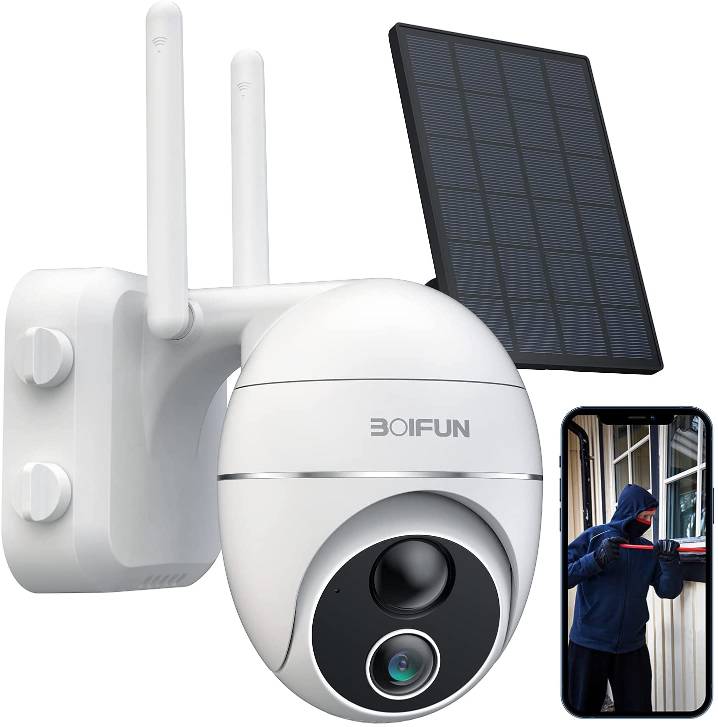
The BOIFUN Solar solves the cable-access problem for outbuildings, fence lines, and gates far from any electrical run. A 15,000mAh battery with a dedicated solar panel, full 360° pan, 1080P resolution, PIR motion detection, and IP65 weatherproofing make this a complete standalone unit that requires zero wiring.
- Resolution: 1080P
- Power: Solar + 15,000mAh battery
- Pan: 360° / Tilt: 90°
- Storage: SD card + cloud
- IP rating: IP65
The solar dependency is the main constraint — north-facing locations with heavy shading won't sustain continuous operation. Position the panel for maximum daily sun exposure. For locations with reliable sun, this camera operates indefinitely without intervention. If you're comparing battery-powered surveillance options, the guide to wireless cameras with the longest battery life gives essential context on what battery capacity numbers actually mean in practice.
3. IeGeek Solar Battery PTZ
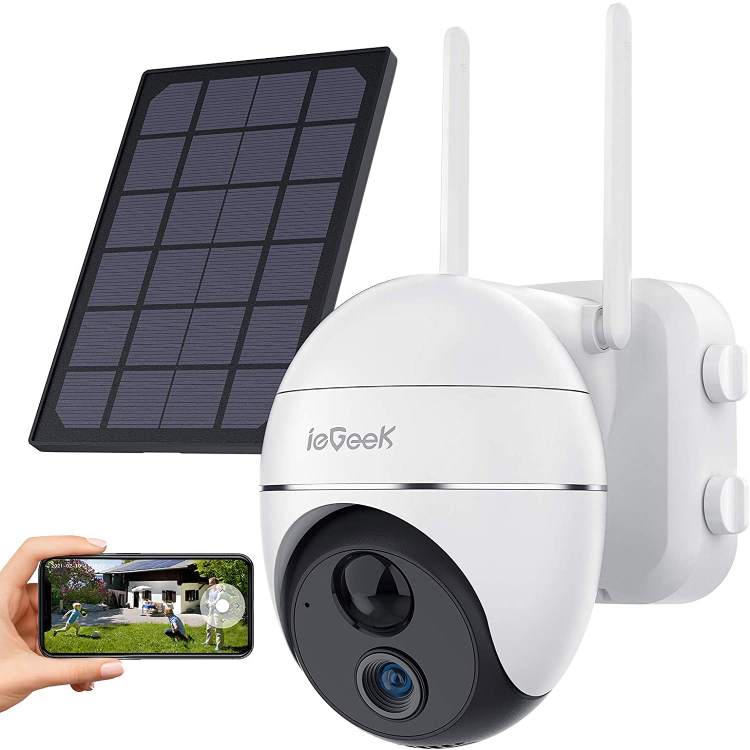
The IeGeek mirrors the BOIFUN's 15,000mAh battery and solar combination in a slightly different form factor. Resolution stays at 1080P with two-way audio, motion alerts, and both SD and cloud storage. A strong secondary choice for solar installs — particularly if you need a different housing profile for aesthetics or mounting compatibility with an existing bracket.
4. JideTech 5MP Auto-Tracking PoE PTZ
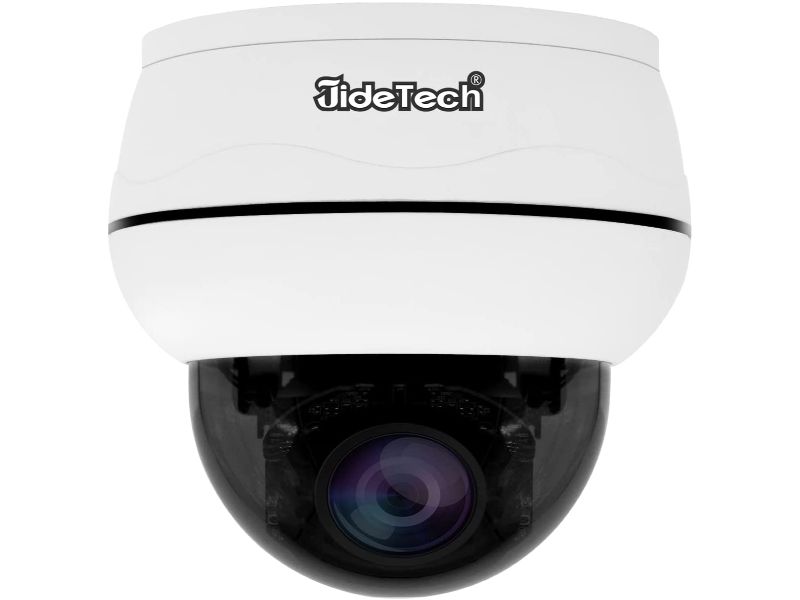
The JideTech delivers auto-tracking at 5MP resolution — a meaningful step above 1080P for identifying facial features and clothing details. The 5X optical zoom and PoE power make this a wired-install workhorse. Human-specific detection filters false positives from animals and tree movement, reducing alert fatigue to a manageable level.
- Resolution: 5MP
- Zoom: 5X optical
- Auto-tracking: Yes (human-specific)
- Power: PoE
- IP rating: IP66
5. ENSTER 1080P WiFi Speed Dome
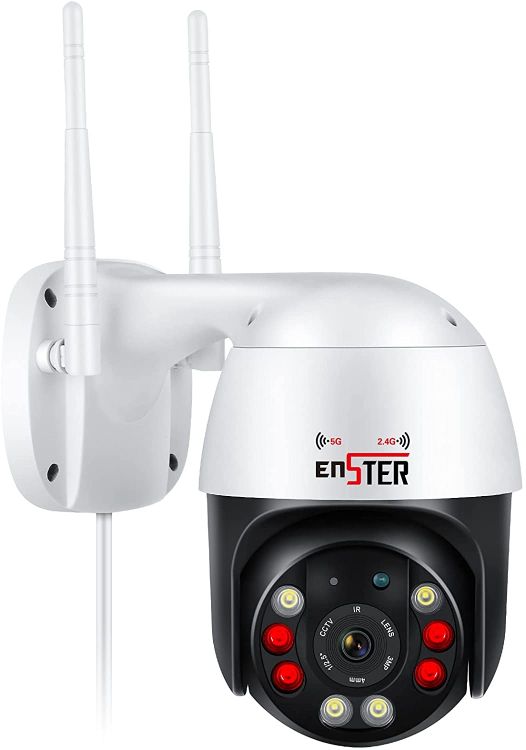
The ENSTER stands out for dual-band WiFi (2.4/5GHz) and an integrated spotlight — a combination that makes it both a surveillance tool and an active deterrent. Color night vision at 150 feet via the spotlight means you're capturing full-color footage after dark, not grayscale IR. AI human detection and a metal housing add real value well above the price point.
6. SV3C 1080P 5X Optical Zoom WiFi PTZ
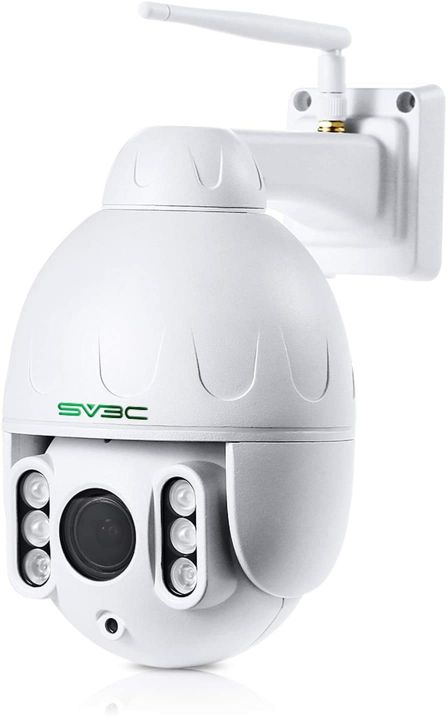
The SV3C delivers 5X optical zoom and 355° pan in a compact, wall-mountable form factor. WiFi connectivity and support for up to 128GB SD cards make it genuinely self-contained. Night vision reaches 197 feet — sufficient for most residential driveways and side yards. The SV3C is the most versatile mid-range WiFi option in this group for straightforward residential installs.
7. Ctronics Auto-Tracking Spotlight PTZ
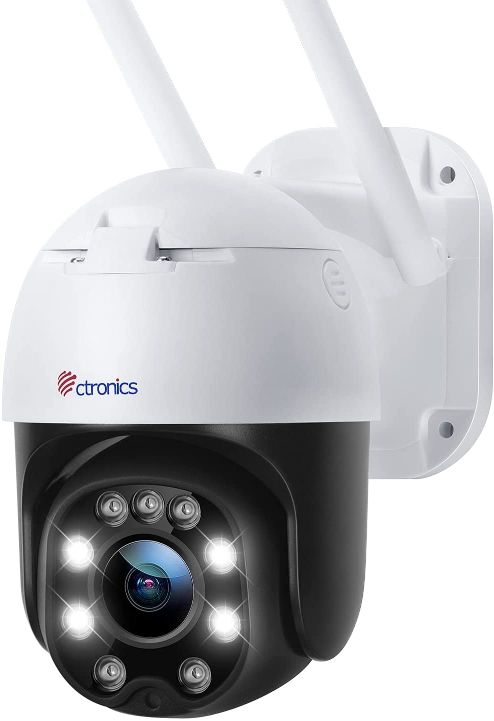
The Ctronics pairs auto-tracking with a spotlight and color night vision — active deterrence in a compact WiFi package. Human detection triggers both the tracking motor and the spotlight simultaneously, making this camera respond to intrusions rather than passively record them. A strong choice for front yards and entry points where visible deterrence matters as much as evidence capture.
8. REOLINK 4K PTZ Outdoor Camera
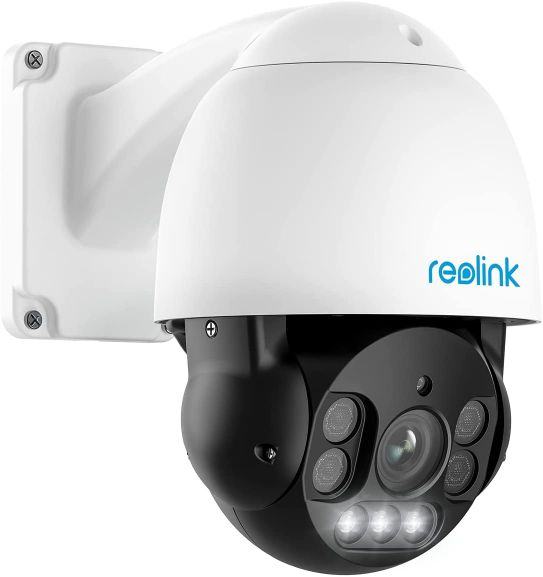
REOLINK's 4K PTZ sits at the top of the resolution stack in this group. 4K capture means you can digitally crop a corner of the recorded frame and still have usable, court-admissible detail — a decisive advantage for post-incident evidence review. REOLINK's ecosystem integrates cleanly with NVRs and home assistant platforms, making it the natural cap-out choice for system builders who intend to scale.
Entry-Level vs. Professional PTZ Systems: How to Choose
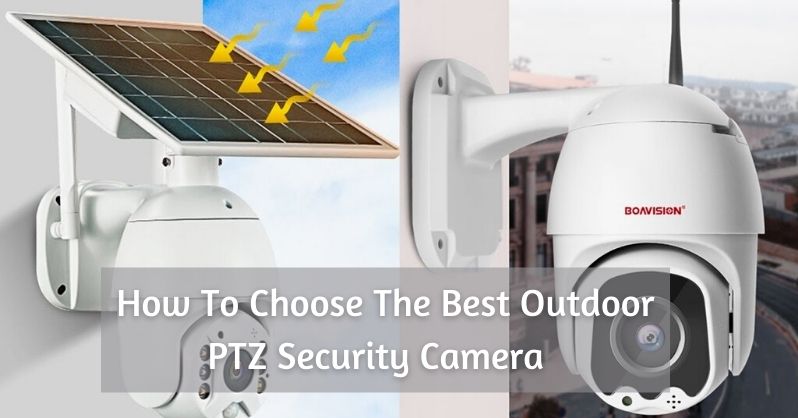
The most common mistake buyers make is optimizing for the wrong spec. Resolution dominates the marketing conversation, but for PTZ cameras, optical zoom range and tracking accuracy matter far more. Here is how to match camera tier to actual need:
- Entry-level (1080P / 4X–5X optical zoom): Suitable for residential yards under half an acre, driveways, and entry points. ENSTER, SV3C, and Ctronics land here.
- Mid-tier (5MP / 5X–10X zoom with auto-tracking): Larger residential properties, small commercial perimeters, high-activity zones requiring subject identification. JideTech and REOLINK 4K serve this category.
- Professional (25X+ optical zoom / PoE+ / high-speed dome): Large acreage, gated communities, commercial boundary monitoring. The SUNBA 601-D25X owns this tier under $500.
PTZ Camera Specs Comparison
| Camera | Resolution | Optical Zoom | Power | Auto-Track | Night Vision | IP Rating |
|---|---|---|---|---|---|---|
| SUNBA 601-D25X | 5MP | 25X | PoE+ | Yes | IR / 1,000ft | IP66 |
| BOIFUN Solar | 1080P | Digital | Solar + Battery | No | IR / standard | IP65 |
| IeGeek Solar | 1080P | Digital | Solar + Battery | No | IR / standard | IP65 |
| JideTech 5MP | 5MP | 5X | PoE | Yes | IR | IP66 |
| ENSTER WiFi | 1080P | 4X | AC / WiFi | No | Color / 150ft | IP66 |
| SV3C WiFi | 1080P | 5X | AC / WiFi | No | IR / 197ft | Waterproof |
| Ctronics | 1080P | 4X | AC / WiFi | Yes | Color / spotlight | IP66 |
| REOLINK 4K | 4K (8MP) | 5X+ | PoE / WiFi | Yes | Color + IR | IP66 |
Power and Connectivity Options
Your power choice shapes every installation decision downstream. Understand the trade-offs before you commit:
- PoE (Power over Ethernet): Single cable, most reliable, best for permanent installations. Requires a PoE-capable switch or injector. PoE+ (802.3at) delivers up to 30W — mandatory for high-speed dome cameras like the SUNBA 601-D25X.
- AC power + WiFi: Simpler for DIY installs where an outlet is accessible near the mount. WiFi range and channel congestion are the main limitations — dual-band cameras like the ENSTER handle crowded 2.4GHz environments significantly better than single-band units.
- Solar + battery: Maximum placement flexibility with zero wiring. Performance depends on panel orientation and local cloud cover. Realistic candidates: BOIFUN and IeGeek.
If you're adding outdoor motion lighting alongside your cameras — a smart pairing that forces intruders into the light your PTZ is already aimed at — the guide to motion security spotlights covers which specs matter most in that layer of your system.
Installation Mistakes That Undermine Your PTZ Coverage
Positioning Errors
Mount height determines almost everything about what your PTZ captures. These are the most common errors in the field:
- Mounting too high: Above 12–15 feet, you capture top-of-head shots that are useless for facial identification even at maximum zoom. The ideal range is 7–10 feet for facial detail, 10–14 feet for wide-area coverage.
- Pointing the camera into direct sun at sunrise or sunset — overexposure washes out the entire frame during the hours when threat activity peaks.
- Positioning the camera where tree limbs enter the motion zone. Every branch movement becomes a tracking event and a false alert, draining your review time and desensitizing you to real triggers.
- Failing to account for the full pan arc — a 355° camera still has a 5° dead zone at the cable exit point. Know exactly where your blind spot falls before you finalize the mount angle.
Pro tip: Before drilling a single mounting hole, stand at the planned camera position and physically pan left and right — you'll spot sight-line obstructions in 30 seconds that would take hours to diagnose after the install is done.
Network Configuration Pitfalls
WiFi PTZ cameras need stable, low-latency connections to respond to pan and tilt commands without perceptible lag. These network mistakes appear constantly in failed installs:
- Running your PTZ camera on a 2.4GHz channel shared with every other smart device in the house. Congested 2.4GHz introduces enough latency to make PTZ motor response sluggish and unreliable.
- Not assigning a static IP. A camera that changes IP after a router reboot silently breaks your NVR connection — you discover the gap when you actually need the footage.
- Ignoring the security implications of UPnP for remote access. Configure port forwarding manually rather than relying on UPnP auto-configuration, which exposes far more than you intend.
For storage planning, the guide on how long cameras can record continuously breaks down the storage math you need before committing to an SD card tier or cloud subscription level.
Diagnosing and Fixing Common PTZ Camera Problems
Motor and Movement Issues
PTZ motor problems follow a small set of patterns. Identify the pattern before assuming hardware failure:
- Camera won't pan or tilt at all: Check power delivery first. PoE+ cameras draw more wattage than standard PoE switches provide — a standard PoE switch powering a PoE+ camera produces exactly this symptom. Confirm your switch output spec against the camera's power requirement.
- Jerky or stuttering movement: Indicates motor strain, usually from mechanical binding after freeze-thaw cycles have worked the mounting bracket loose. Inspect the mount, not the camera electronics.
- Auto-tracking not engaging: Verify the feature is enabled in firmware — not just in the mobile app, which sometimes controls a separate layer. A cold firmware reset resolves approximately 40% of tracking failures without any other intervention.
- Camera returning to incorrect preset position: Corrupted preset data from a power interruption. Clear all presets and reprogram from scratch.
Video Quality Degradation
Video problems in PTZ cameras have distinct causes compared to fixed units:
- Focus drift at zoom extremes: Optical zoom mechanisms experience minor calibration drift over time. Most cameras include an auto-focus calibration routine in the settings menu — run it before assuming lens damage.
- Reduced IR night vision range: A dirty dome cover scatters IR light back into the sensor. Clean the dome — this restores rated range in the majority of cases. If cleaning doesn't help, the IR illuminator LEDs are degrading.
- Streaming lag or dropped frames: This is a network problem, not a camera problem. Check router bandwidth allocation and reduce the remote sub-stream resolution to 720P. Local recording continues at full resolution regardless of sub-stream settings.
Consider the full range of camera types in your system plan — PTZ cameras handle perimeter coverage, but fixed cameras may better serve interior chokepoints where motorized movement adds no value and introduces a single point of mechanical failure.
Long-Term Maintenance to Keep Your PTZ Cameras Field-Ready
Seasonal Inspection Checklist
PTZ cameras carry moving parts that fixed cameras don't — motors, gear assemblies, and gimbal components that wear under continuous outdoor operation. A seasonal inspection catches issues before they become failures:
- Inspect the dome cover or lens port for crazing, internal hazing, or impact damage. Internal fogging means the seal has failed and moisture is inside — replace the cover.
- Check mounting bracket hardware for rust and loosening. Vibration from wind and motor operation works fasteners loose over a full seasonal cycle.
- Test the full pan and tilt range manually through the app or NVR interface. Any resistance indicates debris ingress or mechanical binding before the motor reaches failure.
- Verify IR illuminator output by reviewing a night recording — diminished IR rings indicate LED degradation, and output has dropped below the camera's rated range.
- Clear accumulated debris — leaves, insect nests, spider webs — from housing vents on non-hermetically-sealed units.
For solar-powered PTZ units, add these checks to your seasonal routine:
- Clean the solar panel surface — dust and pollen accumulation reduces output by 15–25%, which translates directly into reduced battery charge during low-sun periods.
- Monitor battery charge cycles after winter. Lithium cells lose capacity under sustained cold, and a degraded battery won't carry the camera through multi-day overcast stretches.
Before you finalize where cameras are positioned — especially those covering fence lines near neighboring properties — understanding the legal framework around outdoor camera placement is a non-negotiable part of a responsible setup.
Firmware and Software Upkeep
Firmware updates on PTZ cameras address three things: known security vulnerabilities, tracking algorithm improvements, and app compatibility. Skipping updates leaves exploitable CVEs open and frequently degrades auto-tracking accuracy as cloud-side detection models update without the on-camera firmware to match.
- Check for firmware updates quarterly — not just at initial install and then never again.
- Back up camera configuration before any major firmware version jump. Settings — motion zones, presets, alert thresholds — don't always survive the migration.
- After any firmware update, verify all preset positions, motion detection zones, and notification settings. These are the parameters most likely to reset to factory defaults.
- Review motion zone configuration annually. Vegetation grows, new structures appear — zones configured at install rarely match actual coverage needs 12 months later.
If you're expanding beyond PTZ cameras into doorbell coverage for your front entry, the Ring vs. Arlo video doorbell comparison lays out the differences between the two dominant platforms — both pair well with a PTZ-anchored outdoor perimeter system.
Frequently Asked Questions
What is the difference between optical zoom and digital zoom on PTZ cameras?
Optical zoom uses the physical lens to magnify the subject, preserving full sensor resolution at every zoom level. Digital zoom crops into the existing captured frame and interpolates pixels — degrading image quality proportionally to the zoom factor applied. For security purposes, optical zoom is the only zoom that delivers usable evidence. A 1080P camera using 4X digital zoom delivers roughly 270P effective resolution — unusable for identification at any meaningful distance.
How much optical zoom do I actually need for a residential property?
For most homes, 4X–5X optical zoom covers driveways and yards at realistic mounting distances. Properties larger than half an acre, or where you need to monitor a gate or fence line at over 100 feet, benefit from 10X or higher optical zoom. The SUNBA's 25X capability is the right specification for large acreage and commercial perimeters — overkill for a standard residential lot, but exactly right for monitoring a property boundary at extended range.
Can PTZ cameras record and operate without an internet connection?
Yes. Cameras recording to a local NVR or SD card operate fully offline. Remote access, cloud storage, and app-based PTZ control require an internet connection, but local recording, motion detection, and preset-based patrol routines run independently on the camera hardware. PoE-connected cameras integrated with a local NVR represent the most reliable offline configuration — no dependency on cloud services, ISP uptime, or router reboots.
The best outdoor PTZ security camera is the one mounted at the right height, aimed at the right angle, and maintained consistently — spec sheets don't protect your property, proper deployment does.


About Vincent Foster
Greetings, This is Tom Vincent. I’m a home Security Expert and Web developer. I am a fan of technology, home security, entrepreneurship, and DIY. I’m also interested in web development and gardening. I always try to share my experience with my reader. Stay Connected and Keep Reading My Blog. Follow Me: Facebook, Twitter, Pinterest
Now you can get FREE Gifts. Or latest Free Security Cameras here.
Disable Ad block to reveal all the gifts. Once done, hit a button below