You come home after a long day, bags in both hands, and the key just won't turn. You wiggle it, apply pressure, try again — nothing. That is not just frustrating. It is a real security problem that needs to be dealt with today.
Knowing how to handle common door lock problems and repair is one of the most practical skills you can develop as a homeowner. Whether your deadbolt is stiff, your latch refuses to catch, or your door knob spins without gripping, most of these issues have straightforward fixes. Our door lock repair resource covers the full range of lock issues — but this guide goes deeper on the specific problems you are most likely to face and exactly what to do about each one.
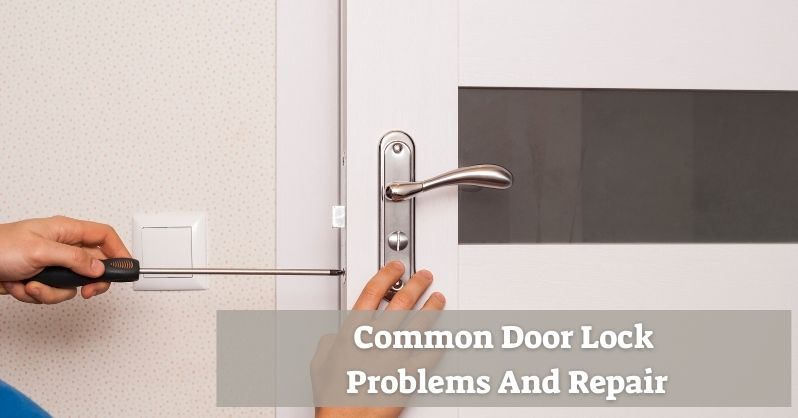
Locks fail for predictable reasons tied to age, use, and environment. Once you understand what is actually happening inside the mechanism, you can diagnose the problem in minutes and choose the right fix — whether that is a five-dollar can of lubricant or a thirty-dollar replacement cylinder. The goal is to get your door working and your home secure with as little hassle as possible.
Contents
Why Door Locks Break Down
Wear and Tear from Daily Use
Every time you insert your key and turn it, the internal pins and springs inside the lock cylinder — the rotating barrel the key slides into — experience friction. Over years of daily use, that friction compounds. Springs lose tension. The plug that turns when the key rotates develops subtle play. A lock that starts feeling gritty, stiff, or loose is showing early wear — it is not completely broken yet, but it will be if you let it go.
According to the National Institute of Standards and Technology (NIST), residential locks under regular daily use have a functional lifespan of roughly 7–10 years before performance degrades noticeably. That is not a trigger to replace every lock on a fixed schedule. It is a useful reference point when you are troubleshooting a lock that has been causing problems for a while and you cannot pinpoint why.
Environmental and Structural Causes
Wood moves. Humidity causes door frames to swell; dry heat causes them to shrink. Over time, even minor frame shifts can throw a deadbolt, strike plate, or latch completely out of alignment. This is the single most common structural cause of lock failure in older homes and in any home that experiences significant seasonal weather swings.
Moisture corrodes the internal springs and pins that make your lock work. Sustained heat warps wood frames and can soften certain plastic components in budget locks. Cold causes metal parts to contract, which is why a lock that works perfectly in July can feel completely seized by January. If your lock problems come and go with the seasons, alignment or corrosion is almost certainly the root cause — and both are fixable without replacing the entire lock.
The Most Common Door Lock Problems and Repair Strategies
When the Key Refuses to Turn
This is the most frequently reported lock issue. The key slides in, but it will not rotate — or it turns only with significant force, leaving your hand sore. Understanding how door knobs work and what is happening inside the cylinder explains why: debris, dried lubricant, and worn pins all create resistance against the key's ridges, preventing the pins from aligning into the shear line (the point at which the plug is free to rotate).
The fix in most cases costs under seven dollars. Apply graphite powder or a dry PTFE (polytetrafluoroethylene — a slippery, non-sticky synthetic compound) spray directly into the keyhole. Insert your key and work it back and forth a dozen times to distribute the lubricant into the pin chambers. Do not use WD-40.
Never use WD-40 inside a lock cylinder. It is a solvent, not a true lubricant — it strips away existing lubrication and leaves behind a sticky residue that attracts dirt and debris, making the problem significantly worse within a few weeks.
If lubrication does not solve it after two or three applications, the cylinder itself is worn or internally damaged and needs to be replaced. Cylinder replacement is a straightforward DIY job that takes about twenty minutes with a standard screwdriver.
When the Bolt or Latch Won't Catch
You close the door and the latch — the angled piece that clicks into the strike plate, which is the metal plate mounted on the door frame — does not engage. Or the deadbolt throws halfway and stops. Either way, the door is closed but not actually locked.
The cause is almost always misalignment between the latch or bolt and the opening in the strike plate. Close the door slowly and watch exactly where the latch makes contact with the plate. If it is hitting the edge instead of sliding cleanly through the hole, the plate has drifted. Loosen the strike plate screws, shift the plate in the direction needed, and retighten. If the gap is larger than about an eighth of an inch, you may need to extend the mortise — the recessed pocket in the door frame — using a sharp chisel.
Replacing the short screws that came with your strike plate with 3-inch screws anchors the plate into the door frame stud, not just the trim wood. This single upgrade dramatically increases forced-entry resistance. For a complete walkthrough of proper deadbolt installation, see our guide on how to install a deadbolt lock on a door.
When the Door Knob Spins Without Engaging
You turn the knob and it rotates freely in all directions without moving the latch at all. This means either the set screw — the small fastener that secures the knob to the spindle — has backed out, or the internal spindle has snapped. Both are common on high-traffic doors that get used dozens of times a day.
Check the set screw first. It is typically on the underside of the knob, accessible with a hex key (Allen wrench). Tighten it and retest. If the spindle is broken, replace the entire knob assembly — parts run $15–$50 depending on quality, and the job takes under thirty minutes. This is also a natural opportunity to upgrade. Comparing August Smart Lock Pro vs. Yale Assure gives you a solid overview of what modern smart lock options look like at this price point.
The Right Approach to Diagnosing and Fixing Any Lock Problem
Diagnose Before You Replace
Jumping straight to replacement wastes money and frequently misses the real problem. Run through this sequence before spending anything:
- Test the lock with the door open. If it works fine, the issue is alignment with the door frame, not the lock mechanism itself.
- Close the door without latching it and check where the latch lines up with the strike plate opening.
- Test from both sides of the door. A lock that works from inside but not outside — or vice versa — points directly to the cylinder on the failing side.
- Apply graphite lubricant and retest before assuming any part needs replacing.
This sequence alone resolves most common lock problems before any money changes hands. It also prevents you from replacing a perfectly functional lock when the actual culprit is a shifted door frame or a loose screw.
Disassembling a Lock Safely
If you need to open the mechanism, use a screwdriver — never a drill. Photograph each stage on your phone before removing any part. Most residential deadbolts and knob locks follow a standard design: remove two screws from the interior rose plate (the decorative collar behind the knob), pull both sides apart, and the cylinder and latch assembly slide free. Marking screw positions before you remove anything prevents confusion during reassembly.
If your lock is more than ten years old and you are already inside it, replacing the entire mechanism often makes more practical sense than hunting down a single discontinued replacement part that may no longer be manufactured.
For anyone upgrading at the same time, our guide on how to install a smart lock walks through swapping an old deadbolt for modern electronic hardware, including compatibility checks for your existing door prep and bore holes.
Simple Maintenance That Prevents Most Lock Problems
Lubrication: The Right Product and Schedule
Apply graphite powder or dry PTFE spray to every lock cylinder in your home twice a year. Spring and fall work well as natural checkpoints. After applying, insert your key and cycle it back and forth at least a dozen times to push the lubricant into the pin chambers where it is needed most.
For the latch face — the exposed angled surface that physically contacts the strike plate on every door closure — a thin coat of petroleum jelly reduces friction without creating a sticky mess inside the mechanism. Apply it with your fingertip and wipe off any excess. This small step prevents the gradual binding that eventually leads to latch misalignment and spring fatigue over time.
Twice-a-Year Inspection Routine
While you are lubricating, spend two minutes checking each exterior door lock. Look for loose strike plate screws and swap them for 3-inch versions if you have not already. Check for visible corrosion on any exposed metal surface — light sanding followed by a coat of clear lacquer spray stops it from spreading. Give each door knob and handle a slight shake to detect any looseness, and tighten the set screw if needed.
This simple habit catches the vast majority of developing problems before they become actual failures. It pairs naturally with broader home security upkeep — our guide on how to burglar-proof your home covers everything from door reinforcement to window security in one place. And if you have recently installed electronic hardware, staying current on access control by knowing how to change the code on an electronic door lock is just as important as the physical maintenance you do twice a year.
What Repairs Actually Cost: DIY vs. Locksmith
Typical DIY Costs
The vast majority of common lock problems are DIY-friendly. Parts are inexpensive, widely available at any hardware store, and the only tools you need are a standard screwdriver and a hex key set. Most repairs cost under $50 in parts — often well under $10. The bigger investment is your time, and most repairs take thirty minutes or less once you know what you are doing.
When to Call a Locksmith
Some situations genuinely warrant a professional: a broken key lodged inside the cylinder, a lock that is fully seized from internal corrosion, or damage to the door frame that requires structural repair. Expect a service call fee of $50–$75 on top of any labor and parts, with total costs typically running $100–$300 depending on the complexity of the job.
| Problem | DIY Cost | Locksmith Cost | Difficulty Level |
|---|---|---|---|
| Sticky or stiff key | $3–$7 (lubricant) | $75–$120 | Easy |
| Misaligned strike plate | $0–$15 (screws, chisel) | $80–$150 | Easy to Moderate |
| Loose or spinning door knob | $0–$40 (replacement knob) | $85–$130 | Easy |
| Cylinder replacement | $15–$50 (new cylinder) | $100–$175 | Moderate |
| Broken key extraction | $10–$20 (extractor kit) | $75–$150 | Moderate to Hard |
| Full lock replacement | $25–$120 (hardware) | $150–$300 | Moderate |
Forcing a stuck lock or using the wrong tools can damage the door frame, turning a twenty-dollar problem into a three-hundred-dollar repair. When structural damage is involved, the professional fee is worth every cent. If the damage extends to the door itself, our guide on how to replace a front door walks through that larger project from start to finish.
Frequently Asked Questions
Why is my key hard to turn in the lock?
The most common reason is a lack of lubrication inside the cylinder. Debris, dried-up lubricant, and worn pins all create resistance against the key's ridges. Apply graphite powder or dry PTFE spray into the keyhole and work the key back and forth several times. If stiffness persists after two applications, the cylinder is worn and should be replaced.
Can I fix a misaligned strike plate on my own?
Yes, and it is one of the easiest lock repairs you can make. Loosen the strike plate screws, shift the plate slightly in the direction the latch is missing, and retighten. If the gap is larger than an eighth of an inch, use a chisel to widen the mortise. Finish by replacing the short original screws with 3-inch versions for a stronger, more secure installation.
How often should I lubricate door locks?
Twice a year is the right maintenance interval for most homes — spring and fall work well. Use graphite powder or dry PTFE spray inside the keyhole and a thin coat of petroleum jelly on the latch face. Avoid oil-based products like WD-40, which attract dirt and degrade lock performance over time.
When should I call a locksmith instead of fixing the lock myself?
Call a locksmith when you have a broken key stuck inside the cylinder, a fully seized lock that will not respond to lubrication, or visible damage to the door frame itself. Also call if you have already disassembled the lock and cannot identify the problem — a locksmith can diagnose it in minutes and prevent further damage from continued attempts.
Most door lock problems are not emergencies — they are maintenance failures, and almost every one of them was preventable with a five-minute checkup and a can of graphite spray.


About Vincent Foster
Greetings, This is Tom Vincent. I’m a home Security Expert and Web developer. I am a fan of technology, home security, entrepreneurship, and DIY. I’m also interested in web development and gardening. I always try to share my experience with my reader. Stay Connected and Keep Reading My Blog. Follow Me: Facebook, Twitter, Pinterest
Now you can get FREE Gifts. Or latest Free Security Cameras here.
Disable Ad block to reveal all the gifts. Once done, hit a button below