Replacing a front door is a one-day project that most homeowners can handle themselves — and it's one of the highest-impact upgrades you can make for both security and energy efficiency. If your current door warps in summer, rattles in wind, or simply doesn't close as cleanly as it used to, learning how to replace a front door step by step will save you money and give you a result you can be proud of. This guide covers everything from preparation and material selection to the actual installation and the security hardware you need after. It's part of the broader category of practical home improvement work that pays dividends every single day.
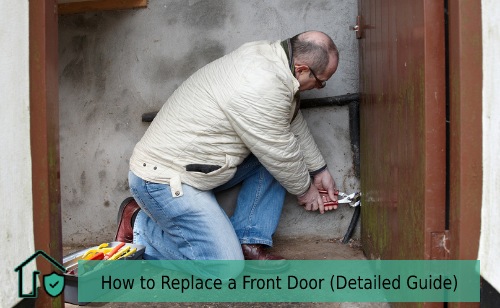
Your front door is the primary barrier between your home and the outside world. A damaged or poorly fitted door weakens every lock and deadbolt attached to it — no matter how good the hardware is. Think of it this way: a high-grade deadbolt mounted in a warped, rotting door frame offers very little real protection. The door itself has to be solid, correctly installed, and properly sealed before any security hardware can do its job.
This guide walks you through the full process — from busting common myths about door replacement, to selecting the right material, to executing a clean, professional-quality installation. By the end, you'll know exactly what to do, what to avoid, and how to finish the job with hardware that actually keeps your home secure.
Contents
What You've Been Told About Front Door Replacement Is Mostly Wrong
Before you spend a dollar or pick up a tool, it's worth clearing up a few pieces of bad advice that circulate constantly in home improvement forums and contractor conversations.
Myth: You Always Have to Replace the Frame Too
This is the most expensive myth in door replacement. The truth is, if your existing frame is structurally sound — no rot, no serious damage, no significant warping — you can install a new door slab directly into it. A pre-hung door (door already attached to its own frame) is only necessary when your current frame is compromised. Before assuming you need a full replacement, probe the frame with a screwdriver. If the wood is solid and doesn't give, a slab replacement is fine.
Myth: All Standard Doors Are the Same Size
There is a common standard — 80 inches tall by 36 inches wide — but it's not universal. Older homes frequently have non-standard openings. Even a quarter-inch difference means the door won't seat correctly, and you'll fight drafts and binding for years. Always measure your actual opening before purchasing anything. The standard front door dimensions are a starting point, not a guarantee.
Myth: Any New Door Is More Secure
A brand-new door with a hollow core and a builder-grade lockset is not more secure than your old solid-wood door with a quality deadbolt. Security comes from the combination of door material, frame strength, and hardware quality. A new door is only an upgrade if you choose the right one and install it correctly — then pair it with hardware that actually resists forced entry.
What to Know Before You Touch That Door
Preparation is where most successful door replacements are won or lost. Rushing to the hardware store without a plan leads to returns, delays, and errors that compound on each other.
Choosing Your Door Material
Three materials dominate the residential front door market. Each has a distinct set of trade-offs. Use the table below to compare them directly:
| Material | Security Rating | Insulation (R-Value) | Maintenance | Average Cost (Door Only) |
|---|---|---|---|---|
| Steel | Excellent | High (R-5 to R-6) | Low — paint touch-ups only | $150–$600 |
| Fiberglass | Very Good | Highest (R-7 to R-9) | Very Low — highly weather-resistant | $200–$1,500 |
| Wood | Good (solid core) | Low (R-2 to R-3) | High — staining and sealing required | $200–$2,000+ |
For pure security, steel wins. It resists kicking and impact better than wood or fiberglass at the same price point. Fiberglass is the best all-around choice if you want low maintenance, excellent insulation, and a look that can mimic real wood. Wood looks premium but demands regular upkeep and offers the weakest thermal performance.
For a deeper look at which doors hold up best under real-world attack, check out this rundown of the best front doors for security — it goes through specific models worth considering.
Measuring the Opening Correctly
Measure the width of your door opening at the top, middle, and bottom — use the smallest measurement. Do the same for height. Always measure the rough opening, not the existing door, because the door itself may have already settled out of its original dimensions. Write everything down before you go shopping.
Tools You'll Need
- Tape measure and level
- Pry bar and hammer
- Utility knife
- Power drill and screwdriver bits
- Circular saw (if trimming is needed)
- Shims (cedar or composite)
- Caulk gun and exterior-grade caulk
- Weatherstripping kit
- Safety glasses and work gloves
You don't need anything exotic. Most of these tools are standard in any homeowner's garage. If you're missing a few, they're available at any hardware store for under $50 total.
How to Replace a Front Door: The Complete Step-by-Step Process
Here's the full walkthrough. Work methodically, and don't skip the level-check steps — a door that isn't plumb will bind, gap, and fail to lock correctly.
Step 1 — Remove the Old Door
Start by opening the door fully. Tap the hinge pins out from the bottom up using a nail and hammer. Have a helper hold the door as you remove the last pin — doors are heavier than they look, especially solid-core or steel units. Once the door is off, set it aside. If you're also removing the frame, use a pry bar to carefully pull it away from the rough opening. Work slowly to avoid damaging the surrounding drywall or siding.
Step 2 — Inspect and Prepare the Frame
Before the new door goes in, the frame has to be right. Look for:
- Rot or soft spots — probe with a screwdriver
- Moisture damage or mold
- Warping or twisting
- Old caulk residue that needs scraping
Repair any rot with epoxy wood filler before proceeding. A well-sealed door frame is critical not just for energy efficiency but for the structural integrity of your door installation — an unstable frame means an unstable door. Clean up the opening so it's flat and clear of debris.
Step 3 — Hang the New Door
If you're installing a pre-hung door, lift the entire unit into the rough opening with a helper. Center it so the gap between the door and frame is even on all sides — typically ⅛ inch. Slide shims behind the hinge-side jamb at each hinge location, then drive screws through the jamb and shims into the rough framing. Check plumb constantly with your level as you go. One side at a time: hinge side first, then latch side, then the head jamb at the top.
If you're installing a door slab into an existing frame, align the hinges with your existing mortises. If they don't line up, you'll need to chisel new mortises. Check that the door swings freely and closes flush before moving on.
Pro tip: Use 3-inch screws through the strike plate and hinge plates into the structural framing — not just the door jamb — to dramatically improve kick resistance.
Step 4 — Install Hardware and Weatherstripping
Once the door hangs and closes correctly, it's time for hardware. Install the handle set, deadbolt, and any additional locks. If you're upgrading to a smart lock at the same time, follow the instructions in this guide on how to install a smart lock on your door — the process pairs well with a fresh door installation since everything is already off the frame.
Finish by pressing your new weatherstripping into the door stop on all four sides. Compression-style weatherstripping works best for most climates. Run a bead of exterior-grade caulk along the outside of the door casing where it meets the siding — this seals the gap against wind and water infiltration. Test the door repeatedly: open, close, lock, and unlock. Adjust shims or strike plate position as needed until everything operates smoothly.
You may also want to consider what type of deadbolt gives you the best protection at this stage. There's a solid breakdown of the different types of deadbolts and their uses to help you make the right call for your new door.
Mistakes That Turn a Weekend Project Into a Costly Headache
Door replacement is forgiving — but only if you respect a few key rules. These are the errors that most commonly derail first-time installers.
Skipping or Rushing the Measurement
This point deserves repeating: measure three times before you buy once. A door that's even ¼ inch too wide won't fit without cutting, and cutting a pre-hung unit in the field is a significant undertaking. A door that's too narrow will have gaps that defeat weatherstripping and create a visual mess. Measure your rough opening precisely, and match the door to those numbers — not to the size printed on your existing door.
Ignoring Frame Damage
Installing a new door in a damaged frame is like putting new tires on a car with a bent axle. The frame is the foundation. Even minor rot at the base of the hinge jamb can cause the door to sag within months, creating binding, gaps, and failure points around your lock hardware. If you find rot, fix it before the new door goes in. Epoxy wood filler works well for surface damage; significant structural rot means replacing that section of the frame entirely.
Underestimating the Security Hardware
A new door is a clean slate — use it to upgrade your entire locking system. Builder-grade locksets use short screws that pull out under a single hard kick. Replace those immediately with longer screws and a reinforced strike plate. At the same time, think about your deadbolt: if you're replacing the door, it's the perfect moment to also look at how to replace a front door lock with a keyed deadbolt. Pair that with a smart lock if you want keyless access and remote monitoring — both install cleanly on a fresh door with no complications.
Don't overlook the door's hinges either. Standard residential hinges use short screws. Replace all hinge screws with 3-inch versions that reach the structural framing — this single step dramatically increases kick resistance at virtually zero cost.
DIY vs. Hiring a Pro: The Honest Trade-Off
Most front door replacements are DIY-appropriate. But some situations genuinely call for professional help. Know which category your project falls into before you commit.
When DIY Is the Right Call
You're a good candidate for DIY if:
- The rough opening is standard size (80" × 36" or 80" × 32")
- The existing frame is structurally sound
- You have basic tools and are comfortable with a drill and level
- You have a helper available — door installation is a two-person job
- The door swings in the same direction as your current one
In these conditions, a pre-hung exterior door goes in cleanly in four to six hours. You'll save $300–$600 in labor, and the result is just as good as professional work if you follow the steps carefully.
When to Call a Professional
Some situations are genuinely better handled by a contractor:
- Non-standard or custom-sized openings that require framing modifications
- Significant structural damage to the rough opening or surrounding wall
- Changing the door swing direction (requires reframing)
- Installing a door with a sidelight or transom window (more complex framing)
- Any situation involving load-bearing walls near the opening
The cost of a mistake outweighs the cost of a professional in these scenarios. A botched frame modification can compromise the structural integrity of the wall itself, and that's a repair order of magnitude more expensive than the original door installation. When in doubt, get a quote — most contractors offer free estimates for door installation projects.
One additional consideration: if you're upgrading your front door as part of a broader security improvement, think about what happens after the door is in. A new door should be paired with a quality handleset. This guide on how to install a door handle set walks you through that follow-up step clearly.
Frequently Asked Questions
How long does it take to replace a front door?
For a standard pre-hung door replacement with a sound existing frame, plan for four to six hours. First-timers should budget a full day to account for adjustments, hardware installation, and caulking. Having a helper cuts this time significantly since hanging the door requires two sets of hands.
Do I need a permit to replace a front door?
In most jurisdictions, a like-for-like door replacement does not require a permit. If you're changing the size of the opening, modifying the framing, or altering a load-bearing wall, a permit is typically required. Check with your local building department before starting — requirements vary by municipality.
Can I reuse my existing door frame?
Yes, if the frame is structurally sound. Probe it with a screwdriver to check for rot or soft spots. If the wood is firm, clean, and undamaged, you can install a new door slab directly. Only replace the frame when it shows rot, significant warping, or structural compromise.
What is the most secure door material?
Steel is the most secure option at any given price point. It resists impact, splitting, and warping better than wood or fiberglass. Fiberglass is a close second and offers better insulation. Both outperform hollow-core doors by a wide margin. Pair either with a quality deadbolt and reinforced strike plate for maximum protection.
How much does it cost to replace a front door?
A basic steel pre-hung door starts around $150–$300. Mid-range fiberglass units run $400–$800. Premium wood or custom doors can exceed $2,000. Add $300–$600 for professional installation if you're not doing it yourself, plus hardware costs. Budget $500–$1,200 total for a solid mid-range DIY installation including a quality deadbolt and handleset.
Can I install a smart lock on my new door right away?
Yes, and a new door installation is actually the ideal time to add a smart lock — the hardware is fresh and you're already working on the door. Most smart locks are designed to fit standard door prep (the standard borehole and latch cutout). Check the specifications of your chosen lock against your door's prep dimensions before purchasing.
Should I replace my door lock when I replace the door?
If your existing lock is more than a few years old, yes. A new door is a good opportunity to upgrade your entire entry security system. At minimum, use longer screws (3 inches) on your strike plate and hinges. If your deadbolt is builder-grade, replace it with a Grade 1 ANSI-rated unit at the same time.
What's the most common reason a new door doesn't close properly?
The most common culprit is an out-of-plumb installation. If the hinge-side jamb isn't perfectly vertical, the door will bind or swing on its own. Always check plumb at every stage of installation and adjust shims before driving screws. A door that binds right after installation will only get worse over time as the house settles.
A new door is only as strong as the installation behind it — measure twice, check plumb three times, and never skip the long screws on the strike plate.


About Vincent Foster
Greetings, This is Tom Vincent. I’m a home Security Expert and Web developer. I am a fan of technology, home security, entrepreneurship, and DIY. I’m also interested in web development and gardening. I always try to share my experience with my reader. Stay Connected and Keep Reading My Blog. Follow Me: Facebook, Twitter, Pinterest
Now you can get FREE Gifts. Or latest Free Security Cameras here.
Disable Ad block to reveal all the gifts. Once done, hit a button below