Have you ever ordered a new front door, only to discover it doesn't fit the rough opening once it arrives? That kind of mistake is more common than most people expect — and it almost always comes down to one thing: not checking standard front door dimensions before buying. Here's the quick answer: most U.S. residential front doors are 36 inches wide and 80 inches tall. But there's a lot more nuance to it than that. The right size affects your weatherstripping, your lock hardware placement, and even how well your door resists forced entry. Browse our full collection of door guides for more resources on entry doors and security hardware.
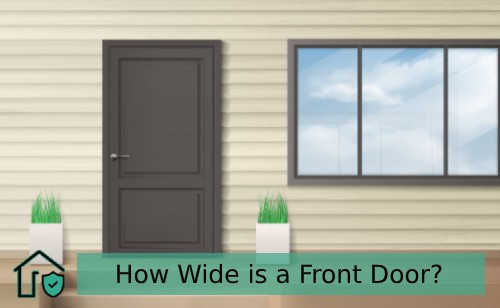
Whether you're replacing an aging door, upgrading to a more secure entry door, or just trying to figure out what fits your home, front door dimensions affect everything downstream — the frame, the rough opening, the hardware placement, and how tightly the door seals against the elements. Getting the size right from the start saves you money, time, and a lot of unnecessary frustration.
This guide walks you through standard sizes, how to measure your existing opening correctly, which dimensions suit different home styles, and what to keep in mind when security is part of the decision. By the end, you'll have a clear picture of exactly what to look for.
Contents
What Standard Front Door Dimensions Actually Mean
When people talk about standard front door dimensions, they're usually referring to the door slab — the panel that swings open and closed. But the full picture is bigger than that. You also need to account for the rough opening (the framed space in the wall), the door frame itself, and the threshold. Each of these measurements is different, and mixing them up is one of the most common ordering mistakes homeowners make.
Why Door Sizes Became Standardized
Door sizing didn't happen by accident. Over time, builders, architects, and manufacturers settled on common dimensions that made production, shipping, and on-site installation more efficient. Standardization also made it practical for homeowners to swap out a worn door without rebuilding the entire frame — a benefit that still holds today.
In the U.S., residential construction has largely aligned around a handful of sizes. If your home was built in the last several decades, there's a strong chance your door falls within a predictable range. That said, older homes — especially those built before the mid-20th century — can have non-standard openings that require custom doors or frame adjustments. If you're working with an older property, measure everything twice before placing any orders.

Building Codes and Accessibility Requirements
Building codes add another layer to the equation. The Americans with Disabilities Act (ADA) requires a minimum clear opening of 32 inches for accessible doorways, with 36 inches being the preferred standard for residential use. The International Residential Code (IRC) also specifies minimum egress requirements that influence how narrow a door can legally be in a habitable space.
What this means practically: even if your home predates modern codes, any replacement you do today likely needs to meet current local standards. Before committing to a door size — especially if you're narrowing an existing opening — check with your local building authority first. That one call can save you from a costly redo.
Pro tip: Always verify local building code requirements before ordering a replacement door — what was acceptable when your home was built may not meet current egress or accessibility standards today.
Common Front Door Sizes Across U.S. Homes
Let's get into the actual numbers. Front door dimensions vary by door type, home age, and regional building practices. Here's a clear breakdown of the most common configurations you're likely to encounter.
Single Entry Door Dimensions
A standard single front door is 36 inches wide and 80 inches tall. That's 3 feet by 6 feet 8 inches, and it's the size you'll find in the vast majority of modern residential homes. Some builders use 32-inch-wide doors for narrower homes or secondary entrances, but 36 inches is the primary standard for main entry doors.
Height is more consistent than width across the industry. The 80-inch height is nearly universal in residential construction. Some homes — particularly those with taller ceilings or custom architectural details — use 84-inch or 96-inch doors for a more dramatic entrance, but these are the exception rather than the rule.
Double Door and Tall Door Dimensions
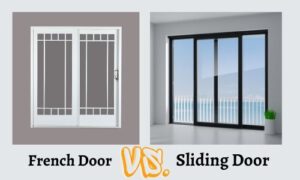
Double doors — sometimes called French entry doors — divide the opening into two panels. Combined widths typically range from 60 to 72 inches, with each individual panel measuring between 30 and 36 inches wide. These are most common on larger homes and create a more formal, open feel at the entrance.
Here's a reference table covering the most common front door dimensions you're likely to encounter when shopping for a replacement or specifying a new install:
| Door Type | Width | Height | Common Use |
|---|---|---|---|
| Single entry (narrow) | 32 inches | 80 inches | Older homes, narrow foyers |
| Single entry (standard) | 36 inches | 80 inches | Most modern residential homes |
| Single entry (wide) | 42 inches | 80 inches | Wider openings, accessible design |
| Tall single door | 36 inches | 84–96 inches | High-ceiling homes, custom builds |
| Double door (French) | 60–72 inches | 80–96 inches | Grand entrances, larger homes |
| Prehung unit rough opening | Slab width + ~2 inches | Slab height + ~2.5 inches | Framing allowance for all installs |
One important distinction to keep in your head: the door slab dimensions and the rough opening dimensions are always different numbers. The rough opening needs to be roughly 2 inches wider and 2 to 2.5 inches taller than the slab to allow for the frame, shimming, and a proper weathertight fit.
How to Measure Your Front Door Opening the Right Way
Accurate measurements are the single most important step before buying a replacement door. Measure wrong, and you're either returning an expensive door or taking on unexpected framing work. Here's how to get it right.
What You'll Need
- A metal tape measure — cloth tapes can stretch and give inaccurate readings
- A pencil and notepad, or your phone, for recording dimensions
- A level to check whether the frame is plumb and square
- A helper is useful for larger or heavier door openings
Step-by-Step Measuring Process
Work through these steps in order to capture both the existing door slab dimensions and the rough opening size:
- Measure the door slab first. With the door closed, measure edge to edge for width and top to bottom for height. Measure the panel itself — not the frame or casing.
- Measure the rough opening width. Open the door and measure horizontally between the two jack studs — the vertical framing members on either side of the opening. Take measurements at the top, middle, and bottom, and use the smallest reading.
- Measure the rough opening height. Measure from the subfloor (or top of the sill) up to the underside of the header. Again, take multiple readings and note the smallest number.
- Check for square. Measure diagonally across the rough opening in both directions. Equal diagonal measurements mean a square opening. Unequal measurements mean the frame has racked and may need adjustment before a new door will hang properly.
- Note the wall thickness. Measure the depth of the wall at the opening — typically 4.5 inches for 2×4 framing or 6.5 inches for 2×6. This determines which door frame jamb profile you need to order.
Warning: Never rely solely on your current door's size when ordering a replacement — always measure the rough opening directly, since frames can shift, settle, or be shimmed unevenly over the years.
Choosing the Right Door Size for Security and Function
Door dimensions aren't just about visual proportion or fitting the opening — they have a direct impact on how secure your entry point is. A door that's too small for its frame, or one that's hung improperly, creates gaps that compromise both weather resistance and physical security.
Frame Strength and Lock Hardware Fit
The relationship between door width and hardware placement matters more than most people realize. Standard lockset bore holes are positioned at a specific distance from the door edge — the backset, typically 2⅜ or 2¾ inches. On a 36-inch door, this geometry leaves solid wood on both sides of the lock cylinder, which is critical for resisting kick-in attacks.
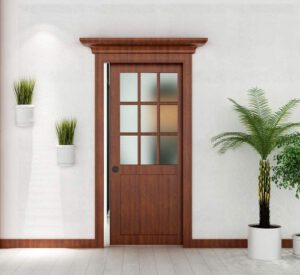
Narrower panels — 28 or 30 inches — compress that geometry and can leave less solid material around the lock. If security is a primary concern, 36 inches is the practical sweet spot: wide enough for proper hardware placement and standard enough that reinforced frames, heavy-duty strike plates, and multi-bolt locks are all designed to fit it. When pairing your door with a new lock, check out our breakdown of the different types of deadbolts to understand which backset and throw length works best for your door thickness and frame depth.
Accessibility and Wide Door Options
If you're planning ahead for accessibility — whether aging in place or accommodating wheelchair users — door width becomes especially important. Here's how the math breaks down for clear opening widths, which is what actually matters for passage:
- A 32-inch door provides roughly 29.5 inches of clear opening — below ADA minimums
- A 36-inch door gives approximately 33.5 inches of clear opening — meets ADA requirements
- A 42-inch door gives about 39.5 inches of clear opening — exceeds ADA by a comfortable margin
Wider doors also give you more flexibility when mounting video doorbells, security cameras, or smart lock keypads adjacent to the entry. If you're building out a layered security setup, a standard or wider opening makes placement decisions much easier.
Planning a Door Replacement That Lasts
A front door replacement isn't something most homeowners do frequently. The decision you make now will likely stay in place for a decade or more, which makes it worth thinking through beyond just the immediate fit.
Future-Proofing Your Entry Door Choice
Sticking to standard dimensions gives you maximum flexibility later. If you go custom — either significantly larger or smaller than the 36×80 standard — you narrow your replacement options considerably. Standard-size doors are stocked at most home improvement stores, meaning faster sourcing and lower costs for any future replacements or repairs.
- Choose a standard width (36 inches) and height (80 inches) unless your situation genuinely requires otherwise
- Opt for a prehung door unit rather than a slab-only replacement if your existing frame is older or shows wear
- Look for doors with reinforced strike plates and multi-point locking systems for better long-term security
- Prefer solid core wood or steel construction over hollow-core — both last longer and perform significantly better against forced entry
Think about the entry system as a whole: the door, the frame, the lock, and the threshold all work together. A heavy-duty deadbolt installed in a weak or rotted frame doesn't deliver the security you'd expect from it on paper.
Installation Considerations
Even a correctly sized door can cause problems if it's installed poorly. A door that's slightly out of plumb or level will bind, stick, develop air gaps along the edges, or prevent the deadbolt from engaging cleanly. These issues are harder to fix after the fact than to prevent during installation.
If you're doing a DIY install, take your time with shimming and leveling. The door should swing freely, latch cleanly without lifting or forcing, and seal consistently around the entire perimeter. Test all four edges before finishing the trim.
For more involved projects — widening an opening from 32 to 36 inches, or converting from a single to a double door configuration — it's worth having a professional assess the framing first, particularly if load-bearing walls are involved. Enlarging a rough opening means modifying the header, which carries structural implications well beyond the door itself. When in doubt, get an expert opinion before you start cutting.
Frequently Asked Questions
What is the most common front door width?
The most common front door width for residential homes in the U.S. is 36 inches. This size accommodates standard lock hardware, meets ADA accessibility guidelines, and is widely stocked at home improvement stores. Some homes use 32-inch doors, particularly older builds, but 36 inches is the dominant standard for primary entry doors.
What is the standard front door height?
Standard front doors are 80 inches tall — that's 6 feet 8 inches. Taller options at 84 or 96 inches are available for homes with higher ceilings or custom architectural designs, but 80 inches remains the baseline in the vast majority of residential construction.
How much bigger should the rough opening be than the door?
The rough opening should be approximately 2 inches wider and 2 to 2.5 inches taller than the door slab. This extra space allows for the door frame, shimming to achieve plumb and level, and threshold components. For a standard 36×80 door, aim for a rough opening of roughly 38 inches wide by 82.5 inches tall.
Can I replace a 32-inch door with a 36-inch door?
Yes, but it requires modifying the rough opening. You'll need to remove the existing frame, reframe the opening wider, and install a new header sized for the span. It's a manageable DIY project in non-load-bearing walls, but you should consult a contractor before cutting into any load-bearing wall structure.
Does door width affect deadbolt installation?
Yes, it does. Door width influences how much solid material surrounds the lock bore. Narrower doors have less material at the latch edge, which can reduce the security and structural integrity of the lock installation. Standard 36-inch doors provide adequate material on both sides of the bore for most deadbolt and smart lock hardware to seat securely.
What door size meets ADA accessibility requirements?
The ADA requires a minimum clear opening of 32 inches for accessible doorways. A 36-inch door slab provides approximately 33.5 inches of clear opening after accounting for the door stop, making it the recommended minimum for ADA-compliant residential entries. A 42-inch door provides additional clearance well above the requirement for greater accessibility.
Key Takeaways
- The standard front door size in most U.S. homes is 36 inches wide by 80 inches tall — a reliable default for replacements and new installations alike.
- Always measure the rough opening directly, not just the existing door slab — the framed space needs to be about 2 inches wider and 2.5 inches taller than the door panel to allow for proper framing and shimming.
- Door width directly affects security hardware performance — a 36-inch door provides sufficient material around lock borings for deadbolts and smart locks to install and function as designed.
- Sticking to standard dimensions gives you the most flexibility for future sourcing, hardware upgrades, and replacements without requiring costly or complex framing changes.


About Vincent Foster
Greetings, This is Tom Vincent. I’m a home Security Expert and Web developer. I am a fan of technology, home security, entrepreneurship, and DIY. I’m also interested in web development and gardening. I always try to share my experience with my reader. Stay Connected and Keep Reading My Blog. Follow Me: Facebook, Twitter, Pinterest
Now you can get FREE Gifts. Or latest Free Security Cameras here.
Disable Ad block to reveal all the gifts. Once done, hit a button below