Picture this: you arrive at a vacation rental late at night, drag your bags inside, and discover the bedroom door lock is completely broken. The host isn't picking up. You need to sleep, but you also need to feel secure. Knowing how to lock a door without a lock in that moment isn't just a clever trick — it's genuinely useful. Whether you're dealing with a broken deadbolt, a door that was never fitted with one, or a temporary security gap while waiting on a repair, there are straightforward methods that actually work. For a full overview of entry-point protection, start with our door security guides.
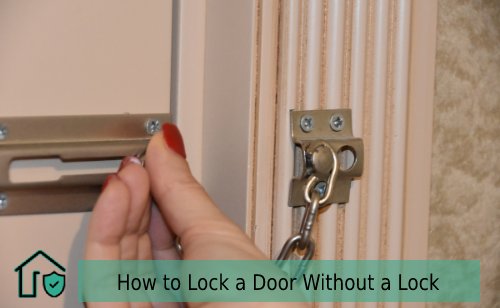
None of these methods are a permanent replacement for a proper deadbolt. But they can absolutely bridge the gap when you need quick, reliable protection. Some use items you already have at home. Others involve a small, inexpensive purchase that's worth keeping in your travel bag or junk drawer. You don't need to be handy or technically skilled to use most of them.
This guide covers six proven methods — from the simplest rubber wedge to a floor-anchored barricade bar — along with practical tips, common mistakes to sidestep, and guidance on when it's time to move beyond improvised solutions entirely.
Contents
- 6 Proven Methods to Lock a Door Without a Lock
- Simple Fixes vs. Heavy-Duty Solutions
- Best Practices for Maximum Door Security
- Mistakes That Leave Your Door Vulnerable
- Where These Methods Work Best
- Troubleshooting: When Your Setup Isn't Working
- When to Rely on These Methods — and When to Upgrade
- Frequently Asked Questions
- Final Thoughts
6 Proven Methods to Lock a Door Without a Lock
Each method below works differently and suits different situations. Read through all six and pick the one — or the combination — that fits your door and your circumstances.
1. Portable Door Lock
A portable door lock (sometimes called a travel lock) is one of the smartest purchases you can make for temporary security. These small, lightweight devices clamp onto a door's strike plate or latch bolt on the inside, physically preventing the door from being opened from the outside — even by someone with a key.
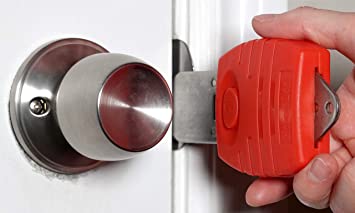
How to use one:
- Close the door fully until the latch engages.
- Slide the portable lock's metal clamp over the latch bolt or strike plate on the inside.
- The device jams the mechanism so the handle can't retract the bolt from the outside.
Most cost under $25, fold flat, and work on the majority of standard inward-opening doors. If you want to compare models before buying, our guide to the best portable door locks reviews the top options by strength and ease of use.
2. Door Barricade Device
A door barricade device is a significant step up in stopping power. It anchors to the floor with a permanent base plate and uses a removable bar that braces vertically against the door. When engaged, it can withstand hundreds of pounds of force — far more than most improvised methods.
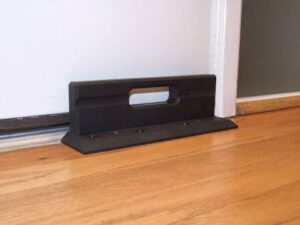
Installation steps (one time only):
- Screw the floor plate into position a few inches from the base of the door.
- When you need security, slot the bar into the floor bracket and lean it against the door.
- The bar transfers door pressure straight into the floor — not the frame.
According to CISA's home security guidance, reinforcing entry points against forced entry is one of the highest-impact steps a homeowner can take. A barricade device does exactly that.
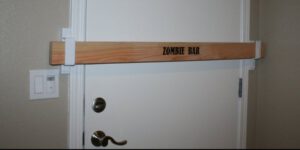
3. DIY Barricade Bar
No hardware on hand? A few common household items can provide surprising resistance in a pinch.
- Belt method: Loop a belt around the door's closer arm or hinge, then anchor the other end to something heavy and fixed — a bed frame rail, a radiator pipe, a wall hook.
- Fork method: Remove a fork's handle and slide it into the latch hole in the door's edge. Bend the tines back against the door face to lock the mechanism in place.
- Rope or cord: Thread a strong cord through or around the handle and tie it tightly to a heavy piece of furniture that can't be dragged.
These are strictly temporary measures. They buy time and deter casual entry, but they're not built to withstand sustained force. Treat them as a bridge, not a solution.
4. Remove the Door Handle
This one surprises people, but it works. With no handle in place, most people simply can't operate the latch from the outside — there's nothing to grip or turn.
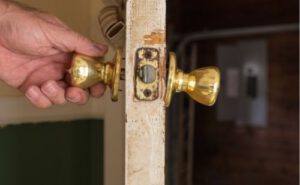
- Use a Phillips or flathead screwdriver to remove the screws on the interior rose plate.
- Pull both handle assemblies free from the door.
- Keep the hardware somewhere accessible — you'll want it back later.
This approach works best on interior doors where you need temporary privacy. It's not a practical solution for a front door or any door you need to exit quickly. Also note: the latch bolt is still in the door edge, just uncontrolled — so the door may not stay truly closed on its own without a wedge to hold it.
5. Tie the Door Handle
If removal isn't an option, tie the handle so it can't rotate. The goal is to link the handle to a fixed point with enough tension that turning it becomes impossible.
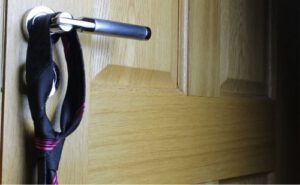
- Loop your belt, bungee cord, or strong rope around the handle — twice if possible.
- Run it to the nearest immovable anchor: a radiator, a heavy dresser leg, a bed frame crossbar.
- Pull it taut and secure with as tight a knot or buckle as you can manage. Zero slack is the goal.
The less the handle can move, the more effective this is. A leather belt works better than rope on smooth handles because it grips without slipping. This method can also work on outward-opening doors — tie it from inside to prevent the door from being pulled open.
6. Door Stopper Wedge
A rubber or metal door wedge creates friction-based resistance that stops the door from swinging inward. It's the simplest method on this list and among the most underrated.
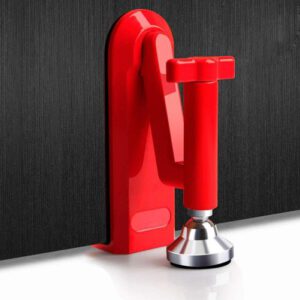
- Choose a wedge with a textured, non-slip rubber base.
- Kick or press it as far under the door gap as it will go.
- Use two wedges side by side for heavier doors or wider gaps.
Choosing the right wedge matters more than most people realize. Our guide on how to choose the right door stopper covers size, material, and grip factors. And if you'd rather build one yourself, the DIY door stopper guide walks through a simple at-home build with basic materials.
Simple Fixes vs. Heavy-Duty Solutions: Which One Do You Need?
Not every situation calls for the same level of effort. Here's how to think about it:
Beginner-Friendly Methods (No Tools, No Installation)
If you need something right now with zero prep:
- Door stopper wedge — grab any wedge-shaped object if a real wedge isn't available
- Tie the handle — a belt or bungee cord works immediately
- Portable door lock — no installation required, just clip it on
These options are ideal for renters, travelers, and anyone dealing with a one-time situation. They leave no holes in walls and make no permanent changes to the door.
More Capable Options (Minor Installation Required)
If you want stronger protection and can spend 15 minutes on setup:
- Door barricade device — one-time floor plate installation, then deploy/store as needed
- Remove the door handle — requires a screwdriver but creates a genuine deterrent
- DIY barricade bar — requires knowing your furniture layout and having a suitable anchor
Understanding the different types of door locks helps you see how these improvised approaches stack up against traditional hardware — and which gaps they fill.
Best Practices for Maximum Door Security
Layer Your Defenses
Never rely on a single method alone. Combine a door wedge with a tied handle, or use a portable lock alongside a barricade device. Layering means an intruder has to defeat two or three obstacles instead of one — and that dramatically increases the time and noise involved, both of which deter entry.
Test Everything Before You Need It
Practice your chosen method in daylight before an emergency. A portable door lock you've never installed is nearly useless when you're tired, stressed, or in the dark. Run through the full setup at least once so your hands know what to do.
Method Comparison at a Glance
| Method | Skill Level | Typical Cost | Tools Needed | Works on Outward-Opening? | Best For |
|---|---|---|---|---|---|
| Portable Door Lock | Beginner | $10–$25 | None | No | Travel, hotels, rentals |
| Barricade Device | Intermediate | $30–$80 | Screwdriver (one-time) | No | Home, dorms, long-term use |
| DIY Barricade Bar | Beginner | $0 | Belt or rope | Partial | Emergencies |
| Remove Handle | Intermediate | $0 | Screwdriver | No | Interior doors, temporary privacy |
| Tie the Handle | Beginner | $0 | Belt or cord | Yes (limited) | Quick fix, any door |
| Door Stopper Wedge | Beginner | $5–$15 | None | No | Travel, renters, light security |
Don't Forget the Door Frame
A strong improvised lock on a weak door frame offers limited protection. Before you commit to any method, check for:
- Gaps wider than 1/4 inch around the frame
- Soft, splintered, or rotting wood near the strike plate
- Loose hinge screws that wobble when you pull the door
If the frame is soft, address that first — otherwise even a good barricade device can fail by pulling the anchors free under force.
Mistakes That Leave Your Door Vulnerable
A door wedge alone won't stop a determined intruder. Combine it with at least one other method — like tying the handle — for meaningful, layered protection.
Trusting One Method in a High-Risk Situation
Single-point improvised security gives you false confidence. A fork in the latch, a loosely tied belt, or a thin rubber wedge are deterrents — not guarantees. If the situation is serious, stack methods.
Using Worn or Damaged Materials
A frayed rope snaps under pressure. A cracked rubber wedge slides. A stretched-out belt buckle gives way. Check any materials you plan to use — especially items repurposed from daily use — and replace anything that looks tired.
Assuming These Methods Work on Outward-Opening Doors
Most of the methods in this guide are designed for inward-opening doors. If your door swings outward, wedges and barricade bars don't engage. Your best options for outward-opening doors are:
- Tying the interior handle to a fixed anchor
- Reinforcing exposed hinges (which are now accessible from outside) with non-removable hinge pins
Ignoring Other Entry Points
Locking one door doesn't secure a space. Windows, sliding doors, and pet flaps are all potential entry points. If you want visibility across multiple areas, our roundup of the best small indoor security cameras covers compact, discreet options that cover more ground without major installation.
Where These Methods Work Best
Portable door locks are one of the best travel security purchases you can make — small enough to fit in a jacket pocket, they work on nearly any inward-opening door in a hotel or rental.
Hotel Rooms and Vacation Rentals
You have no idea how many copies of the room key exist. Property staff, previous guests, cleaning crews — any of them may have had access. A portable door lock or wedge gives you real control. Use one every night and whenever you step out briefly and leave valuables behind.
Interior Doors Needing Temporary Privacy
Bedroom and home office doors often have cheap privacy locks that can be bypassed with a coin or a credit card. Tying the handle or jamming a wedge gives you genuine privacy when you need it — during a call, while working, or when guests are over.
Emergency Shelter-in-Place Situations
If there's a threat outside your home, interior doors become your barrier. A barricade device or a tied handle setup can buy you critical minutes. Know which rooms in your home have the most solid doors, and keep a wedge or portable lock somewhere accessible in each.
Rentals and Dorms Where You Can't Drill
Most leases prohibit modifications. Portable locks and rubber wedges are completely non-invasive and removable — no holes, no hardware, no security deposits at risk. They're an obvious choice for anyone who doesn't own their space.
Troubleshooting: When Your Setup Isn't Working
The Wedge Keeps Sliding Out
- Switch to a rubber wedge with a deeply textured, non-slip base.
- Push it further under the door — the closer to the door's center of mass, the more effective it is.
- If you're on smooth flooring (tile or hardwood), place a textured rubber mat underneath the wedge for extra grip.
The Portable Lock Won't Fit the Strike Plate
- Check whether your lock has an adjustable clamping width — many models accommodate a range of strike plate sizes.
- Try a different model designed for your specific door style (hotel vs. residential vs. commercial).
- As a backup, default to the wedge method until you source the right lock.
The Barricade Bar Doesn't Reach
- Many bars are adjustable — check if yours telescopes or has multiple mounting positions.
- If the bar is genuinely too short, use it in combination with a wedge at the base of the door.
- A floor-anchored barricade device is more reliable for unusual door widths than a bar that spans wall to door.
The Tied Handle Keeps Slipping
- Use a leather belt instead of rope — leather grips smooth metal better.
- Double-loop the belt around the handle before anchoring it.
- A bungee cord stays taut under pressure better than most ropes and adjusts automatically as you pull.
When to Rely on These Methods — and When to Upgrade
Use These Methods When...
- You need a solution right now and can't wait for hardware.
- You're in a rental or temporary accommodation where permanent installation isn't possible.
- You're traveling and want to add a second layer of security to a hotel or Airbnb room.
- A lock has failed unexpectedly and you're waiting on a repair or locksmith.
- You need temporary interior privacy in a room with a weak or broken privacy lock.
Don't Rely on These Methods When...
- This is your primary exterior door at home — these are supplemental, not replacements.
- You're in a high-crime area or have a specific reason to believe you're being targeted.
- Your door frame or hinges are already damaged — no improvised method compensates for a structurally compromised door.
- You need to exit the space quickly in an emergency — some methods (like tying the handle) can slow your own exit.
When to Call a Locksmith or Upgrade Permanently
If your lock has failed entirely, call a licensed locksmith rather than relying on workarounds indefinitely. If you're ready to upgrade, a smart deadbolt is one of the best investments you can make for an exterior door. Our review of the best smart deadbolt locks breaks down models by price, compatibility, and ease of installation. And if you're curious how the technology actually works, this explainer on how smart locks work is a good starting point.
Frequently Asked Questions
Can you lock a door without a lock from the inside?
Yes — several methods work well for securing a door from the inside without any built-in lock. A portable door lock, a rubber door wedge, tying the handle to a fixed anchor, or using a barricade device are all effective options depending on how much stopping power you need.
What household items can I use to barricade a door?
A leather belt looped around the door handle and tied to a bed frame is one of the most reliable improvised options. You can also use a bungee cord, a strong rope, or even a sturdy chair wedged under the handle (tilt the chair back so the top of the backrest catches under the handle). A rubber door wedge jammed under the base is another quick fix.
Does a door stopper actually stop someone from breaking in?
A quality rubber door wedge provides meaningful resistance — it can stop casual attempts and slow down more determined ones. However, under sustained force, most wedges will eventually give. For serious security, combine a wedge with a portable lock or a tied handle for a layered approach.
How do I lock a hotel room door without a lock?
Pack a portable door lock — it's designed specifically for this situation and works on almost every standard hotel door. Alternatively, a door wedge jammed under the door is a low-tech backup. Avoid relying solely on the hotel's chain latch, as these can be defeated with a fork or card.
Can I remove my door handle to prevent entry?
Yes, removing the interior and exterior handle assembly makes it very difficult for someone to retract the latch bolt from outside. You'll need a screwdriver and about five minutes. This works best on interior doors for temporary privacy — it's not practical for a main entry door you need to lock and exit through regularly.
What is the strongest way to lock a door without a lock?
A floor-anchored door barricade device is the strongest option on this list. It transfers force directly into the floor rather than the frame, and quality models can withstand hundreds of pounds of impact. Combined with a portable door lock or wedge, it provides very strong protection for an inward-opening door.
Do these methods work on outward-opening doors?
Most don't — wedges and barricade bars rely on inward force to engage. For outward-opening doors, your best options are tying the interior handle to a fixed anchor point, or reinforcing exposed hinges with security pins that prevent the hinge from being disassembled from outside.
When should I stop using improvised methods and install a real lock?
If you're relying on improvised methods for your primary exterior entry point on a regular basis, it's time to upgrade. A proper deadbolt or smart lock offers far more reliable protection. Improvised methods are great for travel, temporary gaps, or interior privacy — not as a permanent solution for your main doors.
Final Thoughts
Knowing how to lock a door without a lock is a practical skill worth having — for travel, emergencies, and those frustrating moments when hardware fails at the worst time. Start with whichever method fits your situation right now, combine it with a second layer where you can, and then take a few minutes to browse the door security guides to see whether a permanent upgrade makes sense for your home. A small investment in the right hardware today can save you a lot of stress down the road.


About Vincent Foster
Greetings, This is Tom Vincent. I’m a home Security Expert and Web developer. I am a fan of technology, home security, entrepreneurship, and DIY. I’m also interested in web development and gardening. I always try to share my experience with my reader. Stay Connected and Keep Reading My Blog. Follow Me: Facebook, Twitter, Pinterest
Now you can get FREE Gifts. Or latest Free Security Cameras here.
Disable Ad block to reveal all the gifts. Once done, hit a button below