There are 10 types of door locks and how they work comes down to one thing: the mechanism inside. Pin tumblers, spring latches, electronic sensors, multi-bolt systems — each one is built for a different purpose. Choosing the wrong type for a given door is one of the most common (and costly) home security mistakes you can make. Explore the full range on our door locks category page before you buy.
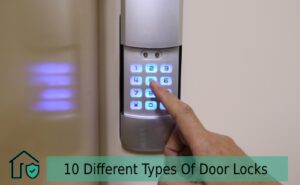
Most homeowners have several different lock types installed without realizing it. According to Wikipedia's overview of security locks, the pin tumbler design — invented in the 1800s — still powers the majority of residential locks sold today. But modern options go far beyond a key-and-cylinder setup, and what works perfectly on your front door is the wrong choice for your patio or filing cabinet.
This guide breaks down all 10 lock types in plain terms, compares their strengths and weaknesses, and tells you exactly which one belongs where.
Contents
- The 10 Types of Door Locks and How They Work
- How the Most Common Locks Stack Up: Pros and Cons
- What to Expect to Pay for Each Lock Type
- How to Choose the Right Lock for Every Door
- Lock Mistakes That Compromise Your Home Security
- Fast Security Wins You Can Do This Weekend
- When to Upgrade Your Locks — and When to Skip It
- Frequently Asked Questions
The 10 Types of Door Locks and How They Work
Each lock type below is built around a core mechanism. Understanding that mechanism tells you exactly how secure it is — and where its limits are.
1. Deadbolts
The deadbolt is the gold standard for exterior door security. Unlike a spring latch (which snaps back automatically and can be slipped with a credit card), a deadbolt throws a solid steel bolt deep into the door frame that won't retract without a key or thumbturn.
A deadbolt is non-negotiable on every exterior door — without one, a door can be opened in seconds with a credit card or a hard shove.
Three main deadbolt types:
- Single-cylinder — key outside, thumbturn inside (the most common residential choice)
- Double-cylinder — key required on both sides (good for doors with glass panels nearby)
- Lockable thumbturn — behaves like a single-cylinder but the thumbturn can be locked from inside
If you want to understand where deadbolts are vulnerable, read our guide on how to pick a deadbolt lock — knowing the weak points helps you choose better hardware and installation methods.
2. Knob Locks
Knob locks are the most common lock on interior doors. The entire locking mechanism lives inside the knob — which is exactly the problem. A hard strike to the knob can snap it off, bypassing the lock completely.
- Best for: interior bedroom and bathroom doors
- Not suitable for: any exterior door used as a primary lock
- How they work: rotating the knob compresses a spring-loaded latch into the door frame
If you have a knob lock on your front door without a deadbolt above it, that is your most urgent security fix.
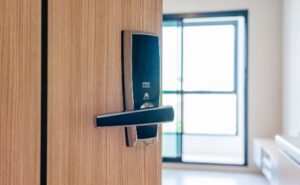
3. Lever Handle Locks
Lever handle locks use the same spring-latch mechanism as knob locks, but the lever shape makes them far easier to operate — especially for people with limited grip strength. They're the standard in commercial buildings, offices, and ADA-compliant spaces for that reason.
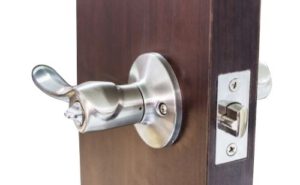
- Common in offices, hotels, schools, and accessible housing
- Easier to torque and force open than a deadbolt — don't use alone on exterior doors
- Available in passage (no lock), privacy (push-button inside), and keyed configurations
4. Padlocks
Padlocks are the only freestanding locks on this list — they don't attach permanently to a door or frame. They secure through a shackle (the U-shaped metal bar) that clips through a hasp, chain, or loop.
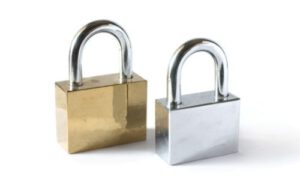
Two main types:
- Keyed padlocks — pin tumbler or disc detainer mechanism, opened with a key
- Combination padlocks — no key needed, opened by aligning a numeric or directional code
Look for hardened steel shackles and anti-drill plates when securing a storage unit or outdoor gate — cheap padlocks can be cut in under 10 seconds. Our guide to the best padlocks for storage units covers the top options by security level. And if you've ever lost the key, our breakdown of how to open a padlock without a key walks through your options step by step.
5. Mortise Locks
Mortise locks are recessed directly into the door edge rather than bolted onto the surface. The lock body fits into a pocket (the "mortise") cut into the door, which makes them significantly harder to kick in or pry out.
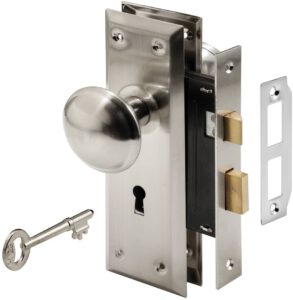
- Common in older homes, hotels, and high-end residential installations
- Combines a deadbolt and spring latch in a single unit
- More complex to install — usually requires a professional or an experienced DIYer
- Among the most durable and secure options for an exterior door
6. Smart and Digital Locks
Smart locks replace your traditional key with a smartphone app, fingerprint reader, or voice command. Most still include a physical key cylinder as a backup. Smart locks connect via Bluetooth, Z-Wave, Zigbee, or Wi-Fi and integrate with home automation platforms.
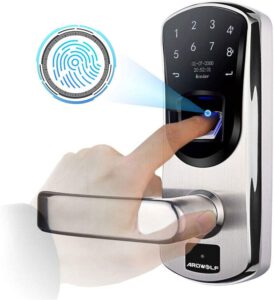
Smart locks are only as secure as their firmware and app — always buy from brands that release regular security updates and support two-factor authentication for remote access.
If you're building a connected home, check out our roundup of the best Bluetooth door locks, our guide to smart locks that work with Google Home, or our picks for the best HomeKit smart lock if you're in the Apple ecosystem.
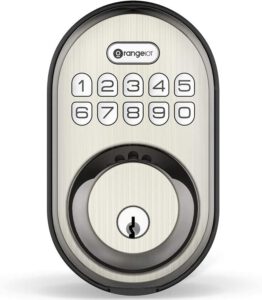
7. Keypad and Electronic Locks
Keypad locks use a PIN code instead of a physical key. They're a popular choice for rental properties, Airbnbs, and family homes where you want to hand out access codes without cutting extra keys.
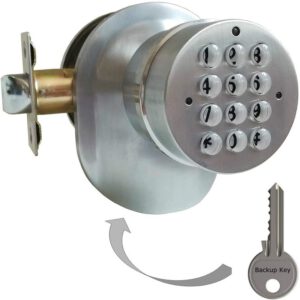
- Can store multiple PIN codes for different users
- Eliminates lockouts caused by lost keys
- Battery-powered — always keep a spare set nearby and set a reminder to change them every 6 months
- Most models include a physical key cylinder as a backup override
8. Multi-Point Locks
Multi-point locks secure the door at three or more points along the frame — typically the top, middle, and bottom — all activated by a single key turn. They're standard on European composite doors and patio doors.
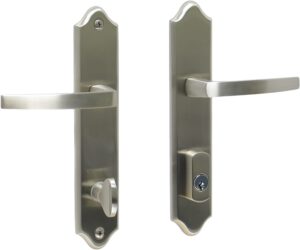
Multi-point locks spread force across the entire door frame — a kick-in attack that would destroy a single-bolt lock barely shakes a properly installed multi-point system.
- Activated by lifting the handle before turning the key
- Ideal for uPVC, composite, sliding patio, and French doors
- Significantly harder to force open than a standard deadbolt on a patio door
9. Cam Locks and Furniture Locks
Cam locks use a small rotating metal tab (called a "cam") to secure cabinets, drawers, mailboxes, and office furniture. They are not designed for exterior doors — security is minimal and they're easy to pick or drill.
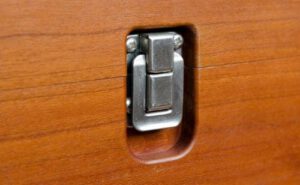
- Common in filing cabinets, office desks, display cases, and mailboxes
- Simple quarter-turn operation — insert key, rotate 90°, cam rotates to block or release
- Suitable for low-security storage only — not for documents or valuables without additional protection
10. Portable Door Locks
Portable door locks are temporary security devices you carry with you for travel. They wedge against the floor or clamp to the door hardware to block the door from opening from outside — even if someone has a valid key to your room.
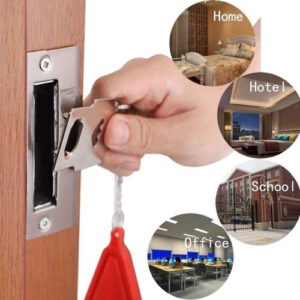
- Designed for hotel rooms, Airbnbs, and dormitory rooms
- Work independently of the existing door hardware
- Not a permanent replacement — supplement only
- Learn how one of the most popular designs works in our guide on how the Addalock portable door lock works
How the Most Common Locks Stack Up: Pros and Cons
Not every lock type is right for every situation. Here's a side-by-side comparison of the key trade-offs across all 10 types.
| Lock Type | Best Use | Security Level | Key Required | Typical Price |
|---|---|---|---|---|
| Single-cylinder deadbolt | Exterior doors | High | Yes | $20–$80 |
| Double-cylinder deadbolt | Doors with nearby glass | High | Yes (both sides) | $30–$100 |
| Knob lock | Interior doors only | Low | Yes | $10–$50 |
| Lever handle lock | Interior / ADA doors | Low–Medium | Yes | $15–$80 |
| Padlock | Gates, storage, lockers | Low–High (varies by model) | Yes / No | $5–$100+ |
| Mortise lock | High-security exterior doors | Very High | Yes | $60–$300 |
| Smart lock | Front door, rentals | High | No (app / fingerprint) | $100–$300 |
| Keypad / electronic lock | Shared access doors | High | No (PIN code) | $50–$200 |
| Multi-point lock | Patio / composite doors | Very High | Yes | $100–$500 |
| Portable lock | Travel / temporary use | Medium | No | $10–$40 |
A few things stand out in that table. Security level varies wildly within the padlock category — a $10 combination lock and a $90 hardened-steel keyed padlock are not the same product. Always look at the construction, not just the price. And notice that smart and keypad locks rate just as high as deadbolts — the mechanism is solid, but the software layer adds a new attack surface that purely mechanical locks don't have.
What to Expect to Pay for Each Lock Type
Lock prices span a wider range than most people expect. Here's what each tier actually gets you.
Budget Range: $10–$50
- Basic knob locks and lever passage sets for interior doors
- Entry-level combination padlocks (adequate for gym lockers, not storage units)
- Portable travel locks — most solid options sit in the $15–$30 range
- Grade 3 deadbolts — meets minimum standards only, skip these for front doors
Mid-Range: $50–$150
- This is the sweet spot for most homeowners. You get legitimate security without overpaying.
- Grade 2 deadbolts with solid brass construction
- Entry-level smart locks with Bluetooth and PIN access
- Quality keyed padlocks with hardened steel shackles and anti-drill protection
- Electronic keypad deadbolts with multiple user codes
Premium Range: $150–$500+
- Grade 1 deadbolts — commercial-grade, tested for 250,000+ cycles
- Full-featured smart locks with fingerprint, app, and keypad access plus auto-lock
- Multi-point locking systems for patio and French doors
- Mortise lock sets for high-end residential installations
One thing the price table won't tell you: the strike plate and installation matter as much as the lock itself. A $200 deadbolt secured with ¾-inch screws into a hollow door frame is less secure than a $50 deadbolt installed with 3-inch screws anchored into the wall stud. Budget for proper hardware, not just the lock body.
How to Choose the Right Lock for Every Door
Security needs change depending on which door you're locking. Here's how to match the lock type to the location.
Front and Back Exterior Doors
- Install a Grade 1 or Grade 2 deadbolt on every exterior door — this is the baseline, not optional
- Use 3-inch screws in the strike plate to anchor into the wall stud, not just the trim
- Add a knob or lever set below the deadbolt for the latch functionality — but the deadbolt is your actual security
- Consider a keypad or smart lock if you have guests, short-term rentals, or kids who lose keys
Interior Bedroom and Bathroom Doors
- A privacy knob or lever lock is sufficient — these lock from the inside with a push button and release with an emergency pin from outside
- No keyed lock needed unless you're securing a home office with sensitive files or equipment
Patio, Sliding, and French Doors
- These are primary entry points for break-ins — treat them seriously
- A multi-point lock is the best dedicated solution for composite and uPVC patio doors
- For sliding glass doors, add a steel track bar or a keyed sliding door lock in addition to the factory hardware
- A floor bolt at the top or bottom adds a third locking point for minimal cost
Garage Side Doors and Basement Doors
- Treat these exactly like your front door — both are common secondary entry points
- Install a deadbolt in addition to the existing knob lock
- A keypad lock on the garage entry door eliminates the need to carry a house key when you're just running to the car
Lock Mistakes That Compromise Your Home Security
These are the errors that show up over and over. All of them are easy to fix once you know they're a problem.
Using a Knob Lock as Your Only Exterior Lock
Knob locks can be snapped off the door with a single hard strike or bypassed with a credit card in seconds. They are convenience hardware, not security hardware. Every exterior door needs a deadbolt — full stop.
Installing Short Screws in the Strike Plate
Most locks ship with ¾-inch screws that only reach the thin door trim, not the stud behind it. One solid kick at the frame and the trim splits, taking the strike plate with it. Replace every strike plate screw with 3-inch screws immediately. This single fix makes more difference than upgrading to a more expensive lock.
Ignoring Battery Life on Electronic Locks
Keypad and smart locks run on AA or AAA batteries. When they die, you're locked out — or worse, the lock fails open. Set a recurring calendar reminder to swap batteries every 6 months. Most modern models also send low-battery alerts to your phone.
Buying a Lock Without Checking the ANSI/BHMA Grade
The ANSI/BHMA grading system (American National Standards Institute / Builders Hardware Manufacturers Association) rates locks Grade 1 through 3. Grade 1 is commercial-strength. Grade 3 is the minimum legal standard. If the packaging doesn't list a grade, assume Grade 3 or lower. Front doors deserve Grade 1 or Grade 2.
Securing a Weak Door with a Strong Lock
A Grade 1 deadbolt installed in a hollow-core interior door provides almost no protection. The lock is stronger than the door — so the door fails first. Exterior doors need solid-core wood or steel construction. A strong lock on a weak door is security theater.
Fast Security Wins You Can Do This Weekend
You don't need to replace every lock to meaningfully improve your home security. These five changes deliver outsized results with minimal effort and cost.
- Replace your strike plate screws. Swap out the ¾-inch screws for 3-inch versions that reach the stud. Cost: under $5. Time: 10 minutes. This single change makes your door kick-resistant at virtually no cost.
- Add a deadbolt to any exterior door that only has a knob lock. A Grade 2 single-cylinder deadbolt runs $30–$60 and takes about 30 minutes to install. Our guide to installing a Kwikset front door handle set walks through the process.
- Install a door reinforcement kit. These steel wrap-around frames bolt around the door edge and dramatically increase kick resistance. Around $40–$60 and no special tools required.
- Switch your front door to a keypad or smart lock. Eliminates lost-key lockouts and lets you hand out temporary access codes to guests, cleaners, or contractors without copying keys.
- Add a portable travel lock to your bag. It weighs almost nothing and gives you real security in hotel rooms and Airbnbs where you can't control the hardware on the door.
These five upgrades take one afternoon and cost under $200 combined. Your home will be measurably harder to breach by the time you're done.
When to Upgrade Your Locks — and When to Skip It
Not every lock needs replacing. Here's how to tell the difference between a security gap and unnecessary spending.
Signs It's Time to Upgrade
- Your exterior door has only a knob lock — no deadbolt
- You've moved into a new home and don't know who has copies of the existing keys
- A lock is visibly worn, stiff, or doesn't engage cleanly
- You're managing a rental property and want keyless access control
- Your patio or French door has only its factory hardware
- You lost a key and can't account for all copies
When Your Current Locks Are Fine
- You already have a Grade 1 or Grade 2 deadbolt on every exterior door with proper strike plate installation
- Your interior door locks are functioning and you're not storing high-value items behind them
- You're considering an upgrade only because the finish is dated — aesthetics don't affect security
- A lock is less than 3–5 years old and shows no signs of wear or damage
The rule is simple: upgrade when there's an actual security gap, not when a shiny new product catches your eye. Focus your budget on the doors that matter most — the ones an intruder would actually try.
Frequently Asked Questions
What is the most secure type of door lock?
A Grade 1 deadbolt or a mortise lock installed with a reinforced strike plate and 3-inch screws is the most secure option for a standard residential exterior door. Multi-point locks add even more protection on patio and composite doors. No lock is fully burglar-proof, but these make forced entry significantly harder and more time-consuming — which is usually enough of a deterrent.
Do I need both a deadbolt and a knob lock on my front door?
Yes. The knob lock handles the spring latch that keeps the door closed when it's not actively locked. The deadbolt is your actual security layer. Using a knob lock alone on an exterior door leaves you vulnerable to both shimming and physical force. Both working together is the standard for residential front doors.
Are smart locks as secure as traditional deadbolts?
The bolt mechanism in a smart lock is just as strong as a standard deadbolt — the physical security is comparable. The difference is the software layer. Smart locks introduce potential vulnerabilities through Bluetooth or Wi-Fi that a purely mechanical lock doesn't have. Stick to brands with strong security track records, regular firmware updates, and two-factor authentication for remote access.
What is the difference between a single-cylinder and double-cylinder deadbolt?
A single-cylinder deadbolt uses a key on the outside and a thumbturn on the inside. A double-cylinder requires a key on both sides. Double-cylinder models are used on doors with glass panels nearby — someone who breaks the glass can't simply reach in and turn a thumbturn. The trade-off is that you need a key to exit in an emergency, so they're not recommended near primary exit routes.
How do I know what grade my existing locks are?
Check the original packaging if you still have it — the ANSI/BHMA grade (1, 2, or 3) is listed there. You can also look up the brand and model number online. If you can't identify the lock at all, assume it's Grade 3 and plan accordingly. Replacement is inexpensive enough that guessing is not worth the risk.
Can a deadbolt be picked?
Yes — any pin tumbler lock can theoretically be picked. However, most residential burglaries don't involve picking at all. Intruders prefer kicking in the door, breaking glass, or finding an unlocked entry. A high-quality deadbolt with security pins is extremely time-consuming to pick, which makes it a non-viable attack method in practice. The bigger vulnerability is almost always the door frame, not the lock cylinder itself.
What type of lock is best for a rental property or Airbnb?
A keypad or smart lock is the best choice for rental properties. You can assign unique codes to each guest, set expiration dates on those codes, and revoke access instantly without changing physical hardware. There's no risk of guests duplicating keys or failing to return them. Look for models with an audit log so you can see when the door was opened.
How long do batteries in electronic door locks typically last?
Most electronic door locks run on 4 AA batteries and last 6 to 12 months under normal residential use — typically 10 to 15 lock cycles per day. High-traffic doors drain batteries faster. Most models include a low-battery warning light or app notification before complete failure. Keep a spare set of batteries in a nearby drawer and change them proactively rather than waiting for a dead lock.
The lock on your door is only as strong as the frame it's bolted into, the screws holding it in place, and your commitment to actually using it every time you leave — the best hardware in the world means nothing if the basics are wrong.


About Vincent Foster
Greetings, This is Tom Vincent. I’m a home Security Expert and Web developer. I am a fan of technology, home security, entrepreneurship, and DIY. I’m also interested in web development and gardening. I always try to share my experience with my reader. Stay Connected and Keep Reading My Blog. Follow Me: Facebook, Twitter, Pinterest
Now you can get FREE Gifts. Or latest Free Security Cameras here.
Disable Ad block to reveal all the gifts. Once done, hit a button below